Author: koreainsideout

  • What to Do in Seoul When It Rains: 15 Indoor & Rainy-Day Ideas

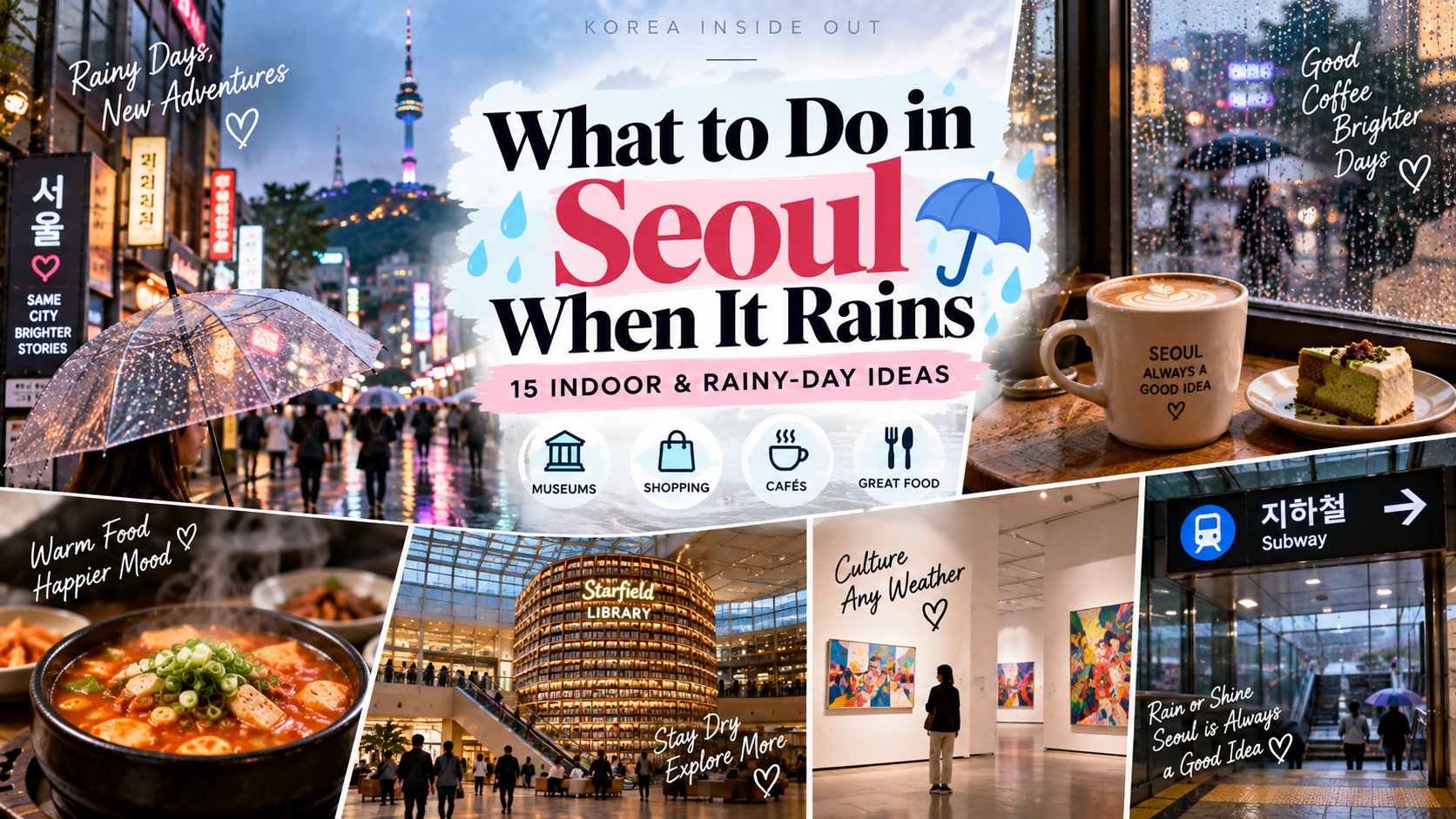
    What to Do in Seoul When It Rains: 15 Indoor & Rainy-Day Ideas

    Rain can completely change your plans in Seoul.

    Maybe you planned to spend the day walking around Bukchon, visiting palaces, taking photos at N Seoul Tower, or exploring the Han River.

    Then you wake up.

    It’s raining.

    Don’t panic.

    A rainy day in Seoul doesn’t have to mean staying in your hotel.

    In fact, Seoul has plenty of things to do when the weather is bad — from museums and shopping malls to cafés, markets, underground shopping areas, Korean food and relaxing activities.

    The trick is not trying to follow your original outdoor itinerary.

    Instead, change the type of day you’re having.

    Here are some of the best things to do in Seoul when it rains.


    Quick Answer: What Should You Do in Seoul When It Rains?

    If you don’t want to read the entire list, here are my easiest recommendations:

    For first-time visitors:
    → Gyeongbokgung area + museum + café

    For shopping:
    → Myeongdong + underground shopping

    For modern Seoul:
    → COEX Mall + Starfield Library + café

    For families:
    → COEX Aquarium or an indoor attraction

    For food lovers:
    → Korean restaurant + market + café

    For a relaxed day:
    → Museum + lunch + coffee + shopping

    For heavy rain:
    → Stay near a subway station and build your day around indoor destinations.

    The most important rule is simple:

    Don’t spend half your day walking between places in the rain.


    1. Start With a Museum

    A rainy day is actually a good excuse to slow down and learn something about Korea.

    Instead of trying to see five outdoor attractions, choose one museum and spend a few hours there.

    Depending on your interests, you can look for:

    • Korean history museums
    • Art museums
    • Contemporary art galleries
    • Cultural museums
    • Design exhibitions
    • Special exhibitions

    This is particularly useful if you’re visiting Seoul for several days.

    You don’t need to spend your entire vacation inside museums.

    But on a rainy afternoon, they can turn an otherwise frustrating day into one of the most interesting parts of your trip.

    My tip

    Don’t choose a museum simply because it’s famous.

    Choose one that is easy to reach from where you’re staying.

    On a rainy day, convenience matters.


    2. Explore COEX Mall

    If you want somewhere where you can spend several hours without worrying about the weather, COEX is one of the easiest choices.

    COEX combines:

    • Shopping
    • Restaurants
    • Cafés
    • Entertainment
    • Indoor attractions
    • Large public spaces

    You can easily turn a rainy afternoon into a full indoor outing.

    And you don’t have to be interested in shopping.

    You can eat lunch, walk around, have coffee and explore the different parts of the complex.

    Why COEX works on a rainy day

    You don’t have to constantly check the weather.

    Once you’re inside, you can simply take your time.

    That makes it particularly useful for families or travelers who don’t want to spend the day carrying umbrellas.


    3. Visit Starfield Library

    One of the most recognizable spaces inside COEX is Starfield Library.

    Even if you’re not a serious reader, it’s worth seeing because the enormous bookshelves create a very different atmosphere from a normal library.

    It’s also an easy place to combine with:

    COEX → Starfield Library → lunch → shopping → café

    You don’t need to dedicate an entire day to it.

    A couple of hours can be enough.


    4. Go Underground in Myeongdong

    Here’s a very practical rainy-day strategy:

    Go underground.

    Myeongdong has underground shopping areas connecting parts of the central Seoul shopping district.

    You can browse:

    • Cosmetics
    • Fashion
    • Accessories
    • Souvenirs
    • Small everyday items

    This is especially useful if you’re already staying in Myeongdong.

    You can combine underground shopping with department stores, cafés and restaurants without spending the entire day outside.


    5. Try a Korean Café

    Rainy weather and Korean cafés go surprisingly well together.

    Instead of treating the café as a quick stop between attractions, make it part of the itinerary.

    Find a café with a comfortable interior.

    Order:

    • Coffee
    • Tea
    • Cake
    • Bingsu
    • A Korean-style dessert

    Then sit for a while.

    You don’t have to feel guilty about it.

    You’re traveling.

    You don’t get bonus points for walking 25,000 steps every day.


    6. Have a Long Korean Lunch

    A rainy day is also a good excuse to make lunch the main event.

    Instead of grabbing something quickly, choose a restaurant and slow down.

    Depending on the season, you could try:

    Kalguksu

    Warm noodle soup is particularly comforting on a cool, rainy day.

    Kimchi jjigae

    A classic Korean stew served hot.

    Seolleongtang

    A mild beef soup that works well when you want something warm and filling.

    Korean barbecue

    Rain doesn’t matter once you’re sitting inside with a grill in front of you.

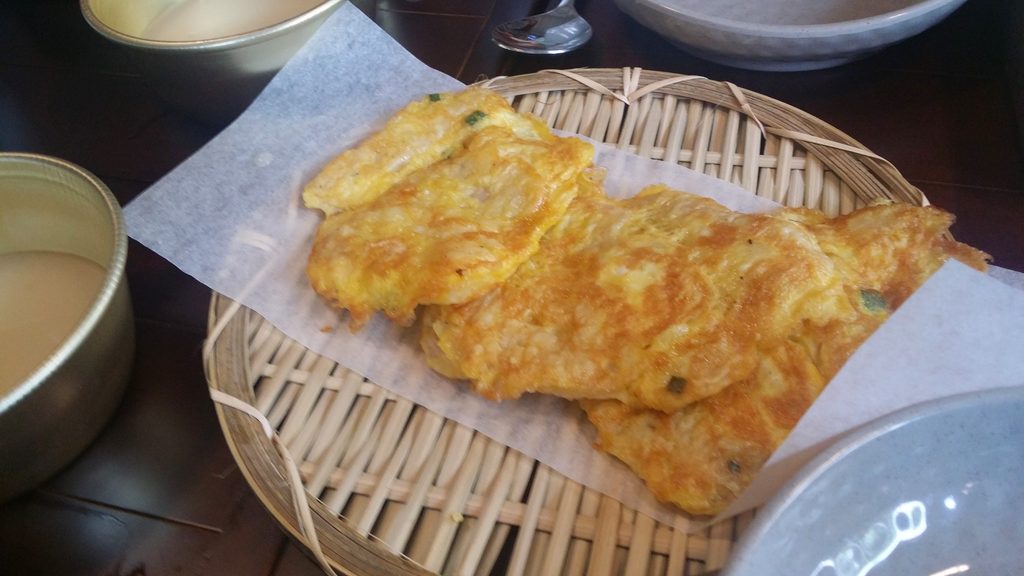
    Pajeon and makgeolli

    A classic rainy-day combination in Korea.

    Just remember that alcohol isn’t necessary to enjoy the food.


    7. Visit a Traditional Market

    Markets can still be interesting in rainy weather.

    But choose your market carefully.

    If heavy rain is falling, you don’t want to spend two hours walking through completely exposed streets.

    Instead, look for a market or shopping area where you can combine:

    Food + indoor spaces + nearby cafés + subway access

    Gwangjang Market, for example, can be combined with nearby indoor or underground destinations if the weather changes.

    The key is to avoid building your entire itinerary around outdoor walking.


    8. Go Shopping

    Seoul is one of those cities where shopping can easily become a rainy-day activity.

    Depending on what you’re interested in, you can explore:

    Myeongdong

    Good for:

    • Korean skincare
    • Cosmetics
    • Fashion
    • Souvenirs

    Gangnam

    Good for:

    • Fashion
    • Beauty
    • Department stores
    • Underground shopping

    COEX

    Good for:

    • Shopping
    • Dining
    • Entertainment
    • Indoor sightseeing

    Department stores

    These are particularly useful when the rain is heavy.

    You can spend several hours indoors without worrying about getting soaked.


    9. Explore an Underground Shopping Center

    Seoul has several underground shopping areas.

    They’re easy to overlook when the weather is good.

    But on a rainy day, they become extremely useful.

    You can find:

    • Clothes
    • Accessories
    • Cosmetics
    • Shoes
    • Souvenirs
    • Small gifts

    And because many are connected to subway stations, you can sometimes move between different areas while staying relatively protected from the rain.

    A good rainy-day combination

    Subway → underground shopping → lunch → café → subway

    That’s a very easy Seoul day.


    10. Go to a Cinema

    This might not sound like a classic tourist activity.

    But sometimes that’s exactly the point.

    If you’re staying in Seoul for a week, you don’t have to spend every day sightseeing.

    Going to a Korean cinema can be a fun way to experience everyday city life.

    You can:

    • Watch an international movie
    • Try a Korean movie
    • Buy Korean movie snacks
    • Relax for two hours

    If you’re exhausted from several days of sightseeing, this can be surprisingly enjoyable.


    11. Visit a Korean Beauty or Spa Experience

    If you’re looking for a more relaxing rainy-day activity, consider a Korean beauty or wellness experience.

    Depending on your comfort level and interests, this could include:

    • Facial treatments
    • Skincare
    • Massage
    • Hair salon
    • Nail salon
    • Korean spa / jjimjilbang

    Just make sure you understand what kind of service you’re booking before you arrive.

    For a first visit, choosing a reputable location with clear information in English can make the experience much easier.


    12. Try a Cooking Class

    If you don’t want to simply walk around shops and museums, consider doing something.

    A Korean cooking class can be a good rainy-day activity because you’re not just looking at Korean culture.

    You’re participating in it.

    Depending on the class, you might learn how to make:

    • Kimchi
    • Bibimbap
    • Korean pancakes
    • Tteokbokki
    • Korean dumplings
    • Other Korean dishes

    And the best part?

    You get to eat what you make.


    13. Spend Time in Insadong

    Insadong is particularly useful because it gives you access to traditional Korean culture while also offering plenty of cafés, shops and indoor spaces.

    On a clear day, you can spend hours walking around the neighborhood.

    On a rainy day, change the strategy.

    Instead of trying to see every street:

    Choose a few indoor stops.

    For example:

    Traditional tea house → lunch → gallery → souvenir shopping → café

    This lets you experience the area without spending hours under an umbrella.


    14. Take a Slow Day at Your Hotel

    This is something travelers often forget.

    You are allowed to have a slow day.

    If you’ve been sightseeing for four days straight, heavy rain might actually be a gift.

    Sleep a little longer.

    Have breakfast.

    Read.

    Work remotely if necessary.

    Order something.

    Watch a movie.

    Then go out for dinner when the rain becomes lighter.

    You don’t need to maximize every hour of your vacation.

    Sometimes the best travel decision is to do less.


    15. Use the Rain as a Reason to Try Something You Didn’t Plan

    This is probably my favorite option.

    A rainy day gives you permission to do something that wasn’t in the original itinerary.

    Maybe you’ve been walking around palaces and shopping districts for three days.

    Today, try:

    • A Korean cooking class
    • A museum
    • A traditional tea house
    • A Korean beauty treatment
    • A cinema
    • A long restaurant meal
    • A café you found by chance
    • A bookstore
    • An indoor exhibition

    Your trip doesn’t have to follow the itinerary you wrote six months ago.


    What to Do Depending on How Heavy the Rain Is

    Not all rain is the same.

    This makes a big difference.

    Light Rain

    If it’s just drizzling:

    You can still visit outdoor attractions.

    Bring an umbrella and adjust your walking route.

    Good options:

    • Palace
    • Traditional neighborhood
    • Market
    • Han River
    • Shopping district

    Just keep a café nearby as a backup.


    Moderate Rain

    This is when I would start mixing indoor and outdoor activities.

    For example:

    Palace → lunch → museum → café

    or

    Shopping street → department store → restaurant → café

    Don’t schedule two hours of outdoor walking.


    Heavy Rain

    This is when you should completely change your plan.

    Choose destinations connected to:

    • Subway stations
    • Underground shopping
    • Large malls
    • Museums
    • Department stores
    • Indoor attractions

    A good heavy-rain itinerary might be:

    Hotel → subway → COEX → lunch → Starfield Library → shopping → café → hotel

    You can spend most of the day indoors.


    A Perfect Rainy-Day Seoul Itinerary

    Here’s an example that works particularly well for first-time visitors.

    9:00 AM — Slow Breakfast

    Don’t rush.

    Check the weather again.


    10:30 AM — Museum

    Spend two hours somewhere indoors.


    12:30 PM — Korean Lunch

    Choose a warm Korean dish.


    2:00 PM — Café

    Find somewhere comfortable.

    Have coffee or dessert.


    3:30 PM — Shopping

    Head to a department store, underground shopping center or mall.


    6:00 PM — Dinner

    Have a proper Korean dinner.


    8:00 PM — Optional Evening Activity

    Depending on the weather:

    • Cinema
    • Café
    • Shopping
    • Jjimjilbang
    • Hotel

    10:00 PM — Back to the Hotel

    Dry your clothes.

    Charge your phone.

    Check tomorrow’s weather.

    Done.


    A Rainy-Day Itinerary Near Different Seoul Areas

    One of the biggest mistakes is choosing an attraction without considering where you’re staying.

    Here’s a simpler way to plan.

    Staying in Myeongdong?

    Try:

    Myeongdong → underground shopping → department store → café → dinner

    Staying in Hongdae?

    Try:

    Hongdae shops → café → restaurant → cinema or indoor activity

    Staying in Jongno / Insadong?

    Try:

    Museum → Insadong → traditional tea house → restaurant

    Staying in Gangnam?

    Try:

    COEX → Starfield Library → shopping → café → dinner

    Staying near Jamsil?

    Try:

    Lotte World area → indoor shopping → restaurant → café

    The point is to reduce unnecessary travel.


    What Should You Wear on a Rainy Day in Seoul?

    Don’t underestimate this.

    If rain is expected, wear:

    • Comfortable shoes with some water resistance
    • Light layers
    • A jacket that can handle rain
    • Quick-drying clothing

    Avoid wearing shoes that become uncomfortable when wet.

    You may be walking much more than you expect.

    And carry an umbrella?

    Yes.

    But you don’t necessarily need to bring one from home.

    Korean convenience stores and shops commonly sell inexpensive umbrellas.

    If the forecast suddenly changes, you can usually buy one without much trouble.


    Should You Cancel Your Seoul Itinerary Because of Rain?

    Usually, no.

    I’d change it.

    That’s different.

    For example:

    Original plan

    Gyeongbokgung → Bukchon → Insadong → Han River

    Rainy version

    Museum → lunch → Insadong tea house → indoor shopping → Korean dinner

    You’re still experiencing Seoul.

    You’re simply experiencing a different side of it.


    One Important Seoul Rainy-Day Tip

    Don’t underestimate walking time.

    A map may tell you two destinations are close.

    But if you’re carrying an umbrella, avoiding puddles, crossing large intersections and trying to find an entrance, that “10-minute walk” may feel much longer.

    On rainy days, I prefer:

    One subway ride + one indoor destination

    over:

    Three short walks between outdoor attractions.

    This is another reason learning the Seoul subway is so useful.

    If you haven’t used it yet, see:

    How to Use the Seoul Subway: A First-Time Visitor’s Guide


    How to Check Whether a Place Is Worth Visiting in the Rain

    Before leaving your hotel, ask yourself three questions.

    1. Is most of the experience indoors?

    If yes, good.

    2. Can I reach it easily by subway?

    If yes, even better.

    3. Is there somewhere nearby where I can escape the rain?

    A café, mall, restaurant or station is ideal.

    If the answer to all three is yes, you’ve probably found a good rainy-day destination.


    What I Would Avoid on a Very Rainy Day

    If rain is heavy, I wouldn’t recommend spending hours at:

    • Han River parks
    • Long palace walking routes
    • Long traditional village walks
    • Outdoor viewpoints
    • Long hiking trails
    • Outdoor markets with little shelter

    You can always come back another day.

    That’s one of the advantages of spending several days in Seoul.


    Don’t Forget: Rain Can Actually Make Seoul Beautiful

    There is another side to rainy Seoul.

    Wet streets reflect neon signs.

    Cafés feel cozier.

    Traditional buildings look different under gray skies.

    Seoul’s night streets can be particularly atmospheric after rain.

    So don’t think of rain as automatically ruining your trip.

    Sometimes it simply changes the mood.


    My Favorite Strategy: Plan an A Day and a B Day

    If you’re visiting Seoul for several days, don’t create one rigid itinerary.

    Create two versions.

    Plan A — Good Weather

    • Palace
    • Bukchon
    • Han River
    • Outdoor markets
    • Walking neighborhoods

    Plan B — Rain

    • Museum
    • Shopping mall
    • Underground shopping
    • Café
    • Restaurant
    • Cinema
    • Indoor experience

    Then check the weather each morning.

    If it’s sunny:

    Plan A.

    If it’s raining:

    Plan B.

    This is much less stressful than rebuilding your entire vacation when the forecast changes.


    Final Thoughts

    A rainy day in Seoul isn’t necessarily a wasted day.

    It just requires a different kind of itinerary.

    Instead of trying to force outdoor sightseeing into bad weather, use the opportunity to experience another side of the city.

    Go underground.

    Visit a museum.

    Eat something warm.

    Spend an hour in a café.

    Explore a shopping mall.

    Try a Korean activity.

    Or simply slow down.

    The goal of a Seoul trip isn’t to collect the largest possible number of attractions.

    It’s to enjoy being in Seoul.

    And sometimes, that means watching the rain from a café window with a cup of coffee in front of you.


    Your Turn

    Have you ever visited Seoul on a rainy day?

    What did you do when the weather ruined your original plans?

    Or, if you’re planning your first trip, what would you most want to do in Seoul when it rains?

    Share your ideas in the comments — your suggestion might help another traveler build their rainy-day plan.


    Planning Your Seoul Trip?

    You may also find these guides useful:

    Where to Stay in Seoul: 7 Best Areas for First-Time Visitors

    How to Use the Seoul Subway: A First-Time Visitor’s Guide

    How Much Does Food Cost in Seoul? A Realistic 2026 Guide

    Do You Need Cash in Korea? Cards, ATMs & T-money Explained

    How Many Days Do You Need in Seoul? 3, 5, or 7 Days

  • Seoul in Your First 24 Hours: What to Do After You Land

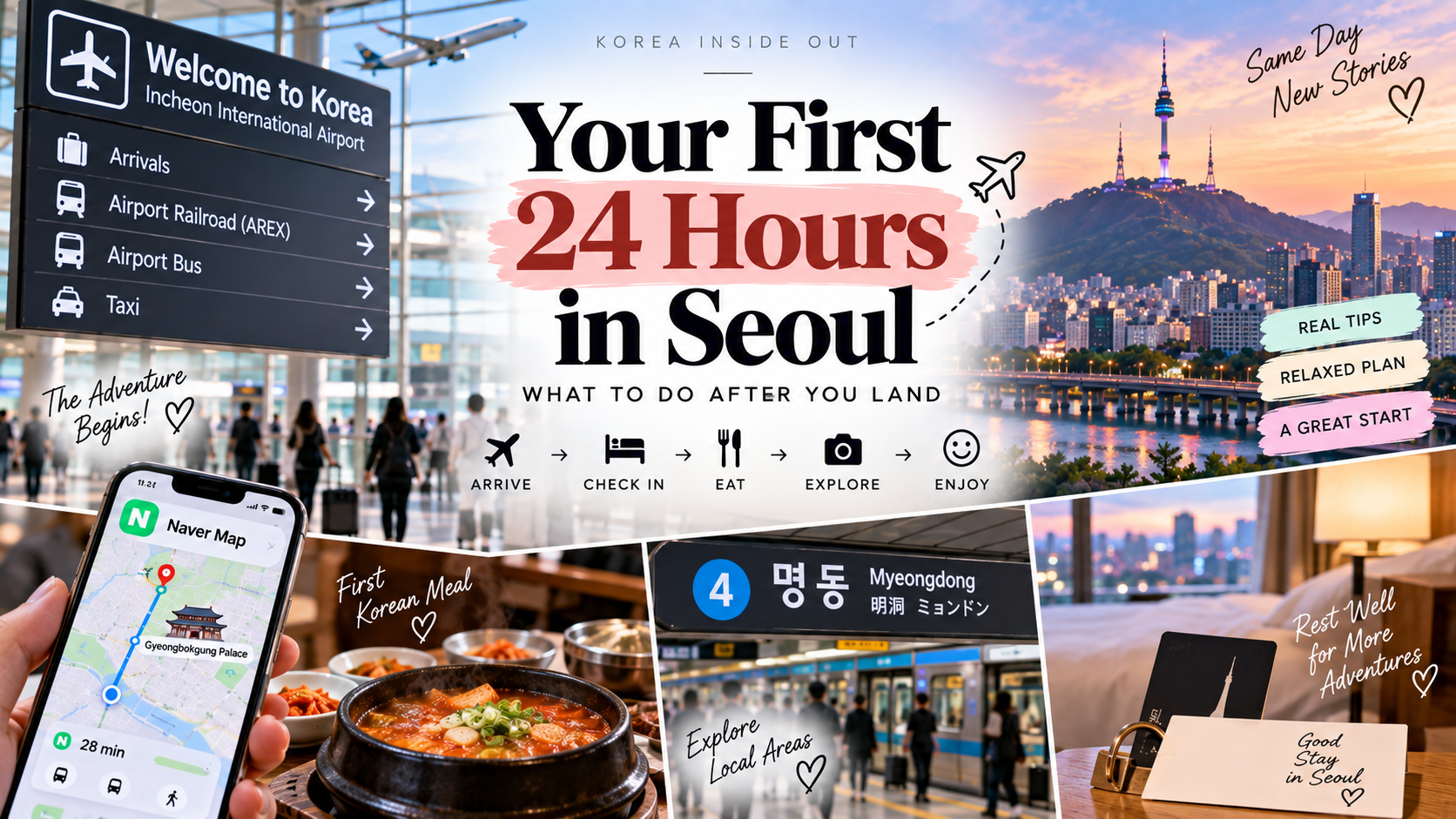
    Seoul in Your First 24 Hours: What to Do After You Land

    Arriving in Seoul for the first time can feel exciting — and slightly overwhelming.

    You’ve just spent hours on a plane.

    You have luggage.

    You’re probably tired.

    And suddenly you’re standing in a huge airport wondering:

    Where should I go first?

    Should you go straight to your hotel?

    Should you start sightseeing immediately?

    Should you exchange money?

    Should you get a transportation card?

    And how much can you realistically see on your first day?

    The good news is that you don’t need to rush.

    Your first 24 hours in Seoul should be about getting comfortable with the city, not trying to complete a sightseeing checklist.

    Here’s how I would approach your first day.


    Your First 24 Hours in Seoul at a Glance

    If you arrive in Seoul in the morning or early afternoon, a comfortable first day could look like this:

    TimeWhat to do
    ArrivalImmigration, luggage, mobile data
    NextGet to your hotel
    AfternoonCheck in or leave luggage
    Late afternoonExplore your neighborhood
    Early eveningFirst Korean meal
    EveningOne major attraction or neighborhood
    NightCafé, convenience store or relaxed walk
    Before bedPrepare for tomorrow

    The key is to keep your first day flexible.

    Flight delays, immigration, luggage, transportation and hotel check-in can all take longer than expected.


    1. Don’t Plan a Major Attraction Immediately After Landing

    This is probably my biggest recommendation.

    If your flight lands at 8 a.m., don’t automatically book a 10 a.m. attraction across Seoul.

    It looks possible on a map.

    But international travel doesn’t always go according to schedule.

    You need time for:

    • Immigration
    • Baggage claim
    • Getting connected to mobile data
    • Finding transportation
    • Traveling into Seoul
    • Finding your hotel
    • Leaving your luggage
    • Eating
    • Recovering from the flight

    Even if everything goes smoothly, you’ll probably feel more tired than you expect.

    Give yourself some breathing room.

    Your first day is not the day to prove how much of Seoul you can see.

    It’s the day to get comfortable.


    2. Get Connected Before You Leave the Airport

    Before heading into Seoul, make sure your phone works.

    Depending on your travel setup, this could mean:

    • Activating an eSIM
    • Using a Korean SIM
    • Connecting to airport Wi-Fi
    • Turning on your international roaming

    You want to be able to access:

    • Your hotel information
    • Maps
    • Transportation information
    • Translation
    • Taxi services
    • Your reservations

    A working phone makes your first day dramatically easier.

    One simple backup

    Take a screenshot of your hotel information before leaving the airport.

    Save:

    Hotel name + address + phone number

    Ideally, have the address in both English and Korean.

    If your internet connection suddenly stops working, you still have the information you need.


    3. Get to Your Hotel First

    Unless you have a very late arrival, I would generally make the hotel your first destination.

    You don’t necessarily need to check in immediately.

    Many hotels will allow you to leave your luggage before your room is ready.

    That means you can arrive, drop your bags, freshen up if possible, and start exploring without dragging a suitcase around Seoul.

    This makes a huge difference.


    Where Should You Stay?

    If you’re still deciding where to stay, your neighborhood can change how your first day feels.

    For a first trip:

    Myeongdong

    Best for convenience, shopping and easy access to many major tourist areas.

    Hongdae

    Best for cafés, restaurants, nightlife and a younger atmosphere.

    Jongno / Insadong

    Best if you’re interested in palaces, traditional neighborhoods and historic Seoul.

    Gangnam

    Best for modern Seoul, shopping, beauty and a very different side of the city.

    If you’re still choosing accommodation, see our guide:

    Where to Stay in Seoul: 7 Best Areas for First-Time Visitors

    The most important thing isn’t choosing the “best” neighborhood.

    It’s choosing a neighborhood that makes your trip easier.


    4. Don’t Exchange All Your Money at the Airport

    You may want Korean won immediately after landing.

    That’s fine.

    But you don’t need to exchange your entire travel budget at the airport.

    Airport exchange counters are convenient, but convenience doesn’t necessarily mean the best exchange rate.

    A small amount of Korean cash can be enough to get started.

    For example, you may want some cash for:

    • Small purchases
    • Markets
    • Street food
    • Transportation-related expenses
    • Backup spending

    For everyday purchases, cards are widely useful.

    If you’re unsure about how much cash to carry, read:

    Do You Need Cash in Korea? Cards, ATMs & T-money Explained


    5. Have Your First Korean Meal Nearby

    Once your luggage is safely at the hotel, eat.

    Seriously.

    Don’t underestimate how much better Seoul feels when you’re no longer hungry and exhausted.

    And your first meal doesn’t need to be at a famous restaurant.

    In fact, I would argue that your first meal is a good time to keep things simple.

    Look for a restaurant close to your hotel.

    You could try:

    • Gimbap
    • Bibimbap
    • Kalguksu
    • Kimchi jjigae
    • Mandu
    • Naengmyeon
    • Korean barbecue

    If you want something quick and inexpensive, a neighborhood restaurant can be a better choice than spending an hour traveling across the city for a famous restaurant.

    You can always do that tomorrow.


    6. Your First Afternoon: Explore Where You Are

    This is where I would resist the temptation to cross Seoul.

    Instead of immediately going from Myeongdong to Gangnam to Hongdae, spend a couple of hours getting to know your own neighborhood.

    Walk around.

    Find:

    • Your nearest subway station
    • A convenience store
    • A café
    • A pharmacy
    • A restaurant
    • An ATM
    • A bus stop

    This sounds boring.

    It isn’t.

    Knowing where everything is around your hotel makes the rest of your trip much easier.


    7. Visit One Major Attraction — Not Five

    If you still have energy, choose one major attraction.

    That’s enough for your first day.

    Depending on where you’re staying, you could choose:

    Gyeongbokgung Palace

    A good choice if you want your first impression of Seoul to include traditional Korean architecture and history.

    N Seoul Tower

    Good if you’d rather see the city from above.

    Han River

    Great if the weather is pleasant and you want a relaxed introduction to everyday Seoul.

    Insadong / Ikseon-dong

    Good for traditional streets, cafés and an easy evening walk.

    Hongdae

    A good choice if you want restaurants, shops, street performances and nightlife.

    The important word here is:

    One.

    You don’t need to see everything.


    8. Use the Subway — But Don’t Make Your First Ride Complicated

    If you’re feeling reasonably energetic, your first subway trip is a good opportunity to learn how Seoul transportation works.

    Don’t choose a route with three transfers.

    Choose something simple.

    For example:

    Hotel → one destination → hotel

    That gives you a chance to understand:

    • Your transportation card
    • Subway signs
    • Line numbers
    • Directions
    • Station exits

    Seoul’s subway system can look intimidating on a map, but once you’ve taken a few trips, it becomes much easier.

    If you haven’t used it before, our guide walks through the process:

    How to Use the Seoul Subway: A First-Time Visitor’s Guide


    9. Your First Korean Convenience Store Visit Is Part of the Experience

    Here’s one of my favorite easy first-day activities.

    Go into a Korean convenience store.

    You don’t need a shopping list.

    Just look around.

    You’ll find things such as:

    • Drinks
    • Snacks
    • Instant noodles
    • Gimbap
    • Desserts
    • Coffee
    • Breakfast items
    • Travel necessities

    Convenience stores are extremely useful during a trip.

    You might even find yourself buying breakfast there the next morning.

    And don’t worry if you can’t understand every label.

    That’s part of the experience.

    Use a translation app when you need it.


    10. Have a Slow Evening

    If you’ve traveled a long way to Korea, your body may not know what time it is.

    That’s why I wouldn’t recommend planning an enormous night out on your first evening.

    Instead, try something simple.

    Option 1: Café

    Find a café near your hotel.

    Have coffee or tea.

    Sit down.

    Watch people.

    Option 2: Neighborhood walk

    Walk around your area after dinner.

    Seoul feels very different after dark.

    Option 3: Convenience-store snack

    Buy a few Korean snacks and take them back to your hotel.

    Option 4: Han River

    If you’re staying near the river and the weather is good, spend some time outside.

    You don’t need an elaborate plan.

    Sometimes simply sitting beside the Han River while the city lights come on is a better first-night experience than checking another attraction off a list.


    11. Don’t Stay Out Too Late on Your First Night

    There is a temptation to think:

    “I’m only in Seoul for five days, so I have to use every hour.”

    I understand the feeling.

    But here’s what usually happens.

    You stay out until midnight.

    You wake up exhausted.

    The next morning you have no energy.

    Your carefully planned itinerary starts slipping.

    And suddenly you’re spending your second day looking for coffee instead of sightseeing.

    Your first day should set you up for the rest of your trip.

    Go to bed.

    Tomorrow will be better.


    A Realistic First 24-Hour Seoul Itinerary

    Here’s what I would actually recommend.

    Morning Arrival

    8:00–10:00 AM

    Arrive at Incheon Airport.

    • Immigration
    • Collect luggage
    • Get mobile data
    • Use the restroom
    • Get some Korean won if necessary
    • Get your transportation sorted

    Don’t rush.


    Late Morning / Early Afternoon

    10:00 AM–1:00 PM

    Travel to Seoul.

    Go to your hotel.

    Leave your luggage if your room isn’t ready.

    Have lunch nearby.


    Afternoon

    1:00–4:00 PM

    Explore your neighborhood.

    Walk around.

    Find a café.

    Visit a convenience store.

    Get familiar with your nearest subway station.


    Late Afternoon

    4:00–6:00 PM

    Visit one major attraction.

    Choose something relatively close to where you’re staying.

    Don’t try to cross the entire city.


    Evening

    6:00–8:00 PM

    Have your first proper Korean dinner.

    This is a good time to try something you’ve been looking forward to.

    Korean barbecue, noodles, fried chicken, bibimbap or another local specialty are all good choices.

    If you’re wondering what food prices look like, our Seoul food guide covers everything from inexpensive local meals to Korean barbecue:

    How Much Does Food Cost in Seoul? A Realistic 2026 Guide


    Night

    8:00–10:00 PM

    Take a relaxed walk.

    Visit a café.

    Or simply return to your hotel.

    Then prepare for tomorrow.


    What If Your Flight Arrives at Night?

    This changes everything.

    If you arrive in Seoul at 9 or 10 p.m., don’t try to force the daytime itinerary.

    Your first 24 hours might simply be:

    Airport → hotel → check-in → food → sleep

    That’s perfectly fine.

    In fact, it’s probably the better choice.

    Your Seoul trip doesn’t start the moment you leave the airplane.

    It starts when you’re rested enough to enjoy it.


    What If You Arrive Very Early in the Morning?

    This is another common situation.

    Your hotel room may not be ready yet.

    In that case:

    Step 1

    Leave your luggage at the hotel if possible.

    Step 2

    Find breakfast.

    Step 3

    Have coffee.

    Step 4

    Take a gentle walk.

    Step 5

    Visit one easy attraction.

    Step 6

    Return for check-in when your room is ready.

    Don’t schedule a full sightseeing day immediately after an overnight flight.

    Your energy level matters more than your itinerary.


    What Not to Do on Your First Day in Seoul

    ❌ Don’t schedule six attractions

    Seoul is much bigger than it looks.

    Moving between neighborhoods takes time.


    ❌ Don’t change hotels

    If you’re staying three to five nights, there’s usually little reason to move hotels during your trip.

    Pack once.

    Stay put.

    Explore from your base.


    ❌ Don’t take a taxi everywhere

    Taxis are useful.

    But Seoul’s subway can get you around much more efficiently for many sightseeing trips.

    Once you understand the system, you’ll probably use it much more than you expected.


    ❌ Don’t spend your first evening shopping for hours

    You may be tempted.

    Especially in Myeongdong.

    But remember that the stores aren’t going anywhere tomorrow.


    ❌ Don’t worry about doing everything perfectly

    You will probably:

    • Take the wrong subway exit
    • Walk the wrong direction
    • Order something you didn’t expect
    • Mispronounce a Korean word
    • Get confused by a sign

    That’s normal.

    You’re traveling.


    Your First 24 Hours Should Answer Five Questions

    By the end of your first day, you should ideally know:

    1. Where is my hotel?

    Obvious, but important.

    2. Where is the nearest subway station?

    This becomes your transportation anchor.

    3. Where can I get food?

    Find at least two nearby options.

    4. Where is the nearest convenience store?

    You’ll probably use it more than once.

    5. How do I get back to my hotel?

    Especially important after a late night.

    Once you know these five things, Seoul will already feel much less foreign.


    The Best First-Day Mindset

    There is a difference between seeing Seoul and experiencing Seoul.

    If you spend your first day running from one famous attraction to another, you’ll see a lot.

    But you may not remember much.

    Instead, try this:

    Have breakfast.

    Walk.

    Take the subway.

    Eat something Korean.

    Sit in a café.

    Watch people.

    Explore a side street.

    Look at the buildings.

    Notice how people move through the city.

    Go to a convenience store.

    Watch Seoul become busy.

    Then watch it become quiet again.

    Those little moments are often what make a trip memorable.


    What I Would Actually Do

    If a friend were visiting Seoul for the first time and asked me what to do during their first 24 hours, I wouldn’t give them a list of 15 attractions.

    I’d say:

    Get to your hotel.

    Eat something.

    Walk around your neighborhood.

    Take one subway ride.

    Visit one major attraction.

    Have a good Korean dinner.

    Go somewhere for coffee or a night walk.

    Sleep.

    Then start the real sightseeing tomorrow.

    That gives you enough structure to avoid wasting your first day without turning your arrival into a race.


    Your First 24 Hours in Seoul: Quick Checklist

    Before leaving the airport:

    ☐ Phone connected
    ☐ Hotel address saved
    ☐ Transportation sorted
    ☐ Some Korean won available if needed
    ☐ Hotel directions ready

    After reaching Seoul:

    ☐ Leave luggage at hotel
    ☐ Eat lunch
    ☐ Find nearest subway station
    ☐ Find convenience store
    ☐ Explore your neighborhood
    ☐ Visit one major attraction
    ☐ Have Korean dinner
    ☐ Take a relaxed evening walk
    ☐ Get enough sleep

    That’s enough.

    Really.


    Final Thoughts

    Your first day in Seoul doesn’t need to be spectacular.

    It needs to be comfortable.

    Once you know how to get around, where to eat, where your hotel is and how the city works, the rest of your trip becomes much easier.

    And that’s why I think the best first 24 hours in Seoul are not about checking off the most famous attractions.

    They’re about getting your bearings.

    By tomorrow morning, you’ll already know a little more about Seoul.

    You’ll understand the subway.

    You’ll recognize a few Korean words.

    You’ll know where the convenience store is.

    You’ll have tried your first Korean meal.

    And you’ll probably feel much more confident stepping out to explore.

    That’s when the real Seoul trip begins.


    What Was Your First Day in Seoul Like?

    If you’ve already visited Seoul, what did you do on your first day?

    Did you go sightseeing immediately, or did you take it slow after arriving?

    And if you’re planning your first trip, what are you most worried about on your first day in Korea?

    Share your experience or question in the comments — it might help another first-time visitor.


    Planning Your First Trip to Seoul?

    You may also find these guides useful:

    Is Seoul Expensive? A Realistic Seoul Travel Budget for 2026

    Where to Stay in Seoul: 7 Best Areas for First-Time Visitors

    How to Use the Seoul Subway: A First-Time Visitor’s Guide

    How Much Does Food Cost in Seoul? A Realistic 2026 Guide

    Do You Need Cash in Korea? Cards, ATMs & T-money Explained

    How Many Days Do You Need in Seoul? 3, 5, or 7 Days
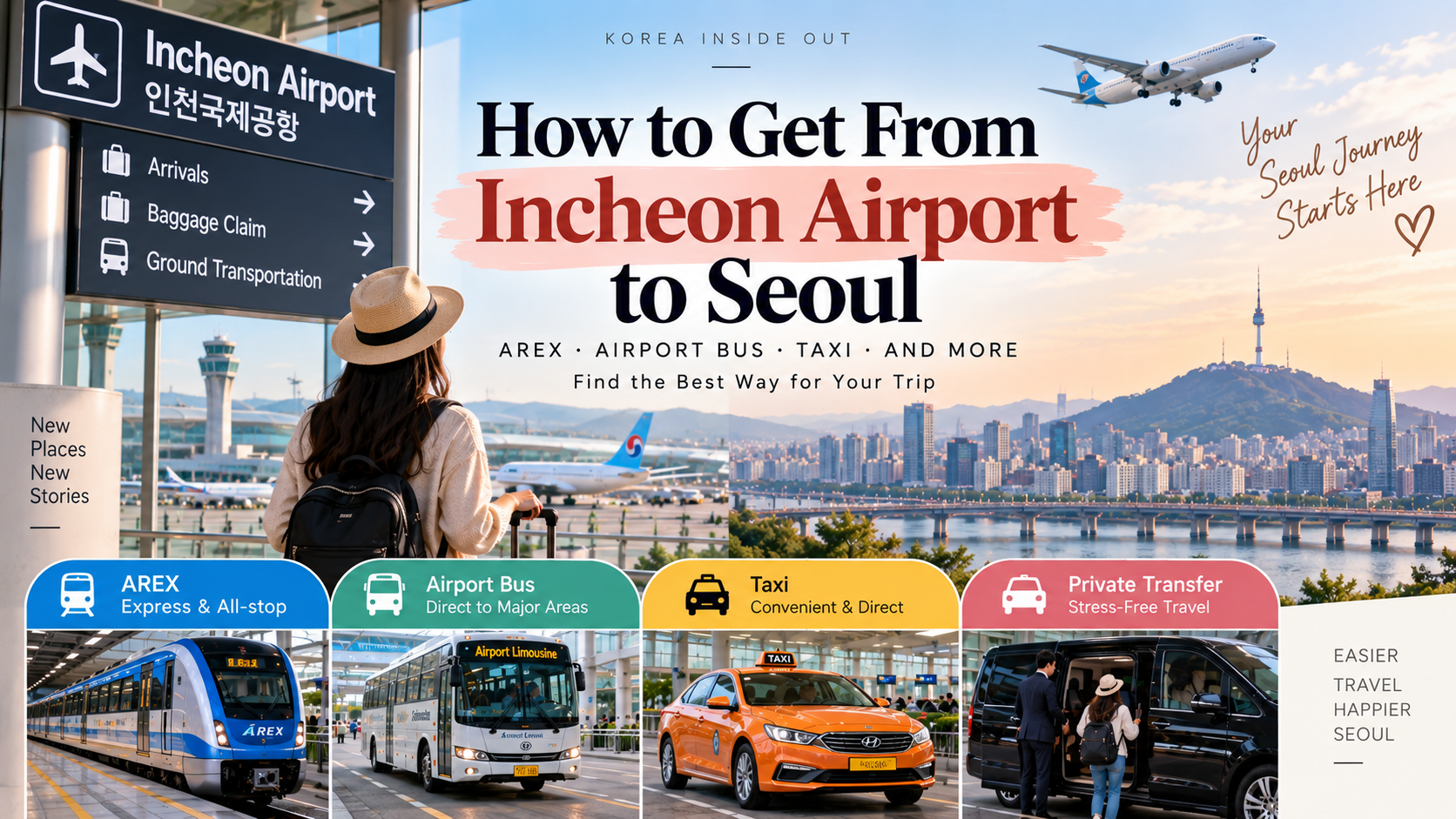
  • How to Get From Incheon Airport to Seoul: AREX, Airport Bus, Taxi & More

    How to Get From Incheon Airport to Seoul: AREX, Airport Bus, Taxi & More

    Landing at Incheon International Airport for the first time?

    One of the first questions you’ll probably have is:

    How do I actually get from the airport to my hotel in Seoul?

    Fortunately, getting from Incheon Airport to Seoul is relatively straightforward once you understand your options.

    You can take the AREX airport train, an airport limousine bus, a regular taxi, or a private transfer.

    The best choice depends on where you’re staying, how much luggage you have, what time you arrive, and whether you want to save money or minimize hassle.

    For most first-time visitors, I’d narrow it down to three choices:

    • AREX if you want a predictable and affordable journey
    • Airport limousine bus if you want to get closer to your hotel without changing trains
    • Taxi or private transfer if you have lots of luggage or simply want the easiest arrival

    Here’s how to choose.


    Incheon Airport to Seoul: Quick Comparison

    OptionBest ForApprox. TimeMain Advantage
    AREX All-Stop TrainBudget travelersAbout 1 hourAffordable and reliable
    AREX Express TrainSeoul Station areaAbout 40–50 minNon-stop and comfortable
    Airport Limousine BusHotel-area convenienceAbout 1–2 hours*Less luggage handling
    TaxiFamilies / lots of luggageVariesDoor-to-door
    Private TransferFirst-time visitors / groupsVariesPre-arranged and easy

    *Travel time varies significantly depending on the destination and traffic.

    There isn’t one “best” option for everyone.

    The most important thing is to choose based on where you’re staying, not simply which transportation method sounds fastest.


    First: Which Incheon Airport Terminal Are You Using?

    Incheon International Airport has Terminal 1 and Terminal 2.

    Your airline determines which terminal you use, so check your flight information before arriving.

    This matters because:

    • Train locations are different
    • Bus boarding areas are different
    • Taxi pickup areas are different
    • Travel times can differ slightly

    If you’re not sure, check your airline information before leaving home.

    Don’t wait until you land.


    Option 1: AREX All-Stop Train

    For many independent travelers, the AREX All-Stop Train is the easiest balance between price and convenience.

    It connects Incheon Airport with Seoul and stops at several stations along the way.

    You can eventually reach areas such as:

    • Hongdae
    • Gongdeok
    • Seoul Station
    • Digital Media City
    • Gimpo Airport

    The journey from Terminal 1 to Seoul Station is roughly one hour, while Terminal 2 takes longer. The trains run frequently during operating hours.

    Why I like it for first-time visitors

    It’s:

    • Predictable
    • Relatively inexpensive
    • Not affected by road traffic
    • Easy to connect with Seoul’s subway system

    And once you’ve used it once, you’ll probably find it very straightforward.

    Current fare

    The adult fare to Seoul Station is currently around ₩4,750 from Terminal 1 and ₩5,350 from Terminal 2 on the all-stop service, based on current 2026 fare information.

    Fares can change, so check the current AREX fare before your trip.

    Where do you board?

    The airport railway station is located in the Transportation Center on the basement level of the airport.

    Follow the signs for:

    Airport Railroad / AREX

    You don’t need to go outside the airport to find the train.


    Who Should Take the All-Stop Train?

    I’d choose it if:

    • You’re staying near an AREX station
    • You’re comfortable using public transportation
    • You want to keep transportation costs low
    • You don’t mind carrying your luggage
    • You arrive during normal train operating hours

    It’s especially convenient if you’re staying around Hongdae.

    Instead of going all the way to Seoul Station and then transferring, you can get off at Hongik University Station.

    That’s an important detail.

    Staying in Hongdae?

    Take the AREX All-Stop Train and get off at:

    Hongik University Station

    This can save you an unnecessary trip into Seoul Station.

    If you’re staying elsewhere, check your hotel location before deciding where to get off.


    Option 2: AREX Express Train

    The AREX Express Train takes you directly from Incheon Airport to Seoul Station without intermediate stops.

    The journey is approximately 40–50 minutes, depending on the terminal and current timetable.

    The major advantage is simplicity.

    You board the train.

    You sit down.

    And you get off at Seoul Station.

    No intermediate stops.

    No worrying about where to transfer.

    Who should take the Express?

    I’d consider it if:

    • You’re staying near Seoul Station
    • You have a large suitcase
    • You want a guaranteed seat
    • You prefer a quieter, more straightforward journey
    • You’re traveling after a long flight and don’t want to think too much

    But there’s one important catch:

    It only takes you to Seoul Station.

    If your hotel is in Hongdae, Myeongdong, Gangnam, or another neighborhood, you still need to continue from Seoul Station.

    So don’t automatically assume the Express is the fastest option for your actual hotel.

    The train may be faster to Seoul Station but slower overall once you add another transfer.


    AREX Express vs. All-Stop: Which One Should You Choose?

    Here’s the simple version:

    Choose All-Stop if:

    You want to save money or your hotel is near an AREX station.

    Choose Express if:

    You want a reserved-seat, non-stop ride to Seoul Station and don’t mind paying more.

    For many first-time visitors, I actually think the All-Stop train is perfectly good.

    You don’t necessarily need to pay extra simply because the train has “Express” in its name.

    Think about your final destination.


    Option 3: Airport Limousine Bus

    The airport limousine bus is another very useful option, particularly if you’re staying in a hotel district that has a convenient airport bus stop.

    Unlike the train, you don’t have to carry your luggage through subway corridors and up and down stairs while transferring.

    You get on the bus at the airport and get off somewhere much closer to your destination.

    Why travelers like airport buses

    They’re particularly useful when:

    • You have large suitcases
    • You’re traveling with children
    • You’re staying far from Seoul Station
    • You don’t want to transfer
    • You’re arriving tired after a long flight

    Airport buses serve Seoul and surrounding areas, but routes, fares, and operating schedules vary, so you should check the current route for your hotel rather than assuming there is a bus to every neighborhood.


    Where Do You Catch the Airport Bus?

    At Terminal 1, airport buses use the transportation area around the first-floor arrival level.

    At Terminal 2, bus services are accessed through the transportation center on the basement level.

    Follow the airport signs for:

    Airport Bus / Limousine Bus

    Because routes can change, check the destination and route number on the official airport information before boarding.

    Don’t simply get on a bus because the neighborhood name looks familiar.


    Is the Airport Bus Better Than AREX?

    It depends.

    Imagine you’re staying at a hotel in Myeongdong.

    The AREX train can get you toward central Seoul, but you’ll then need another subway journey or taxi to reach your hotel.

    If an airport limousine bus stops conveniently near your hotel, the bus may be easier even if the total journey takes longer.

    That’s the key distinction:

    Fastest transportation isn’t always the easiest transportation.

    Especially when you’re carrying two suitcases.


    Option 4: Taxi From Incheon Airport to Seoul

    If you want to go directly from the airport to your hotel, a taxi is the simplest option.

    You leave the terminal.

    Find the official taxi stand.

    Give the driver your destination.

    And you’re on your way.

    Taxi is particularly useful if:

    • You’re traveling with three or four people
    • You have lots of luggage
    • You’re arriving late
    • Your hotel is far from a subway station
    • You’re traveling with young children
    • You simply don’t want to navigate public transportation after a long flight

    The downside is cost.

    A taxi from Incheon Airport to Seoul can be substantially more expensive than public transportation, and the final fare depends on your destination, traffic, tolls, and applicable surcharges.

    One important safety tip

    Use the official designated taxi stand.

    Incheon Airport specifically warns travelers about illegal solicitation and overcharging involving unauthorized vehicles.

    If someone approaches you inside the arrival area asking whether you need a taxi, you don’t need to accept.

    Simply follow the airport signs to the official taxi area.


    Option 5: Private Airport Transfer

    A private transfer is the most straightforward option if you don’t want to figure anything out after landing.

    You book the vehicle in advance.

    A driver meets you at the airport.

    You get in.

    And you go directly to your hotel.

    This can be particularly attractive for:

    • Families
    • Groups
    • Travelers with lots of luggage
    • Late arrivals
    • First-time visitors who are nervous about navigating Seoul
    • Travelers staying somewhere difficult to reach by public transportation

    It’s more expensive than taking the train or bus, but you’re paying for convenience.

    For a group, the difference in cost per person may also be smaller than you expect.


    What If You Arrive Late at Night?

    This is one situation where you should plan ahead.

    Don’t assume that the transportation you want will still be running when your flight lands.

    AREX and regular airport buses have operating hours, and the final departure depends on the service and terminal.

    Incheon Airport also operates late-night buses on selected routes, including services toward areas such as Gangnam and Dongdaemun, but routes and times vary.

    If your flight arrives late

    Before you fly, check:

    1. Your actual landing time
    2. Immigration and baggage time
    3. Last train
    4. Last airport bus
    5. Night bus options
    6. Taxi availability

    Don’t plan around your scheduled arrival time alone.

    A flight scheduled to land at 10:30 PM may not actually get you out of the airport until much later.


    What If You Have a Lot of Luggage?

    This changes my recommendation.

    If you have:

    One small suitcase + backpack

    → AREX is easy.

    If you have:

    Two large suitcases + carry-ons

    → An airport bus or taxi may be much more comfortable.

    Remember that getting from the airport to Seoul isn’t just about the vehicle.

    You also have to:

    • Find the station
    • Carry your luggage
    • Transfer
    • Find your hotel
    • Walk from the station
    • Possibly climb stairs

    A route that looks cheap and efficient on a map can feel very different when you’re exhausted and carrying 30 kg of luggage.


    Which Airport Transportation Is Best for Different Seoul Neighborhoods?

    Here’s a simple way to think about it.

    Staying in Hongdae

    AREX All-Stop

    This is one of the easiest neighborhoods to reach by airport train because Hongik University Station is directly on the AREX route.


    Staying near Seoul Station

    AREX Express or All-Stop

    Both work well.

    If convenience and a reserved seat matter to you, consider the Express.


    Staying in Myeongdong

    AREX + subway/taxi

    or

    Airport limousine bus, depending on the current route and your hotel’s location.

    Don’t assume that Seoul Station is automatically your final destination.


    Staying in Gangnam

    An airport bus or taxi can sometimes be more convenient because Seoul Station is not necessarily on your way to Gangnam.

    Late-night travelers should also check night bus options.


    Staying in Itaewon

    You’ll likely need another connection after arriving in Seoul.

    An airport bus or taxi may be worth considering if you have heavy luggage.


    The Most Important Question: Where Is Your Hotel?

    Before choosing transportation, open your hotel location on a map.

    Then ask:

    Where will I actually get off?

    This sounds obvious, but it’s one of the easiest mistakes to make.

    For example:

    “AREX goes to Seoul Station.”

    That’s true.

    But if your hotel is in Hongdae, you may not want to go to Seoul Station at all.

    Likewise, if you’re staying in Gangnam, getting off at Seoul Station isn’t necessarily the most convenient solution.

    Your hotel location should determine your route.


    A Simple Arrival Strategy for First-Time Visitors

    If I were planning a first trip to Seoul, I’d do this before leaving home.

    Step 1: Save your hotel

    Save the hotel location in your map app.

    Also save the address in both English and Korean if available.

    Step 2: Identify the nearest subway station

    Know the station name before you land.

    Step 3: Check the airport route

    Look at:

    Incheon Airport → hotel

    rather than:

    Incheon Airport → Seoul

    That small difference can completely change which option is best.

    Step 4: Have a backup plan

    If your flight is delayed, know what you’ll do if you miss the last train.

    Step 5: Don’t rush

    You just arrived in a new country.

    You don’t need to prove that you can navigate the airport in five minutes.

    Take your time.

    Follow the signs.

    Ask airport staff if you’re unsure.


    Do You Need a T-money Card at the Airport?

    A transportation card such as T-money can be useful during your Seoul trip, particularly if you’ll be using the subway and buses.

    However, don’t feel that you need to solve every transportation problem immediately after landing.

    Your first priority is simply getting to your accommodation.

    Once you’re settled, you can sort out the rest.

    If you want to understand T-money and other payment options in more detail, see:

    Do You Need Cash in Korea? Cards, ATMs & T-money Explained

    And once you’re ready to use the Seoul subway:

    How to Use the Seoul Subway: A First-Time Visitor’s Guide


    What I Would Choose

    If I were traveling alone with one suitcase:

    AREX All-Stop

    I’d keep it simple and inexpensive.

    If I were staying near Seoul Station and wanted the easiest train journey:

    AREX Express

    If I were traveling with children and several suitcases:

    Airport limousine bus or taxi

    If I were arriving very late:

    Check night bus options first, then use a taxi if necessary

    If I were traveling with a group:

    Compare the total cost of a private transfer or taxi with multiple train tickets

    The “best” option isn’t necessarily the cheapest one.

    It’s the one that gets you from the airport to your hotel with the least unnecessary stress.


    One Mistake to Avoid

    Don’t choose your airport transportation based only on the travel time shown online.

    A 43-minute train ride sounds fantastic.

    But imagine:

    **43 minutes on the train

    • 15 minutes waiting
    • 10 minutes finding your hotel
    • 15 minutes transferring**

    versus:

    75 minutes on a direct airport bus that stops near your hotel.

    The second option may actually be easier.

    When you’re traveling, door-to-door time matters more than vehicle travel time.


    Before You Fly: Your Incheon Airport Checklist

    Save this section.

    Before leaving home:

    ☐ Check whether you’re arriving at Terminal 1 or Terminal 2

    ☐ Save your hotel location

    ☐ Save your hotel’s Korean name/address

    ☐ Find the nearest subway station

    ☐ Check the current AREX timetable

    ☐ Check the airport bus route if you’re considering one

    ☐ Check late-night transportation if your flight arrives late

    ☐ Have a backup payment method

    ☐ Keep your hotel information accessible offline

    That last one is especially important.

    You don’t want your first task in Korea to be:

    “Why isn’t my phone connecting to the internet?”

    while standing outside an airport at midnight.


    Final Thoughts

    Getting from Incheon Airport to Seoul isn’t difficult.

    The trick is simply understanding that the fastest option isn’t always the best option for your particular hotel.

    For many travelers, AREX is the easiest starting point.

    For others, an airport bus is more convenient.

    And if you’re traveling with family, lots of luggage, or a very late arrival, paying more for a taxi or private transfer can be completely worth it.

    Before your trip, spend five minutes checking your hotel’s exact location and planning your airport route.

    That small amount of preparation can make your first hour in Korea much easier.

    And once you arrive in Seoul, the real trip can begin.


    Planning Your First Trip to Seoul?

    Once you know how to get from the airport, these guides can help with the rest of your trip:

    Where to Stay in Seoul: 7 Best Areas for First-Time Visitors

    How to Use the Seoul Subway: A First-Time Visitor’s Guide

    Do You Need Cash in Korea? Cards, ATMs & T-money Explained

    How Many Days Do You Need in Seoul? 3, 5, or 7 Days
    Is Seoul Expensive? A Realistic Seoul Travel Budget for 2026


    What About You?

    How are you planning to get from Incheon Airport to Seoul?

    Are you leaning toward AREX, the airport bus, a taxi, or a private transfer?

    If you’ve already made the trip, which option worked best for you?

    Share your experience in the comments — it may help another first-time visitor.

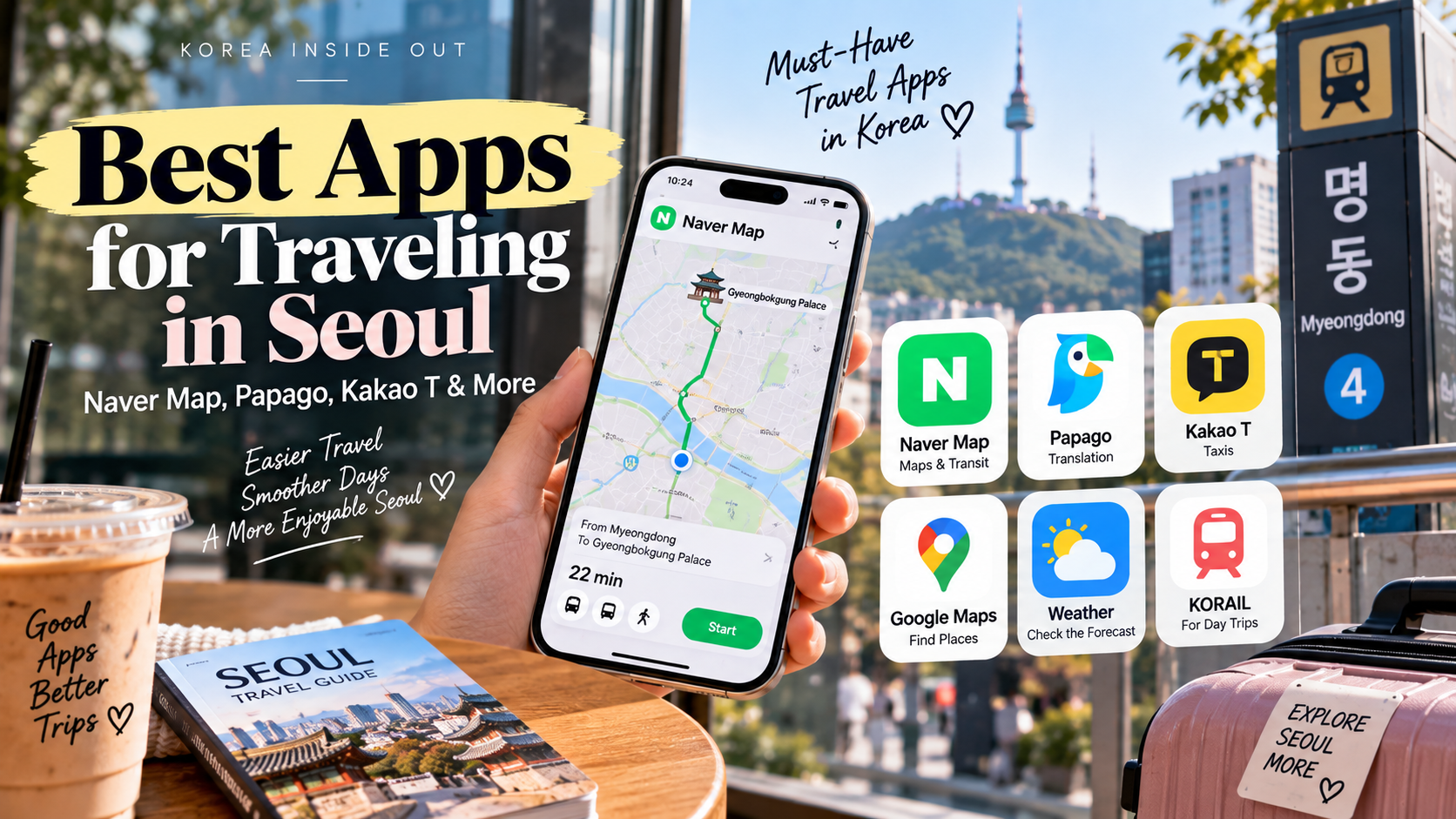
  • Best Apps for Traveling in Seoul: Naver Map, Papago, Kakao T & More

    Best Apps for Traveling in Seoul: Naver Map, Papago, Kakao T & More

    If you’re traveling to Seoul for the first time, downloading the right apps before your trip can make your days much easier.

    Seoul has an excellent public transportation system, thousands of restaurants and cafés, and plenty of English-friendly tourist areas. But there is one small problem for first-time visitors:

    The apps you normally use at home may not always be the best tools in Korea.

    The good news is that you don’t need dozens of Korean apps.

    For most travelers, these are enough:

    • NAVER Map — maps, walking directions, subway and buses
    • Papago — Korean translation
    • Kakao T or k.ride — taxis
    • Google Maps — useful for saving places and general information
    • Weather app — useful for checking Seoul’s changing weather
    • Korail / transportation apps — helpful for longer trips outside Seoul

    Here’s exactly what I would download before visiting Seoul.


    The 5 apps I would download first

    AppBest forHow important is it?
    NAVER MapMaps, walking, subway, buses⭐⭐⭐⭐⭐
    PapagoKorean translation⭐⭐⭐⭐⭐
    Kakao T / k.rideTaxis⭐⭐⭐⭐
    Google MapsFinding places and saving locations⭐⭐⭐
    Weather appWeather and rain forecasts⭐⭐⭐

    If you’re staying only in Seoul, NAVER Map + Papago + a taxi app will cover most situations.


    1. NAVER Map: The app I would download first

    If you download only one Korea-specific app before your trip, make it NAVER Map.

    NAVER Map is one of the most useful navigation tools for visitors because it is designed around locations and transportation in Korea.

    The app supports English, Japanese and Chinese as well as Korean.

    NAVER Map official site

    What can you use it for?

    NAVER Map is useful for:

    • Finding restaurants
    • Finding cafés
    • Walking directions
    • Subway routes
    • Bus routes
    • Checking travel times
    • Finding subway exits
    • Checking opening hours
    • Looking at photos and reviews
    • Finding hospitals and pharmacies
    • Checking nearby attractions

    One particularly useful feature is that NAVER Map can show transportation routes and estimated fares.

    Why is this important in Seoul?

    Seoul can look surprisingly confusing on a regular map.

    A restaurant may be only 500 meters away, but the actual walk can take much longer because of:

    • Large roads
    • Underground shopping areas
    • Subway entrances
    • Bridges
    • Buildings with multiple entrances
    • Hills
    • Complicated intersections

    NAVER Map is especially useful when you’re trying to figure out which subway exit to use.

    That can save you from walking 15 minutes in the wrong direction.

    One tip before your trip

    Don’t wait until you arrive in Seoul to download it.

    Install it at home and search for your hotel.

    Try searching:

    Hotel → Myeongdong

    or

    Hotel → Gyeongbokgung Palace

    This gives you a chance to get familiar with the interface before you’re standing on a Seoul street with your luggage.


    2. Papago: Your Korean translation backup

    Even if you speak English, Papago is worth having on your phone.

    Papago is NAVER’s translation service and supports Korean, English, Japanese, Chinese and several other languages. It also supports text, image and voice translation.

    Papago official site

    For tourists, the most useful feature may actually be image translation.

    Use Papago when you see:

    • A Korean-only menu
    • A restaurant sign
    • A subway notice
    • A product label
    • A Korean instruction
    • A parking sign
    • A receipt
    • A notice at your hotel

    Instead of typing the Korean characters manually, you can use your phone camera to translate text from an image.

    That is much faster when you’re traveling.


    A real-life example

    Imagine you walk into a small Korean restaurant.

    The menu is almost entirely in Korean.

    Instead of immediately leaving, open Papago and use the image translation function.

    You may be able to figure out:

    • What the main dishes are
    • Whether something contains meat
    • What side dishes are included
    • Whether a menu item is spicy

    It won’t replace human translation in every situation, but for everyday travel it can be extremely useful.

    Another useful tip

    Save a few basic Korean phrases in Papago before your trip:

    • “I don’t speak Korean.”
    • “Do you speak English?”
    • “One, please.”
    • “Where is the bathroom?”
    • “Please take me here.”
    • “Is this spicy?”

    You may never need them.

    But having them ready is reassuring.


    3. Kakao T or k.ride: For taxis

    Seoul’s subway is usually the easiest way to get around, but there will be times when a taxi makes more sense.

    For example:

    • You have heavy luggage
    • It’s raining
    • You’re traveling with children
    • You’re returning to your hotel late
    • You’re carrying shopping bags
    • Your destination is awkward to reach by subway

    This is where a taxi app becomes useful.

    Kakao Mobility taxi service

    What about foreign visitors?

    Kakao Mobility now offers k.ride, a mobility platform designed for global travelers.

    k.ride supports English, Japanese and Chinese, and lets visitors search for destinations in their own language. It also shows estimated fares before requesting a taxi.

    k.ride for global travelers

    For an English-speaking traveler who doesn’t already use Kakao T, k.ride may be the simpler option to look at first.


    Why use an app instead of stopping a taxi on the street?

    The biggest advantage is convenience.

    You can:

    1. Enter your destination
    2. See the estimated fare
    3. Request a taxi
    4. Check the vehicle information
    5. Follow the trip on the app

    This can be much easier when you don’t speak Korean.

    It also means you don’t have to explain your destination verbally.


    4. Google Maps: Still useful, but don’t rely on it alone

    This part has changed recently.

    For years, travelers were told that Google Maps was not useful for navigation in Korea because of restrictions on the use of high-precision map data.

    In February 2026, South Korea conditionally approved Google’s request to export high-precision map data, potentially allowing Google to expand its navigation services in Korea.

    So the old advice that “Google Maps simply doesn’t work in Korea” is becoming outdated.

    However, if you’re visiting Seoul today, I would still keep NAVER Map as your primary Korea navigation app.

    Why?

    Because NAVER Map is deeply integrated with local places, Korean businesses, transportation information and local listings.

    My recommendation

    Use the apps this way:

    Google Maps
    → Save places, check general information and keep using the interface you’re familiar with.

    NAVER Map
    → Actually navigate around Seoul.

    This gives you the best of both worlds.


    5. Your regular weather app

    This one sounds obvious, but don’t underestimate Seoul weather.

    A sunny morning can turn into a rainy afternoon.

    And during summer, Seoul can be extremely hot and humid.

    During the winter, temperatures can drop significantly.

    Before leaving your hotel each morning, check:

    • Temperature
    • Rain probability
    • Hourly forecast
    • Wind
    • Air quality

    This can completely change your plans.

    For example:

    If heavy rain is expected at 3 p.m., you may want to visit an outdoor attraction in the morning and move to cafés, shopping or museums later.


    6. Do you need a Korean subway app?

    If you’re mainly staying in Seoul, NAVER Map is usually enough.

    You don’t necessarily need a separate subway app.

    NAVER Map can help you find:

    • Subway lines
    • Transfers
    • Travel times
    • Station exits
    • Walking routes between destinations

    That makes it especially useful for first-time visitors.

    If you haven’t used the Seoul subway before, read our complete guide:

    How to Use the Seoul Subway: A First-Time Visitor’s Guide


    7. What about T-money?

    T-money isn’t really an app that you need to rely on.

    For most tourists, the important thing is having a T-money transportation card or another accepted transit payment method.

    You can use it for public transportation and, in many cases, small everyday purchases.

    If you’re arriving at Incheon Airport, it can be useful to get your transportation plan sorted out before heading into Seoul.

    Our guide explains the main options:

    How to Get From Incheon Airport to Seoul: AREX, Airport Bus, Taxi & More


    8. What apps do you NOT need?

    This may be the most useful part of the list.

    You don’t need to download every Korean app you see mentioned online.

    For a normal Seoul vacation, I wouldn’t fill my phone with dozens of unfamiliar apps.

    Start with:

    Essential

    NAVER Map

    Papago

    Kakao T or k.ride

    Useful

    Google Maps

    Weather app

    Optional

    Other transportation, shopping or reservation apps depending on your itinerary.

    That’s enough for most first-time visitors.


    My recommended Seoul app combination

    If I were packing my phone for a first trip to Seoul, this is the setup I’d use.

    For getting around

    NAVER Map

    Use it for subway, buses, walking and finding places.

    For language

    Papago

    Use it for menus, signs, conversations and Korean text.

    For taxis

    k.ride or Kakao T

    Use it when public transportation isn’t convenient.

    For saved places

    Google Maps

    Keep using it if you’re already comfortable with it.

    For weather

    Your preferred weather app

    Check it every morning.


    A simple example: One day in Seoul

    Let’s say you’re staying in Myeongdong.

    You want to:

    Myeongdong → Gyeongbokgung → Bukchon → Hongdae → Hotel

    Here’s how I would use the apps.

    Morning

    Open NAVER Map.

    Search for Gyeongbokgung Palace and follow the subway route.

    At the palace

    Use your normal camera or Google Maps to save photos and locations.

    Lunch

    Find a nearby restaurant on NAVER Map.

    If the menu is mostly Korean, open Papago.

    Afternoon

    Search for Bukchon on NAVER Map and use walking directions.

    Evening

    Head toward Hongdae using NAVER Map.

    Late evening

    If you’re tired or carrying shopping bags, open k.ride and request a taxi.

    That’s basically it.

    You don’t need ten different apps.


    One important tip: Download and test everything before you leave

    This is something many first-time visitors forget.

    Don’t download an app at Incheon Airport and try to figure it out while exhausted after a long flight.

    Do it at home.

    Before your trip:

    • Download NAVER Map
    • Download Papago
    • Set the language to English
    • Download or set up your preferred taxi app
    • Search for your hotel
    • Search for your first destination
    • Check that your phone can access mobile data
    • Save your hotel address somewhere easy to find

    You don’t need to become an expert.

    You just want to know where to tap when you’re tired.


    What if your phone has no internet?

    This is another reason I recommend keeping important information somewhere other than one app.

    Before leaving for the airport, save:

    • Hotel name
    • Hotel address
    • Hotel phone number
    • Flight information
    • Passport information
    • Emergency numbers
    • Important reservation details

    A screenshot can be surprisingly useful.

    If your mobile data stops working, you don’t want your entire trip to depend on opening one app.


    Don’t forget about emergency information

    Hopefully you won’t need it, but it’s worth knowing.

    In Korea:

    112 — Police

    119 — Fire and ambulance

    For general tourist assistance and interpretation, the 1330 Korea Travel Helpline can also be useful.

    For more information about staying safe in Seoul, see:

    Is Seoul Safe for Tourists? What First-Time Visitors Should Know


    My bottom line: You only need a few apps

    If you’re overwhelmed by all the Korea travel apps recommended online, don’t be.

    For a first trip to Seoul, I would keep it simple:

    NAVER Map + Papago + k.ride/Kakao T

    Those three cover most of the situations where a foreign visitor is likely to need help.

    Then keep Google Maps if you already use it for saving places, and use your normal weather app for daily planning.

    The goal isn’t to turn your phone into a Korean smartphone.

    The goal is simply to make Seoul easier to navigate.

    And once you’ve used these apps for a day or two, you’ll probably stop thinking about them altogether.


    Final Seoul App Checklist

    Before flying to Korea, make sure you have:

    ☐ NAVER Map
    ☐ Papago
    ☐ k.ride or Kakao T
    ☐ Google Maps
    ☐ Weather app
    ☐ Your hotel address saved offline
    ☐ Important reservations saved
    ☐ Emergency numbers saved

    That’s all you really need.

    What travel app do you usually rely on when visiting a new country? And if you’ve already been to Korea, is there an app you couldn’t live without? Let me know in the comments!

  • Everland vs Lotte World: Which Korean Theme Park Is Better?

    Everland vs Lotte World: Which Korean Theme Park Is Better?

    If you’re planning a trip to South Korea, you may find yourself choosing between two of the country’s biggest theme parks:

    Everland or Lotte World?

    Both are popular. Both have major rides, family attractions, food, shows and plenty of photo opportunities.

    But they offer very different experiences.

    Everland is a huge outdoor theme park in Yongin, known for its gardens, animals, safari experiences and major outdoor attractions.

    Lotte World is located in Seoul and combines a large indoor theme park with an outdoor area called Magic Island.

    So which one should you visit?

    The answer depends on where you’re staying, who you’re traveling with, what you want to do, and how much time you have.

    Here’s our honest comparison for first-time visitors to Korea.


    Everland vs Lotte World: Quick Answer

    If you don’t have time to read the whole article, here’s our short version:

    Choose Lotte World if:

    • You’re staying in Seoul
    • You have only 3–5 days in Korea
    • You want easy subway access
    • You’re traveling on a rainy day
    • You have young children
    • You want an indoor + outdoor theme park
    • You don’t want to spend much time traveling

    Choose Everland if:

    • You love outdoor theme parks
    • You want animal experiences
    • You want Safari World or Lost Valley
    • You enjoy gardens and seasonal scenery
    • You want T Express
    • You have a full day available
    • You’re happy to travel outside Seoul

    If you can visit only one:

    For most first-time visitors staying in Seoul, we’d choose Lotte World.

    For theme-park enthusiasts, animal lovers and visitors with a full free day, we’d choose Everland.


    Everland vs Lotte World at a Glance

    EverlandLotte World
    LocationYonginSeoul
    SettingMostly outdoorIndoor + outdoor
    Best forFull-day theme-park tripEasy Seoul day trip
    Animals⭐⭐⭐⭐⭐⭐⭐
    Gardens⭐⭐⭐⭐⭐⭐⭐
    Thrill rides⭐⭐⭐⭐⭐⭐⭐⭐
    Young children⭐⭐⭐⭐⭐⭐⭐⭐⭐
    Rainy day⭐⭐⭐⭐⭐⭐⭐
    Public transportation⭐⭐⭐⭐⭐⭐⭐⭐
    Indoor attractions⭐⭐⭐⭐⭐⭐⭐
    Night atmosphere⭐⭐⭐⭐⭐⭐⭐⭐⭐⭐
    Seoul itinerary⭐⭐⭐⭐⭐⭐⭐⭐
    Full-day experience⭐⭐⭐⭐⭐⭐⭐⭐⭐

    1. Location: Lotte World Wins

    This is probably the biggest difference between the two parks.

    Lotte World

    Lotte World is in Jamsil, Seoul.

    It’s part of the huge Jamsil area, which means you can easily combine a visit with other Seoul attractions, restaurants and shopping.

    For an international visitor staying in Seoul, this is a major advantage.

    You don’t need to dedicate an entire day just to getting to and from the theme park.

    Lotte World is also directly connected to the Jamsil transportation network.


    Everland

    Everland is located in Yongin, outside central Seoul.

    It’s absolutely possible to visit from Seoul, but you need to allow additional travel time.

    That isn’t necessarily a bad thing.

    Everland feels more like a destination theme park, where you spend the whole day there rather than simply adding a few hours to a Seoul sightseeing itinerary.

    Winner: Lotte World

    If you’re staying in Seoul and want convenience, Lotte World is the clear winner.


    2. Size and Atmosphere: Everland Wins

    Everland feels much more like a traditional large-scale outdoor theme park.

    It has:

    • Large outdoor spaces
    • Gardens
    • Themed areas
    • Animal attractions
    • Roller coasters
    • Outdoor rides
    • Seasonal flowers and decorations

    The park’s scale means you can easily spend a full day exploring.

    Lotte World is also large, but its experience is more concentrated.

    The indoor Adventure area feels like a giant enclosed entertainment complex, while Magic Island provides the outdoor experience.

    Winner: Everland

    If you want the feeling of spending a full day in a huge theme park, Everland has the edge.


    3. Indoor vs Outdoor: Lotte World Wins

    This is where Lotte World has a huge advantage.

    Lotte World Adventure is mostly indoors, while Magic Island is outside.

    That makes Lotte World particularly useful when Seoul’s weather isn’t cooperating.

    Rain?

    You can still enjoy much of the park.

    Hot summer day?

    You can spend plenty of time indoors.

    Cold winter?

    Again, the indoor Adventure area is a major advantage.

    Lotte World’s official information describes Adventure, Magic Island, Underland and Kidizone as distinct areas, giving visitors a mix of indoor and outdoor attractions.

    Of course, Magic Island is still affected by weather, so outdoor attractions may not operate in poor conditions.

    Winner: Lotte World

    If weather is a concern, choose Lotte World.


    4. Rides: It’s a Tie

    This one is harder.

    Both parks have serious thrill rides.

    Everland

    Everland’s signature attraction is T Express, one of the rides that attracts thrill-seekers to the park.

    There are also other major attractions, including:

    • Thunder Falls
    • Hurricane
    • Double Rock Spin
    • Amazon Express
    • Other seasonal and family attractions

    Everland currently offers Plan-it products that allow visitors to reserve selected attractions in advance, with different products covering groups of attractions.


    Lotte World

    Lotte World has its own collection of thrill rides, particularly around Magic Island.

    These include:

    • Atlantis
    • Gyro Drop
    • Gyro Swing
    • Comet Express

    Lotte World’s official attraction guide currently lists these attractions in Magic Island, along with various height requirements.

    Which has better rides?

    For outdoor roller-coaster fans, we’d give Everland a slight edge.

    For variety and convenience, Lotte World is extremely competitive.

    Winner: Everland — by a small margin

    But if rides aren’t your main reason for visiting, this probably shouldn’t determine your choice.


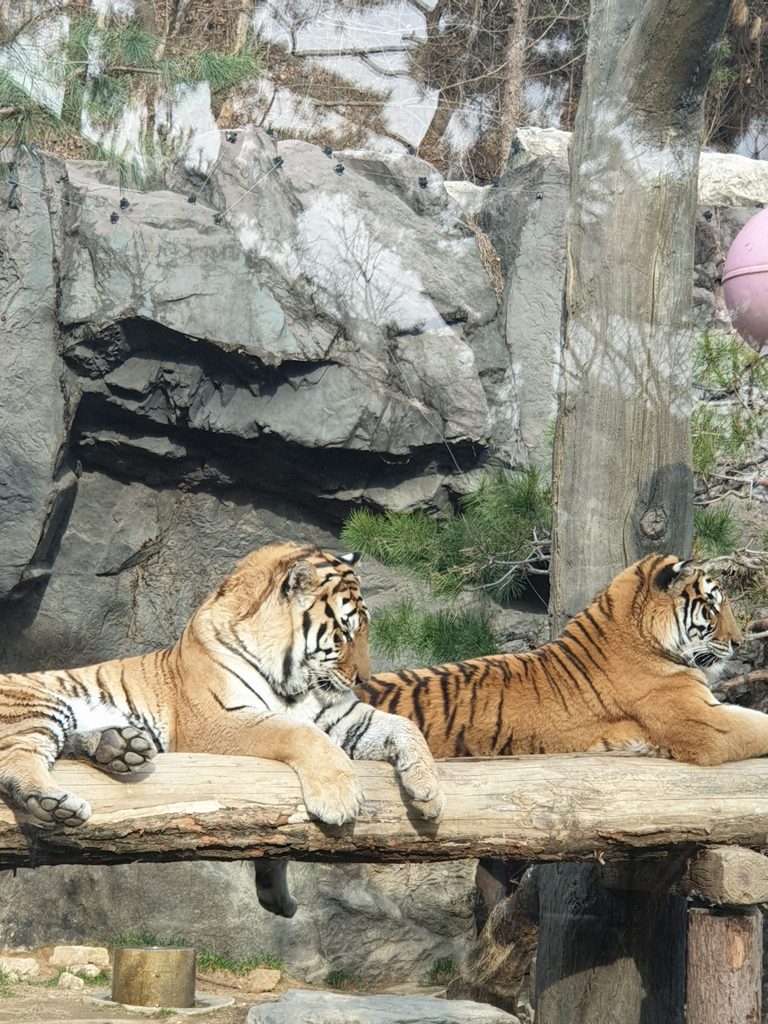
    5. Animals: Everland Wins Easily

    This isn’t really a fair fight.

    If you want to see animals, Everland is the obvious choice.

    Its Zootopia area includes attractions such as:

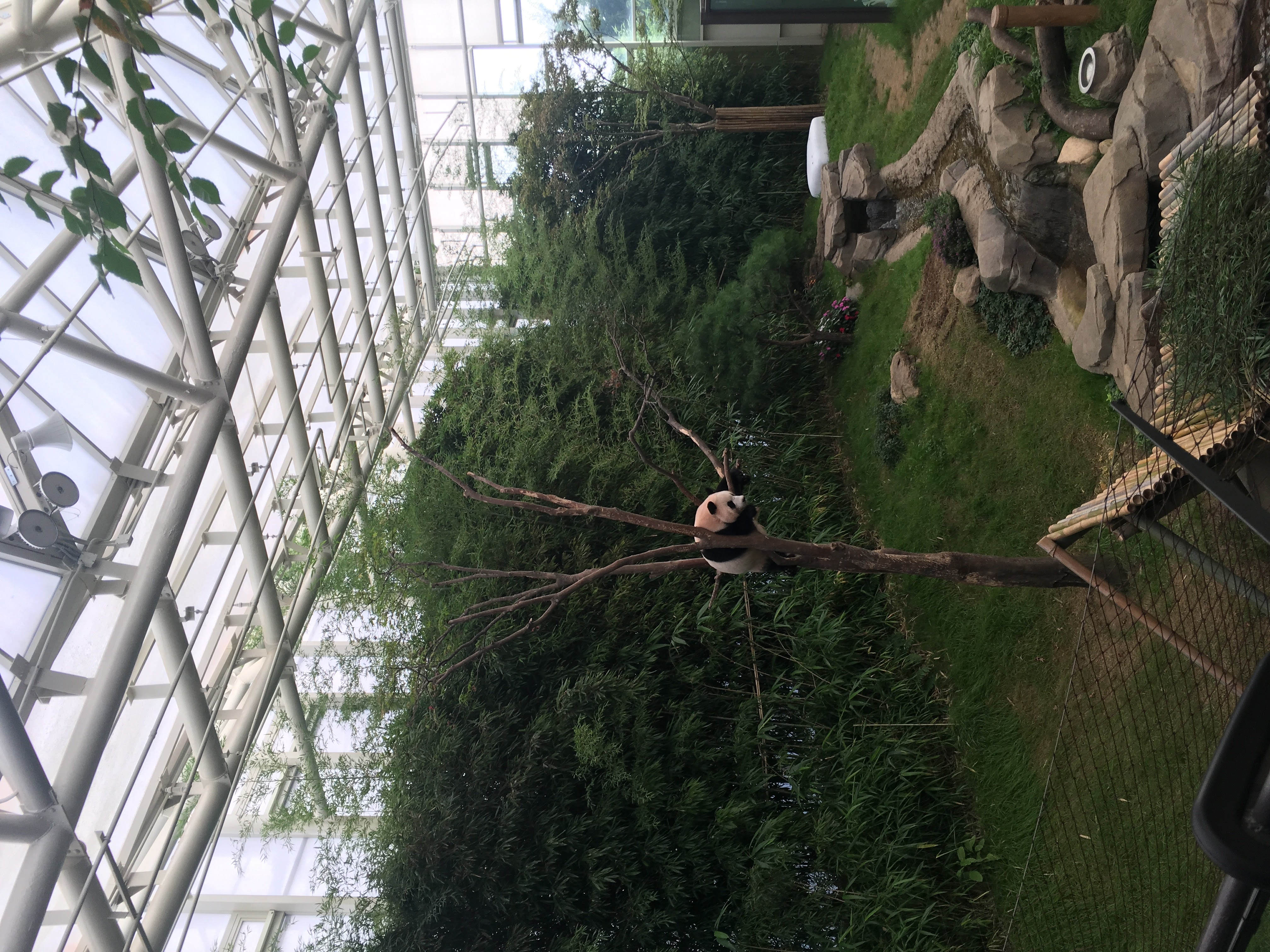
    • Safari World
    • Lost Valley
    • Panda World

    For many international visitors, these animal experiences are one of the biggest reasons to choose Everland.

    The current Everland reservation information also shows that animal experiences can have specific reservation and operating arrangements, so check the app before your visit.

    Winner: Everland

    If pandas, safari animals or animal experiences are high on your list, choose Everland.


    6. Families with Young Children: Lotte World Wins

    This is a little more complicated.

    Both parks are good for families.

    But Lotte World has an important advantage:

    You don’t have to worry as much about the weather.

    The indoor Adventure area has children’s attractions, restaurants, rest areas and entertainment all within a relatively compact environment.

    Lotte World also has a dedicated Kidizone for younger children. Its official attraction information includes family rides and children’s facilities with specific height requirements.

    Everland is also excellent for families, especially if your children love:

    • Animals
    • Gardens
    • Outdoor spaces
    • Safari experiences

    So this really depends on your child’s interests.

    Choose Lotte World if:

    Your child gets tired easily, you’re visiting in bad weather, or you want convenience.

    Choose Everland if:

    Your child loves animals and outdoor experiences.

    Winner: Lotte World — slightly


    7. Best for Teenagers: Everland

    If you’re traveling with teenagers who want thrill rides, Everland may have the advantage.

    The park has a more expansive outdoor environment and a stronger “destination theme park” feeling.

    T Express alone can be a major attraction for thrill-seeking teenagers.

    But Lotte World has plenty to offer teenagers too, particularly around Magic Island.

    Winner: Everland

    Especially for thrill-seeking groups.


    8. Best for a Rainy Day: Lotte World by Far

    This is probably the easiest category to decide.

    Lotte World.

    If the weather forecast says rain, Lotte World becomes much more attractive.

    You can spend most of the day in the indoor Adventure area and only venture outside when the weather improves.

    Everland is much more dependent on outdoor conditions.

    Some attractions can also be affected by weather or operational conditions.

    Winner: Lotte World

    If your Seoul trip happens to have a rainy day, this is one of the best times to choose Lotte World.


    9. Best Gardens and Seasonal Scenery: Everland

    Everland isn’t just an amusement park.

    Its gardens and seasonal landscaping are a major part of the experience.

    Depending on the season, you can see:

    • Spring flowers
    • Rose gardens
    • Summer greenery
    • Autumn colors
    • Winter decorations

    This makes Everland particularly attractive for visitors who don’t want to spend the entire day on rides.

    You can ride a few attractions, explore the gardens, take photos, eat and simply enjoy the atmosphere.

    Winner: Everland

    If photography and seasonal scenery matter to you, Everland is the better choice.


    10. Best Night Experience: Both

    This is another difficult one.

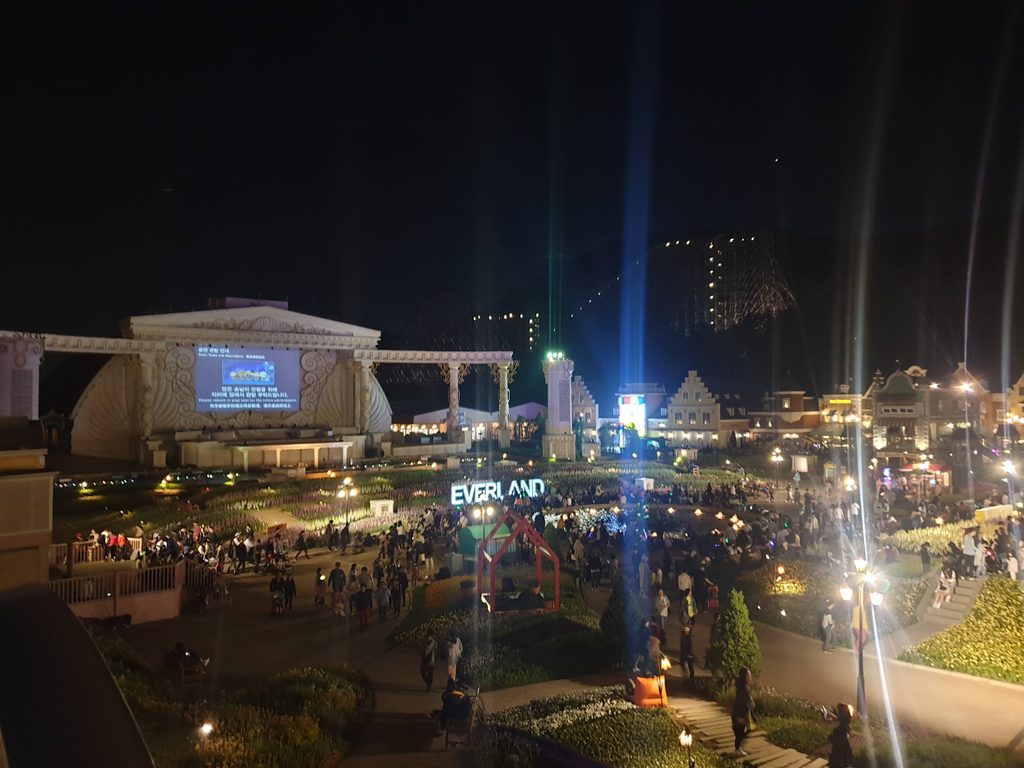
    Everland has a beautiful nighttime atmosphere, especially when the park’s lights and seasonal decorations come on.

    Lotte World is also impressive after dark.

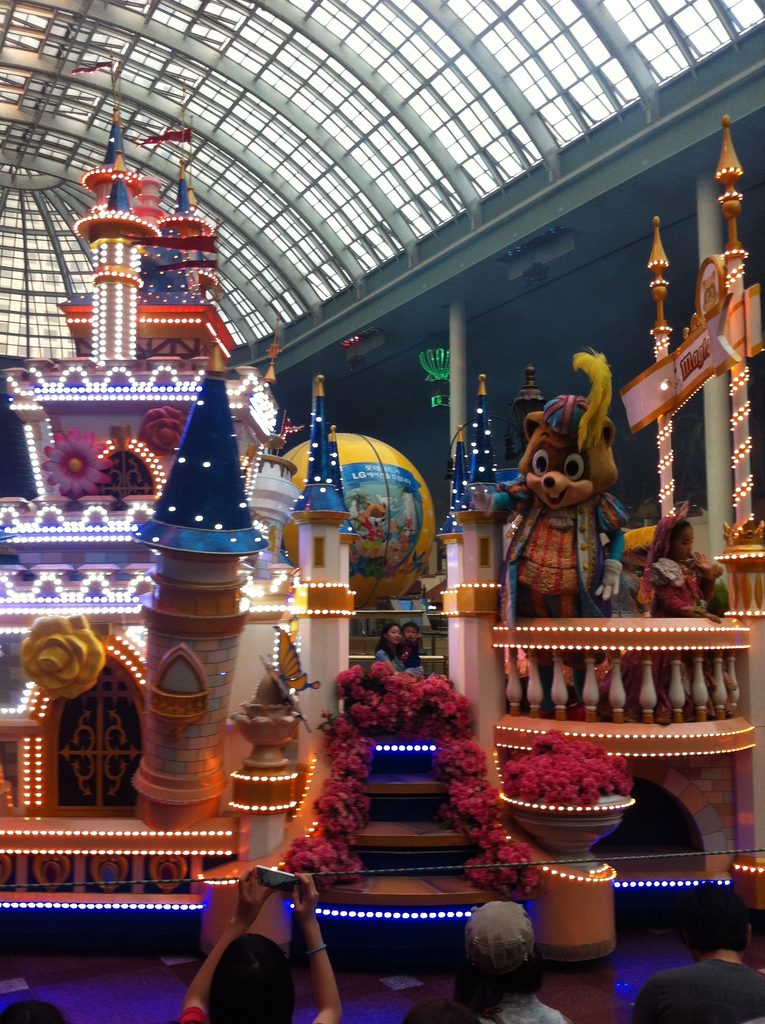
    Magic Castle becomes particularly photogenic at night, and the indoor Adventure area takes on a completely different atmosphere once the lights come on.

    Winner: Tie

    If you love photography, stay until evening at either park.


    11. Which One Is Better for a Short Seoul Trip?

    Let’s say you have only three days in Seoul.

    Do you really want to spend several hours traveling to and from a theme park?

    Probably not.

    That’s where Lotte World wins.

    You can spend most of the day at the park and still have the convenience of being in Seoul.

    For a longer trip, however, Everland becomes more attractive because you can dedicate an entire day to it.

    Winner for 3–5 day Seoul trips: Lotte World

    Winner for longer Korea trips: Everland


    12. Which One Is Better for a Full-Day Trip?

    If you have one completely free day and want a destination rather than simply another Seoul attraction:

    Everland.

    The park’s size, outdoor environment, animals, gardens and rides make it easy to spend the entire day there.

    Lotte World can also fill a day, but its location means it works particularly well as part of a broader Seoul itinerary.

    Winner: Everland


    13. Which One Is Better for International Visitors?

    This depends on what you mean by “better.”

    For convenience:

    Lotte World

    For a uniquely Korean theme-park experience:

    Everland

    For animals:

    Everland

    For easy transportation:

    Lotte World

    For rainy weather:

    Lotte World

    For gardens:

    Everland

    For first-time Seoul visitors:

    Lotte World

    For theme-park enthusiasts:

    Everland


    14. What About the Queues?

    This is where planning matters more than choosing the park.

    Both parks can get extremely busy.

    Don’t expect to walk into either park on a Saturday and ride everything without waiting.

    Both parks have systems designed to help visitors manage queues.

    Everland

    Everland offers Plan-it, a paid reservation product for selected attractions. Current products include Plan-it 3 and Plan-it 5, with specific attraction groups and reservation conditions.

    Lotte World

    Lotte World offers Magic Pass, which provides access to designated attractions through a reservation system. The official system is operated through the Lotte World app, and quantities are limited.

    Our advice

    Don’t automatically buy a paid queue-skipping product.

    First ask:

    “What do I actually want to ride?”

    If there are only two or three attractions you care about, you may be perfectly happy without one.

    If you want to maximize rides on a busy weekend, paying for some queue-saving options can make more sense.


    15. Which One Should You Choose?

    Here’s our simplest decision tree.

    Are you staying in Seoul?

    Yes → Lotte World

    No / flexible → Everland becomes more attractive


    Is it raining?

    Yes → Lotte World

    No → Either


    Do you love animals?

    Yes → Everland

    No → Either


    Are you traveling with young children?

    Yes → Lotte World for convenience

    Animal-loving children → Everland


    Are you a thrill seeker?

    Yes → Everland

    But Lotte World still has plenty of major rides


    Do you love gardens and photography?

    Yes → Everland


    Do you have only one free day?

    Lotte World if you’re based in Seoul

    Everland if you’re happy to make it a dedicated day trip


    Everland vs Lotte World: Our Verdict

    There’s no universal winner.

    The better theme park depends on your trip.

    🏆 Best for Seoul convenience:

    Lotte World

    🏆 Best for animals:

    Everland

    🏆 Best for rainy weather:

    Lotte World

    🏆 Best for gardens:

    Everland

    🏆 Best for young families:

    Lotte World

    🏆 Best for thrill seekers:

    Everland

    🏆 Best for a full-day destination:

    Everland

    🏆 Best for a short Seoul trip:

    Lotte World


    Our Recommendation for First-Time Visitors

    If you’re visiting South Korea for the first time and staying in Seoul for only a few days, we’d choose:

    Lotte World

    It’s simply easier.

    You can reach it by subway, spend a full day there, enjoy both indoor and outdoor attractions, and return to your hotel without losing a huge amount of time to transportation.

    But if you have more time — or if you specifically want animals, gardens, outdoor rides and T Express — make the trip to Everland.

    And if you absolutely love theme parks?

    Visit both.

    They’re different enough that visiting one doesn’t make the other redundant.


    Can You Visit Both Everland and Lotte World?

    Absolutely.

    If you’re spending a week or more in Korea, you could easily dedicate:

    Day 1: Lotte World
    Day 2: Everland

    They offer sufficiently different experiences to justify both.

    You could even use the weather forecast to decide which day to visit each park.

    Sunny day → Everland

    Rainy day → Lotte World

    That’s a very practical way to plan.


    Final Tip

    Don’t choose a theme park simply because someone says it’s “the best.”

    Choose the one that fits your Korea trip.

    If you’re staying in Seoul for a short time, Lotte World’s location is hard to beat.

    If you want a big outdoor adventure with animals, gardens and thrill rides, Everland is worth the journey.

    And if you have enough time?

    Do both.

    Because the real answer to Everland vs Lotte World is:

    They’re not really competing for the same experience.

    They’re two very different ways to spend a day in Korea.


    Everland vs Lotte World: Quick Decision Guide

    If you care most about…Choose
    Easy access from Seoul🎠 Lotte World
    Rainy-day activities🎠 Lotte World
    Young children🎠 Lotte World
    Indoor attractions🎠 Lotte World
    Animals🎢 Everland
    Safari experiences🎢 Everland
    Gardens🎢 Everland
    T Express🎢 Everland
    Outdoor theme-park atmosphere🎢 Everland
    Full-day destination🎢 Everland
    Short Seoul itinerary🎠 Lotte World
    Visiting both🇰🇷 Why choose?

    Operating hours, attraction availability, queue systems, ticket products and weather-related operations can change. Check the official Everland and Lotte World websites or apps shortly before your visit.

  • Is Seoul Safe for Tourists? What First-Time Visitors Should Know

    Is Seoul Safe for Tourists? What First-Time Visitors Should Know

    If you’re planning your first trip to Seoul, you may have an important question before you book your flight:

    Is Seoul safe for tourists?

    The short answer is yes, Seoul is generally considered a safe city for visitors, including people traveling alone.

    But “safe” doesn’t mean you should switch off your common sense.

    Like any major city, Seoul has crowded areas, busy roads, nightlife districts, occasional scams, and situations where travelers should pay attention to their surroundings.

    The good news is that most visitors won’t experience serious problems.

    For a first trip, you mainly need to understand what to watch out for, what is actually worth worrying about, and what to do if something goes wrong.

    Here’s what you should know before visiting Seoul.


    Is Seoul Safe for Tourists?

    For most visitors, yes.

    The official Seoul tourism guide describes Seoul as a safe destination for both group and solo travelers and recommends the usual precautions, such as avoiding isolated or poorly lit areas and staying aware of your surroundings.

    Seoul is also a city where many people regularly use public transportation late into the evening, and major neighborhoods remain active well after dark.

    That doesn’t mean every street is equally comfortable at every hour.

    The same basic rule applies here as anywhere else:

    Busy and well-lit areas are generally a better choice than isolated streets late at night.

    If you’re visiting Seoul for the first time, you don’t need to be constantly worried about safety.

    You just need to travel intelligently.


    Is Seoul Safe at Night?

    This is one of the most common questions first-time visitors ask.

    In general, many parts of Seoul remain active late into the evening.

    Neighborhoods such as Myeongdong, Hongdae, Gangnam, Itaewon, and Jongno can stay busy well after dinner.

    You may see people walking around, using public transportation, shopping, eating, and meeting friends late at night.

    That can feel very different from cities where streets become quiet soon after sunset.

    But don’t confuse “busy” with “risk-free.”

    If you’re walking alone late at night:

    • Stay on well-lit streets
    • Avoid isolated alleys
    • Keep your phone and wallet secure
    • Don’t walk while completely distracted by your phone
    • Use a taxi if you feel uncomfortable
    • Avoid getting heavily intoxicated
    • Pay attention to traffic

    You don’t need to avoid Seoul at night.

    Just use the same judgment you would use in any large city.


    Is Seoul Safe for Solo Travelers?

    Generally, yes.

    Seoul is particularly convenient for solo travelers because public transportation is extensive and many neighborhoods remain active throughout the day and evening.

    Eating alone is also relatively common, although some restaurants—especially certain Korean BBQ restaurants—may be more comfortable for groups.

    If you’re traveling alone

    I’d recommend:

    During the day

    Explore freely, use public transportation, and walk around neighborhoods.

    At night

    Stay in active areas and use transportation rather than walking through unfamiliar isolated streets for long distances.

    When drinking

    Keep your alcohol consumption moderate and make sure you know how you’ll get back to your accommodation.

    When meeting strangers

    Use the same caution you would anywhere else.

    Being in Seoul doesn’t mean you need to be suspicious of everyone.

    It simply means you should maintain normal travel awareness.


    Is Seoul Safe for Women Traveling Alone?

    For many solo female travelers, Seoul can be a comfortable destination.

    The official Seoul tourism guide specifically notes that many parts of the city can be freely explored day and night with basic precautions, including by women traveling alone.

    But no city should be treated as completely risk-free.

    If you’re traveling alone, simple habits can make your trip more comfortable:

    • Keep your accommodation address saved
    • Share your itinerary with someone you trust
    • Avoid isolated areas late at night
    • Keep your phone charged
    • Have a backup payment method
    • Know how to call a taxi
    • Keep your passport secure
    • Don’t accept drinks from strangers
    • If a situation feels uncomfortable, leave

    The most important point is this:

    You don’t need to be frightened, but you should trust your instincts.

    If somewhere feels wrong, you don’t need to stay just because you planned to visit it.


    What About Pickpocketing?

    Seoul is not a city where most tourists spend their entire trip worrying about pickpockets.

    But crowded places are still crowded places.

    Use extra awareness in:

    • Subway stations
    • Packed subway trains
    • Major shopping streets
    • Festivals
    • Markets
    • Tourist attractions
    • Crowded nightlife areas

    Keep your phone and wallet somewhere secure.

    A crossbody bag worn toward the front can be useful in crowded areas.

    And don’t leave your phone or wallet sitting openly on a café table while you walk away.

    A good travel habit

    Think:

    Secure, not paranoid.

    You don’t need to hold your bag with both hands all day.

    Just don’t make it unnecessarily easy for someone to take something.


    Is the Seoul Subway Safe?

    For ordinary travel, the subway is generally a straightforward way to get around Seoul.

    But crowded trains require the same awareness as public transportation anywhere.

    Keep your belongings close.

    Don’t leave your phone unattended.

    Be careful when entering and leaving trains.

    And stand behind the platform safety line while waiting.

    One important safety issue: escalators and stairs

    Seoul’s subway stations can be large.

    You’ll encounter:

    • Long escalators
    • Stairs
    • Busy passageways
    • Crowded platforms
    • Multiple exits

    If you’re carrying large luggage, don’t rush.

    Let people pass when necessary and pay attention to where you’re walking.

    If you haven’t used the subway in Korea before, our beginner’s guide explains how the system works:

    How to Use the Seoul Subway: A First-Time Visitor’s Guide

    How to Use the Seoul Subway: A First-Time Visitor’s Guide


    Be Careful Around Seoul Traffic

    This is something I would actually put higher on a first-time visitor’s safety checklist than many people expect.

    Seoul is a pedestrian-friendly city in many areas, but it is also a huge, busy metropolis.

    Cars, buses, motorcycles, bicycles, and electric mobility devices share the roads.

    Don’t assume a pedestrian crossing means you can stop paying attention.

    Especially watch for:

    • Turning vehicles
    • Buses
    • Motorcycles
    • Bicycles
    • Electric scooters
    • Cars entering or leaving side streets

    Look both ways even when you have the right of way.

    And don’t walk into the road while staring at your phone.

    This sounds obvious.

    But when you’re navigating an unfamiliar city, it’s surprisingly easy to do.


    Is Seoul Safe for Nightlife?

    Seoul has a huge nightlife scene.

    Hongdae, Itaewon, Gangnam, Euljiro, and other areas can be extremely lively at night.

    If nightlife is part of your trip, there is no reason to avoid it simply because you’re visiting Korea.

    But nightlife creates a different set of risks.

    Keep these habits in mind:

    Watch your drink.

    Don’t leave it unattended.

    Know how you’re getting home.

    Don’t wait until you’re exhausted to figure out transportation.

    Don’t drink beyond your limits.

    Being unfamiliar with the city makes getting lost or separated from your group more difficult.

    Stay with your friends.

    If you’re traveling as a group, decide what you’ll do if someone gets separated.

    And if you’re traveling alone, make sure someone knows where you’re going.


    Are There Scams in Seoul?

    Most visitors won’t encounter serious scams.

    But tourists can occasionally be targeted by overcharging or questionable sales practices, particularly in busy tourist areas.

    The official Seoul tourism guide recommends checking prices before ordering at restaurants and street-food stalls, particularly when prices aren’t clearly displayed.

    A simple rule

    If the price isn’t clear, ask before ordering.

    This is especially useful at:

    • Street food stalls
    • Small shops
    • Markets
    • Tourist-oriented businesses
    • Services where the final price isn’t obvious

    Don’t feel embarrassed about asking.

    You can simply say:

    “How much is this?”

    Or:

    얼마예요?

    Eolmayeyo?

    Knowing the price beforehand prevents an awkward conversation later.


    What About Taxis?

    Taxis are a convenient way to get around Seoul, particularly at night or when you’re carrying luggage.

    But as a tourist, you should still use common sense.

    Use official taxi services or a reputable taxi-hailing app.

    Don’t accept unsolicited offers from strangers approaching you and offering a ride.

    If you’re unsure, go to the designated taxi area or use an app.

    The official Seoul tourism guide also advises visitors to check that the meter is being used for regular taxis.

    Before getting in

    Check:

    • Vehicle identification
    • Destination
    • Meter
    • Approximate route

    And if you’re using an app, confirm that the vehicle information matches what appears on your phone.


    What If You Lose Your Phone or Wallet?

    This is one of the situations worth planning for before your trip.

    You don’t want to figure everything out after losing your phone.

    Before leaving home

    Save:

    • Your hotel address
    • Your passport information
    • Emergency contacts
    • Your credit card company’s phone number
    • Your travel insurance information
    • A backup payment method

    Keep a copy of your important documents somewhere separate from the originals.

    If you lose your phone

    If you can, use another device to:

    • Lock the phone
    • Track the phone
    • Contact your mobile provider
    • Secure important accounts

    If you lose your wallet

    Contact your card issuer as soon as possible.

    If you think the wallet was stolen, report it to the police.

    For lost property in Korea, the official Lost112 system can also be useful.


    What If You Lose Your Passport?

    If your passport disappears during your trip, don’t panic.

    First, retrace your steps and check with the places you visited.

    If you believe it was stolen, report it to the police.

    Then contact your country’s embassy or consulate in Korea.

    They can explain the process for replacing your travel document or obtaining emergency travel documentation.

    One important tip

    Don’t keep your passport in an easily accessible outside pocket of your backpack while sightseeing.

    Keep it secure.

    And carry a copy or digital backup of the identification page separately.


    What Should You Do in a Medical Emergency?

    If you have a serious medical emergency in Korea, call:

    119

    This is the emergency number for fire and ambulance services.

    The Seoul tourism guide states that English-language assistance is available through the emergency system, and the official VisitKorea guidance also advises non-Korean speakers to say “English please” or “Interpreter please” when connected.

    For a police emergency:

    112

    For tourist information and interpretation assistance:

    1330

    The 1330 Korea Travel Helpline provides tourist information, interpretation, and assistance with tourism-related problems.

    Save these numbers now

    112 — Police

    119 — Fire / Ambulance

    1330 — Korea Travel Helpline

    You may never need them.

    But knowing where they are before an emergency happens is much better than searching for them during one.


    What If There Is a Natural Disaster?

    Korea can experience heavy rain, typhoons, heat waves, earthquakes, and other weather-related or natural events.

    You don’t need to spend your vacation worrying about disasters.

    But it is worth knowing how emergency information works.

    The Korean government provides multilingual emergency information for international visitors, including the Emergency Ready app and the Baro Emergency Reporting App. The government recommends these resources for foreign visitors who may need emergency information or reporting assistance.

    During severe weather

    Check official alerts.

    Follow instructions from local authorities.

    Avoid flooded roads.

    Don’t enter restricted areas.

    And if you’re told to move somewhere safer, do it promptly.


    What About Earthquakes?

    Korea isn’t generally associated with major earthquakes in the way some neighboring countries are.

    But earthquakes can occur.

    If you feel significant shaking:

    • Stay calm
    • Move away from windows
    • Protect your head
    • Follow local instructions
    • Don’t rush into elevators

    If you’re staying in a hotel, familiarize yourself with the emergency exits when you arrive.

    You probably won’t need this information.

    But knowing where the exits are takes less than a minute.


    What About Drinking Tap Water?

    For travelers, bottled water is an easy option if you’re uncomfortable drinking tap water.

    You can also use filtered water where available.

    The bigger issue is usually not safety but personal preference.

    Korean restaurants commonly provide drinking water, and convenience stores are everywhere if you’d rather buy bottled water.


    What About Food Safety?

    For most travelers, eating in Seoul is straightforward.

    Use normal precautions:

    • Choose busy restaurants when possible
    • Check food before eating
    • Be careful with foods that have been sitting unrefrigerated for long periods
    • Wash your hands
    • Stay hydrated
    • Don’t suddenly eat enormous amounts of unfamiliar spicy food

    And if you have food allergies, don’t assume that a dish is safe simply because the ingredient isn’t obvious.

    Korean cooking can use ingredients such as seafood, fish sauce, shrimp, or broth that may not be immediately visible.


    What About Drinking and Getting Lost?

    This deserves its own section because it’s one of the easiest ways to turn a safe trip into an unnecessarily difficult night.

    Seoul’s nightlife can be very social.

    If you drink, know how you’re getting back to your hotel before you become too tired or intoxicated to think clearly.

    Before going out

    Save:

    • Hotel name
    • Hotel address
    • Hotel phone number
    • Map location

    And if you’re with friends, make sure everyone knows the meeting point.

    If you’re alone, consider sharing your location or plans with someone you trust.


    Are Tourist Areas Safe?

    Generally, busy tourist areas are exactly where many visitors feel most comfortable.

    Places such as Myeongdong, Hongdae, Insadong, and major shopping and sightseeing districts are accustomed to international visitors.

    But popularity doesn’t eliminate the need for awareness.

    Crowded places can increase the chance of:

    • Lost belongings
    • Accidental separation from friends
    • Pickpocketing
    • Getting on the wrong train
    • Getting distracted

    The official Seoul tourism guide notes that tourist police services are available in major tourist areas and that visitors can seek assistance when needed.


    What About Political Protests or Large Crowds?

    Seoul occasionally hosts demonstrations, rallies, festivals, concerts, and large public events.

    If you encounter a large crowd or demonstration:

    Don’t assume something dangerous is happening.

    But don’t push your way into the middle of an unfamiliar crowd either.

    Instead:

    • Check local news or official notices
    • Follow police instructions
    • Take another route if necessary
    • Allow extra time for transportation
    • Avoid confrontations

    Large events can also cause subway stations to close temporarily or buses to change routes.

    If you’re visiting a major event area, check current transportation information before leaving your hotel.


    A Simple Seoul Safety Checklist

    Before leaving your hotel each morning:

    ☐ Phone charged

    ☐ Hotel address saved

    ☐ Some backup payment available

    ☐ Passport secured

    ☐ Important documents backed up

    ☐ Weather checked

    ☐ Transportation route checked

    ☐ Emergency numbers saved

    At night:

    ☐ Stay aware of your surroundings

    ☐ Avoid isolated areas

    ☐ Keep valuables secure

    ☐ Know how you’re getting back

    ☐ Don’t drink beyond your limits

    ☐ Trust your instincts

    That’s really all most visitors need.


    What I Would Actually Worry About in Seoul

    If you’re coming from a country where you’ve heard that Seoul is exceptionally safe, you may wonder:

    “So what should I actually be careful about?”

    My answer would be:

    1. Traffic

    Look before crossing.

    2. Crowds

    Keep your belongings secure.

    3. Nightlife

    Don’t get so drunk that you can’t navigate safely.

    4. Weather

    Check forecasts during periods of extreme heat, heavy rain, or typhoons.

    5. Getting lost

    Keep your hotel location and a reliable map available.

    6. Unclear prices

    Ask before ordering when a price isn’t obvious.

    That’s a much more realistic safety checklist than spending your entire trip worrying about serious crime.


    Is Seoul Safe for First-Time Visitors?

    Yes.

    For most travelers, Seoul is a city where you can comfortably explore neighborhoods, use public transportation, eat out, shop, and stay out into the evening while using ordinary precautions.

    The important thing is not to confuse “safe” with “nothing can ever happen.”

    Things can go wrong anywhere.

    Your phone can disappear.

    You can get lost.

    You can get sick.

    You can take the wrong train.

    You can encounter a difficult situation.

    The advantage of preparing is that these problems become manageable rather than disastrous.


    Final Thoughts

    If you’re nervous about visiting Seoul for the first time, I wouldn’t let safety concerns stop you from going.

    Seoul is a huge, busy city, but it is also highly organized and very accustomed to international visitors.

    You don’t need to spend your trip looking over your shoulder.

    Instead:

    Stay aware.

    Keep your belongings secure.

    Be careful around traffic.

    Use official transportation.

    Know your emergency numbers.

    Trust your instincts.

    And if something does go wrong, ask for help.

    You don’t have to speak perfect Korean to get assistance.

    That’s one of the most useful things to remember as a first-time visitor.

    The goal isn’t to travel without taking any risks at all.

    It’s to understand the city well enough that you can relax and enjoy it.


    Planning Your First Trip to Seoul?

    Before you arrive, you may also want to read:

    How to Get From Incheon Airport to Seoul: AREX, Airport Bus, Taxi & More

    How to Get From Incheon Airport to Seoul

    How to Use the Seoul Subway: A First-Time Visitor’s Guide

    How to Use the Seoul Subway: A First-Time Visitor’s Guide

    Where to Stay in Seoul: 7 Best Areas for First-Time Visitors

    Where to Stay in Seoul: 7 Best Areas for First-Time Visitors

    Do You Need Cash in Korea? Cards, ATMs & T-money Explained

    Do You Need Cash in Korea? Cards, ATMs & T-money Explained

    How Many Days Do You Need in Seoul? 3, 5, or 7 Days
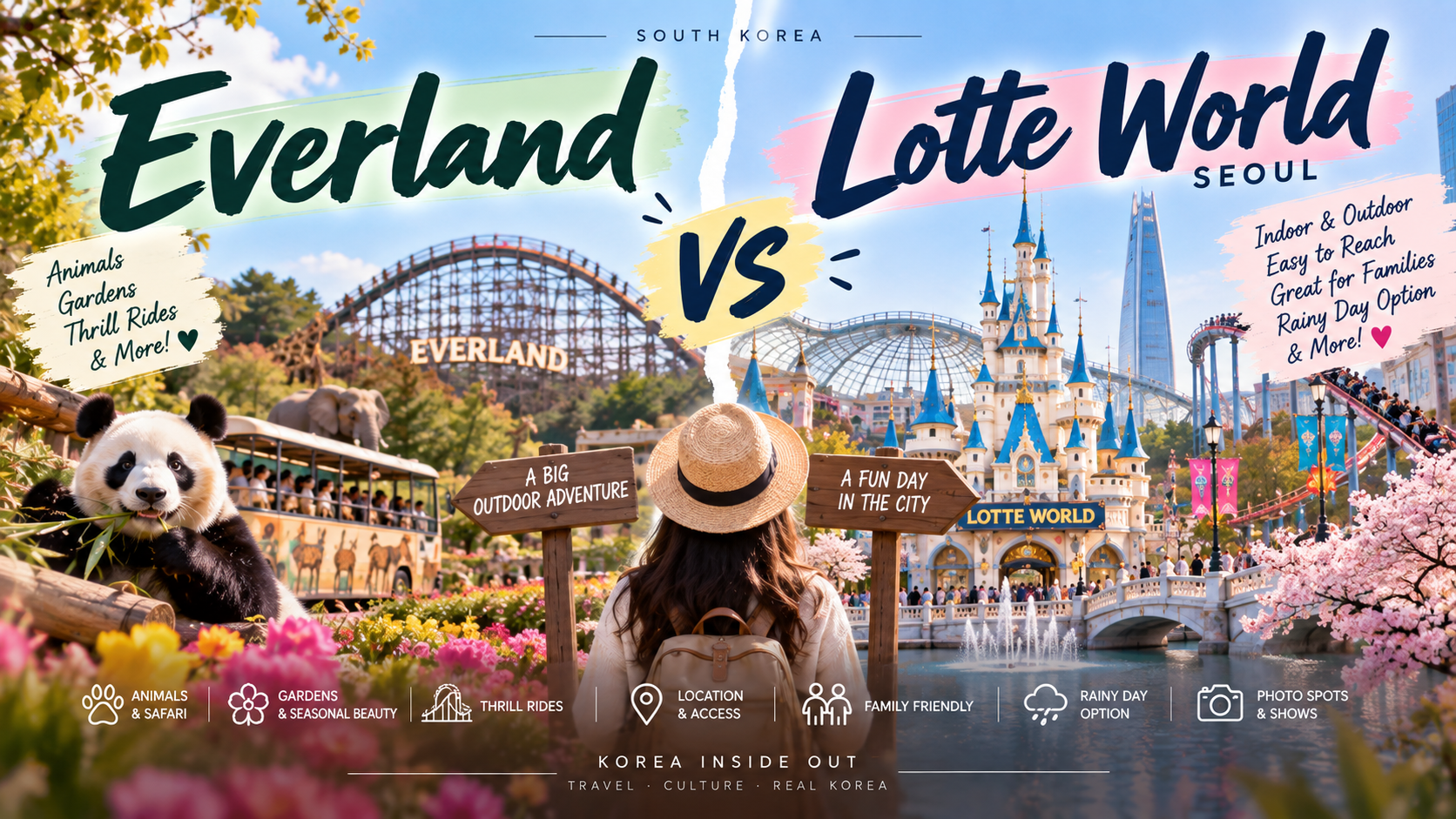
    How Many Days Do You Need in Seoul? 3, 5, or 7 Days

    What About You?

    If you’ve visited Seoul before, what made you feel safest—or what surprised you most about safety in Korea?

    And if this is your first trip, what safety question are you still wondering about?

    Share it in the comments. Your question might help another first-time visitor too.

  • Theme park in Seoul – Lotte World : 15 Tips for First-Time Visitors

    Theme park in Seoul – Lotte World : 15 Tips for First-Time Visitors

    Planning to visit Lotte World in Seoul?

    If you’re looking for a fun day out in Seoul, Lotte World is one of the easiest theme parks in Korea to add to your itinerary.

    Unlike Everland, which is located outside Seoul in Yongin, Lotte World is right in Seoul and combines a huge indoor theme park with an outdoor amusement area called Magic Island.

    That makes it particularly appealing to international travelers.

    You can visit even when the weather isn’t perfect, get there easily by subway, enjoy rides, shows and food, and still be back in central Seoul for dinner.

    But there’s a catch.

    Lotte World can get very busy.

    Popular rides can have long queues, the park is larger than it looks on a map, and first-time visitors can easily waste time walking around without a plan.

    So here’s our practical guide to getting the most out of Lotte World Seoul.


    1. Know What Lotte World Actually Is

    The first thing to understand is that Lotte World is divided into two very different areas.

    Adventure

    This is the giant indoor theme park.

    You’ll find:

    • Roller coasters
    • Family rides
    • Children’s attractions
    • Restaurants
    • Shops
    • Performances
    • Photo spots
    • Indoor parades and entertainment

    The indoor environment is one of Lotte World’s biggest advantages.

    Magic Island

    Magic Island is the outdoor section, located around Seokchon Lake.

    This is where you’ll find some of the park’s most famous thrill rides, including:

    • Atlantis
    • Gyro Drop
    • Gyro Swing
    • Comet Express

    The outdoor area also has the iconic Magic Castle, which is one of the most recognizable photo spots in the park.

    Our tip: Don’t think of Lotte World as simply an indoor amusement park. You really want to experience both Adventure and Magic Island.


    2. Lotte World Is Great on a Rainy Day

    This is probably one of the biggest reasons we recommend Lotte World to travelers.

    It can be a very good backup plan when the weather in Seoul isn’t cooperating.

    A large portion of the park is indoors, so you can enjoy rides, restaurants, shops and entertainment without spending the entire day outside.

    However, there’s an important catch:

    Magic Island is outdoors.

    Rain, strong wind and extreme temperatures can affect the operation of outdoor attractions. Lotte World’s official operating information specifically notes that some Magic Island attractions may be suspended depending on weather conditions.

    So on a rainy day, don’t plan your entire visit around Atlantis or another outdoor ride.

    Instead, use the indoor Adventure area as your base.


    3. Buy Your Ticket Before You Go

    You don’t need to wait until you arrive at Lotte World to figure out your admission ticket.

    Check the official Lotte World reservation site before your visit and compare the available ticket options.

    Lotte World also regularly offers different ticket promotions, so the price can vary depending on the date and product.

    Our tip: Always compare the official price with any third-party deal before buying.

    A cheap-looking ticket isn’t necessarily cheaper once you check the actual conditions.


    4. Download the Lotte World App

    If you want to make the most of your day, download the Lotte World Adventure app before visiting.

    The app is particularly important if you plan to use Magic Pass.

    Lotte World’s official information says Magic Pass is sold exclusively through the Lotte World app, and the available quantity is limited.

    The app is also useful for checking:

    • Park information
    • Attraction information
    • Operating status
    • Waiting information
    • Magic Pass
    • Tickets and reservations

    Don’t wait until you arrive at the park to install it.

    Set everything up before leaving your hotel.


    5. Understand Magic Pass Before You Arrive

    Magic Pass is Lotte World’s attraction reservation system.

    Instead of standing in the regular queue, eligible visitors can use a dedicated Magic Pass line for selected attractions.

    There are currently different Magic Pass products, and the official site lists options including 5-use tickets. Magic Pass is separate from your park admission ticket, so you need a valid admission ticket as well.

    Important things to know

    Magic Pass:

    • Is purchased through the official Lotte World app
    • Has limited daily quantities
    • Is only valid for the person who purchased it
    • Cannot simply be transferred to another visitor
    • Doesn’t apply to every attraction
    • Can be affected by temporary attraction closures

    The current official system also allows same-day purchases from 8:30 AM, while advance reservation for eligible Magic Pass products opens during a limited period before the visit.

    Our advice: If you know that you absolutely want to ride several major attractions, investigate Magic Pass before your trip rather than figuring it out after you arrive.


    6. Arrive Early

    Even though Lotte World is convenient to reach, don’t make the mistake of arriving in the afternoon.

    The park’s official operating hours vary by date, and recent schedules have commonly shown opening around 10 AM, with closing times varying by day.

    For a busy day, arriving around opening gives you the best chance of getting to popular attractions before queues become much longer.

    Your first hour matters.

    A good morning strategy

    Before opening

    Arrive at the station → enter the park → check the app.

    First priority

    Go to one of your must-ride attractions.

    Second priority

    Move to another nearby attraction rather than crossing the entire park.

    Late morning

    Take a break or have an early lunch.

    This simple strategy can make a surprisingly big difference.


    7. Choose Your Must-Ride Attractions Before You Go

    Don’t arrive at Lotte World and then spend 30 minutes deciding what to do.

    Pick three to five attractions before you arrive.

    For thrill seekers, popular choices include:

    Atlantis

    One of the most famous rides at Lotte World and one of the attractions that tends to attract significant interest.

    Gyro Drop

    A high-intensity drop ride at Magic Island.

    Gyro Swing

    A giant spinning attraction for visitors who like serious thrills.

    Comet Express

    An indoor roller coaster located in Magic Island.

    The Adventure of Sindbad

    A more family-friendly adventure ride inside Adventure.

    The exact operating status of attractions can change, so always check the official app on your visit day. Lotte World’s daily schedule shows attraction-specific closures and temporary suspensions.


    8. Don’t Spend Your Whole Day Chasing Rides

    This is especially important for first-time visitors.

    Lotte World isn’t just a collection of roller coasters.

    Part of the fun is the atmosphere.

    Take time to:

    • Watch a performance
    • Explore the indoor park
    • Take photos
    • Visit Magic Island
    • Stop for Korean snacks
    • Browse the shops
    • Enjoy the scenery around Seokchon Lake

    If you spend the entire day staring at queue times on your phone, you may technically ride more attractions — but have a less enjoyable day.

    Our tip: Pick your priorities, then leave some room for spontaneous discoveries.


    9. Visit Magic Island Even If You Don’t Love Thrill Rides

    Magic Island is worth visiting even if roller coasters aren’t your thing.

    The outdoor area sits beside Seokchon Lake, with the Magic Castle creating one of the most recognizable views in the park.

    It’s also one of the best places for photos.

    You can:

    📸 Photograph Magic Castle
    🌳 Walk around the outdoor area
    🌊 See Seokchon Lake
    🎢 Watch other visitors on the rides
    ☕ Take a break from the indoor crowds

    If the weather is pleasant, Magic Island can feel completely different from the indoor Adventure area.


    10. Take Photos at Magic Castle

    If you’re visiting Lotte World for the first time, don’t leave without taking a photo at Magic Castle.

    It’s especially photogenic:

    • In the afternoon
    • Around sunset
    • After dark, when the lights come on

    You don’t need to spend much time here.

    Just add it to your itinerary while moving between attractions.

    Our tip: If you have children, teenagers or anyone who loves Instagram-worthy photos, this is one of the easiest wins in the park.


    11. Eat Before Everyone Else

    Just like Everland, Lotte World restaurants can become busy during conventional lunch hours.

    Instead of eating at noon, try:

    11:00–11:30 AM

    or

    1:30–2:00 PM

    This gives you more flexibility and can save you from spending your best park time waiting for food.

    You can also use the indoor area to take a proper break during the afternoon.

    Theme parks are exhausting.

    A 30-minute rest can sometimes be more valuable than another ride.


    12. Lotte World Is Excellent for Families

    If you’re visiting Seoul with young children, Lotte World can be an easier choice than a huge outdoor theme park.

    The indoor environment means:

    • Less exposure to hot sun
    • Less exposure to rain
    • Easier access to restaurants and rest areas
    • Lots of family attractions
    • Plenty of indoor space

    The park also has a dedicated Kidizone area with attractions designed for younger visitors.

    For example, Lotte World’s current attraction information lists children’s attractions including Kids Bumper Car and other family-oriented rides with specific height requirements.

    One important tip for parents

    Check the height requirements before promising a child a particular ride.

    Nothing ruins a theme-park day faster than:

    “You’re too short to ride this.”


    13. Check Height Restrictions in Advance

    This is particularly important if you’re traveling with children.

    Lotte World lists height requirements for many attractions.

    For example, current official information lists:

    • The Adventure of Sindbad — 110 cm+
    • Flume Ride — 110 cm+
    • Gyro Swing — 130–190 cm
    • Comet Express — 120 cm+
    • Kids Bumper Car — 110–125 cm

    Requirements can vary by attraction and may be updated, so check the official attraction information before your visit.

    Our tip: Make a list of rides your children can actually ride before you arrive.

    It will save you a lot of walking.


    14. Don’t Forget the Korean Folk Museum

    Here’s something many international visitors don’t realize:

    Lotte World also contains a Korean Folk Museum.

    If you’re interested in Korean history and culture, this can be a nice break from the rides.

    It gives your Lotte World day a distinctly Korean element rather than feeling like a generic international theme park.

    It’s also a good option when you need a quieter indoor activity.

    You can effectively combine:

    Theme park + Korean culture + food + shopping

    in one location.

    That’s one of the things that makes Lotte World particularly interesting for international travelers.


    15. Stay Until Evening

    Don’t automatically leave once you’ve finished the rides.

    Lotte World looks completely different after dark.

    The indoor park lights up, Magic Island becomes more atmospheric, and the Magic Castle is especially attractive at night.

    Depending on the date, the park may also have seasonal entertainment or performances.

    Check the official daily schedule before your visit because shows, performances and attraction operating times can change.

    Our favorite strategy

    Morning:
    Focus on your priority rides.

    Afternoon:
    Explore, eat and enjoy indoor attractions.

    Evening:
    Head outside to Magic Island and take photos.

    It’s a much more relaxed way to finish the day.


    How to Get to Lotte World Seoul

    This is one of Lotte World’s biggest advantages over Everland.

    It’s located in Jamsil, Seoul, so you don’t need to make a long trip outside the city.

    The easiest way for most international visitors is the Seoul Subway.

    The park is directly connected to the Jamsil area, making it easy to reach from many popular Seoul neighborhoods.

    If you’re already using the subway during your Seoul trip, Lotte World can be much easier to fit into your itinerary than Everland.

    And if you’re still planning your first Seoul trip, our guide to How to Use the Seoul Subway: A First-Time Visitor’s Guide can help you get comfortable with the system.


    Lotte World vs Everland: Which Is Better?

    This is probably the question you’re asking if you’re planning a Korean theme-park day.

    The short answer:

    Choose Lotte World if you want:

    • A theme park inside Seoul
    • Easy subway access
    • Indoor attractions
    • A rainy-day option
    • A shorter travel day
    • Korean culture + theme park in one place
    • Younger-child-friendly attractions

    Choose Everland if you want:

    • A much larger outdoor park
    • More extensive gardens
    • Animal experiences
    • Safari attractions
    • A more resort-like day trip
    • T Express and other major outdoor attractions

    If you’re visiting Seoul for only a few days, Lotte World is usually easier to fit into your itinerary because you don’t have to spend as much time traveling.

    If you have a full day available and love outdoor theme parks and animals, Everland may be worth the extra journey.


    A Simple One-Day Lotte World Itinerary

    Here’s the strategy we’d recommend for a first-time visitor.

    9:30–10:00 AM

    Arrive around Jamsil and get ready to enter.

    10:00 AM

    Enter Lotte World and check the app.

    10:00–12:00

    Prioritize your most important rides.

    12:00

    Early lunch.

    1:00–3:00

    Explore Adventure and family attractions.

    3:00–4:00

    Take a break, enjoy a snack or visit the Korean Folk Museum.

    4:00–6:00

    Explore more rides or head toward Magic Island.

    Sunset

    📸 Take photos around Magic Castle.

    Evening

    Enjoy the lights, entertainment and final attractions.

    Before leaving

    Pick up souvenirs and head back toward Jamsil Station.

    The important thing is that this is a framework, not a strict schedule.

    Queue times and attraction availability can change during the day.


    What to Bring to Lotte World

    You don’t need much.

    Essentials

    ✓ Phone
    ✓ Lotte World app
    ✓ Ticket/QR code
    ✓ Portable battery
    ✓ Comfortable shoes
    ✓ Credit/debit card
    ✓ Water
    ✓ Small bag

    If rain is expected

    ☔ Compact umbrella
    🧥 Lightweight rain jacket

    Because so much of Lotte World is indoors, you don’t need to cancel your entire day because of rain.

    Just be aware that outdoor Magic Island attractions may be affected by weather.


    10 Lotte World Mistakes to Avoid

    ❌ Arriving in the afternoon
    ❌ Not checking the app
    ❌ Assuming every ride operates all day
    ❌ Ignoring Magic Pass
    ❌ Trying to ride everything
    ❌ Eating lunch at noon
    ❌ Spending the entire day indoors
    ❌ Forgetting Magic Island
    ❌ Ignoring children’s height restrictions
    ❌ Leaving before seeing the park at night


    Is Lotte World Worth Visiting?

    Absolutely — especially if you’re visiting Seoul for the first time.

    Lotte World isn’t necessarily the biggest or most extreme theme park in Korea.

    That’s not really the point.

    Its biggest advantage is convenience and variety.

    You can spend the morning riding roller coasters, have Korean food for lunch, visit a Korean history museum, take photos at Magic Castle, escape the rain, and be back in central Seoul without spending half your day traveling.

    For international visitors, that’s a pretty compelling combination.

    Our Pick

    If you’re staying in Seoul for three to five days and want to add a theme-park day, Lotte World is one of the easiest choices to make.

    And if you’re deciding between Lotte World and Everland?

    Don’t worry — we’ll compare them properly in the next guide.


    Lotte World Seoul: Quick Tips

    TipWhy It Matters
    Download the appEssential for Magic Pass and park information
    Arrive earlyPopular rides get busy
    Choose 3–5 must-ridesDon’t waste the day chasing everything
    Consider Magic PassUseful on busy days
    Check weatherMagic Island is outdoors
    Visit both areasAdventure and Magic Island feel very different
    Eat earlyAvoid peak lunch crowds
    Check height restrictionsImportant for families
    Visit Magic CastleOne of the best photo spots
    Stay until eveningThe park looks great after dark

    Final Tip: Use Lotte World’s Biggest Advantage

    The best thing about Lotte World isn’t actually one particular ride.

    It’s the fact that you can experience so much without leaving Seoul.

    If it’s raining, go inside.

    If the weather is beautiful, explore Magic Island.

    If you want rides, there are plenty.

    If you want Korean culture, visit the Folk Museum.

    If you’re tired, sit down for food.

    And when the sun goes down, take one last photo in front of Magic Castle.

    That’s the Lotte World experience.

    One park, two worlds — and one very easy day in Seoul. 🇰🇷🎢

    Lotte World’s operating hours, attraction availability, Magic Pass products, ticket prices and weather-related operations can change by date. Check the official Lotte World website and app shortly before your visit.

  • South Korea’s largest theme park – Everland Korea: 15 Tips to Make the Most of Your Day

    South Korea’s largest theme park – Everland Korea: 15 Tips to Make the Most of Your Day

    Planning a trip to Everland in Korea?

    South Korea’s largest theme park is a lot of fun — but it can also be surprisingly overwhelming for first-time visitors.

    Everland is huge, the park is spread across several themed areas, popular attractions can have long waits, and there are more things to see than you can realistically fit into one day.

    The good news?

    You don’t need to do everything. You just need to plan your day wisely.

    From using the Everland app to choosing the right attractions, here are our best Everland tips for first-time visitors.


    1. Download the Everland App Before You Go

    This is probably the single most important Everland tip.

    Download the official Everland app before your visit and register your ticket.

    The app can be used for park information, ticket management and Smart Queueing (스마트줄서기) for eligible attractions and experiences. Everland’s official reservation guide specifically recommends registering your ticket in the app for smoother use of the park.

    Don’t wait until you’re standing at the entrance to figure this out.

    Before leaving your hotel:

    • Download the Everland app
    • Create an account
    • Register your ticket
    • Add your travel companions if necessary
    • Check the attractions and shows for your visit date
    • Check which attractions are operating that day

    Our tip: Take a few minutes to set everything up the night before. It can save you a surprising amount of time inside the park.


    2. Buy Your Ticket Online

    Don’t assume you need to buy your ticket at the entrance.

    Everland’s Smart Reservation system allows visitors to purchase tickets in advance and enter by scanning the QR code, avoiding the ticket-office queue.

    Prices can vary depending on the date and promotions, so check the official reservation site before buying.

    There are also periodic discounts through partner cards and other promotions. For example, Everland currently lists various partner-card and promotional ticket options through Smart Reservation.

    Don’t buy a ticket just because you see a random “Everland discount” website. Check the official price first and compare the final price.


    3. Go Early — Really Early

    If you want to experience the most popular attractions, arriving early is one of the best things you can do.

    Many visitors make the mistake of arriving around lunchtime.

    By then, the most popular rides may already have long waiting times.

    Instead, try to arrive before or around park opening time.

    Your first hour can be much more valuable than an hour later in the afternoon.

    A simple strategy:

    Before opening:
    Arrive → security/entrance → get your app ready

    Immediately after entering:
    Go toward your highest-priority attraction

    Late morning:
    Do your second priority

    Afternoon:
    Shows, food, animals and less popular attractions

    Evening:
    Night scenery, rides and entertainment

    You don’t need to sprint through the park. Just make sure your most important attractions aren’t left until 4 PM.


    4. Don’t Try to Ride Everything

    This sounds obvious, but it’s one of the biggest mistakes first-time visitors make.

    Everland is large, and walking from one area to another takes time.

    Instead of creating a list of 15 attractions, choose three to five must-dos.

    For example:

    If you’re visiting with young children:

    • Panda World
    • Children’s rides
    • Gentle family attractions
    • Animal experiences
    • Shows

    If you’re visiting with teenagers:

    • T Express
    • Thunder Falls
    • Hurricane
    • Double Rock Spin
    • Other thrill rides

    If you’re visiting as adults:

    • T Express
    • Safari World
    • Panda World
    • Shows
    • Seasonal events
    • Evening entertainment

    Your day will be much more enjoyable if you have a realistic plan.


    5. Understand Smart Queueing

    Everland’s Smart Queueing system is one of the most useful features for visitors.

    Instead of physically standing in a line, eligible attractions or experiences can allow you to make a reservation through the app and return during your assigned time.

    However, not every attraction uses Smart Queueing, and the available attractions can change.

    That’s why you should check the Everland app on the day of your visit rather than relying on an old blog post or YouTube video.

    Everland itself recommends registering tickets in the app to use Smart Queueing.

    The important rule:

    Don’t assume “Smart Queueing” means every ride can be reserved.

    Check the app.


    6. Consider Plan-it If You Hate Waiting

    If your priority is rides rather than simply enjoying the park atmosphere, consider Plan-it.

    Plan-it is a paid reservation product that lets you reserve selected attractions in advance.

    The current Plan-it 5 product, for example, includes two time-specific attractions and three attractions from selected groups. Availability and eligible attractions can change, so check the official product page before your visit.

    This can be particularly useful when:

    • You’re visiting on a busy weekend
    • You’re traveling with teenagers
    • You have only one day
    • You really want to ride several popular attractions
    • You don’t want to spend hours in queues

    But Plan-it isn’t automatically necessary.

    If you’re visiting on a quieter weekday and are happy to be flexible, you may prefer saving the money.

    Our rule:
    If your trip is mainly about rides → consider Plan-it.
    If your trip is mainly about animals, scenery, food and shows → you may not need it.


    7. Don’t Forget T Express

    If you’re a thrill-seeker, T Express is the ride you shouldn’t overlook.

    It’s one of Everland’s signature attractions and is located in the Global Fair area of the park.

    The ride is famous for its steep drop and wooden roller-coaster structure.

    But here’s the important part:

    Don’t assume you can simply walk up and ride whenever you want.

    Check the Everland app for the current operating status and waiting time before making a long walk across the park.

    Attractions can also close temporarily because of weather, maintenance or other operational reasons.


    8. Plan Your Route by Area

    Everland isn’t a compact theme park.

    Walking back and forth across the park can eat up a lot of your day.

    Instead of thinking:

    “What ride should we do next?”

    Think:

    “What can we do in this area before moving on?”

    For example:

    Morning:
    Global Fair → European Adventure

    Midday:
    Zootopia

    Afternoon:
    American Adventure

    Evening:
    Return toward the central areas for food and entertainment

    Your exact route should depend on the attractions you want to visit, but the principle is simple:

    Don’t zigzag across the park all day.


    9. Don’t Skip Zootopia

    Everland isn’t just about roller coasters.

    One of the things that makes the park different from many traditional amusement parks is its large animal area, Zootopia.

    This is where you’ll find experiences such as:

    • Safari World
    • Lost Valley
    • Panda World

    For many international visitors, these are actually some of the most memorable parts of Everland.

    But check the current operation before your visit.

    Attractions and animal experiences can have different operating hours, reservation systems and temporary closures.

    For example, Everland’s current Plan-it information notes that Panda World and Lost Valley have special operating conditions during parts of September–November 2026.

    Never build your entire itinerary around one attraction without checking its status on the day.


    10. Visit Panda World — But Check the Rules First

    Panda World is one of Everland’s most popular attractions, especially for international visitors.

    If seeing the pandas is high on your list, check the app before heading there.

    Operating arrangements can change, and Everland sometimes changes whether an experience is available for advance reservation or general viewing.

    Our tip: Put Panda World high on your priority list rather than assuming you’ll have time at the end of the day.


    11. Eat at an Off-Peak Time

    Theme park restaurants get busy at exactly the same time everyone gets hungry.

    That’s why one of our favorite Everland hacks is incredibly simple:

    Don’t eat lunch at noon.

    Try:

    11:00–11:30 AM
    or
    1:30–2:00 PM

    instead.

    You’ll have more restaurant choices and spend less time waiting.

    The same applies to dinner.

    If everyone is eating at 6 PM, you don’t have to.


    12. Bring a Portable Battery

    Your phone becomes extremely important at Everland.

    You’ll probably use it for:

    • Tickets
    • The Everland app
    • Waiting times
    • Smart Queueing
    • Maps
    • Photos
    • Translation
    • Transportation

    A dead phone can turn into a surprisingly serious problem.

    Bring a portable power bank.

    This is especially important if you’re visiting with children and using your phone all day.


    13. Wear Comfortable Shoes

    This might be the least exciting tip in this article.

    It’s also one of the most important.

    Everland is large, and you’ll walk much more than you expect.

    Wear:

    • Comfortable sneakers
    • Breathable clothes
    • Socks you can walk in all day

    Avoid wearing brand-new shoes just because you want a nice photo.

    Your feet will thank you at 9 PM.


    14. Don’t Leave Too Early

    A lot of visitors leave Everland after the major rides are finished.

    That’s a mistake if you enjoy atmosphere and photography.

    Everland becomes particularly attractive in the evening when the lights come on.

    Depending on the season and operating schedule, there may also be nighttime entertainment or seasonal events.

    Before your visit, check the day’s performance schedule and park operating information through the official app or website. Everland’s official site provides daily operating information and attraction closure notices.

    Our favorite strategy:

    Do your biggest rides earlier.

    Then slow down in the evening.

    Take photos.

    Eat something.

    Enjoy the lights.

    That’s often when Everland feels most magical.


    15. Check the Weather Before You Go

    This is particularly important in Korea.

    Everland is largely outdoors, so weather can have a major effect on your day.

    Before leaving Seoul, check:

    • Temperature
    • Rain forecast
    • Wind
    • Heat
    • Air quality

    Some attractions can be affected by weather or temporary operating conditions.

    If rain is forecast, bring a lightweight rain jacket or umbrella — but remember that some rides may temporarily stop operating during bad weather.


    How to Get to Everland from Seoul

    Everland is located in Yongin, outside central Seoul.

    For international visitors staying in Seoul, there are several ways to get there.

    Option 1: Shuttle Bus

    A shuttle bus can be one of the easiest options for first-time visitors, particularly if you’re staying in a major tourist area.

    However, routes and schedules can change, so check the current operator information before booking.

    Option 2: Public Transportation

    You can also travel using Seoul’s subway/bus network and connect toward Everland.

    This can be cheaper, but the journey is longer and involves more transfers.

    Option 3: Taxi

    A taxi is convenient for families or groups, but the cost can be significantly higher than public transportation.

    If you’re traveling with several people, compare the total taxi fare with shuttle-bus costs.

    Our advice: For first-time visitors, convenience is usually more important than saving a few thousand won.


    What Should You Bring to Everland?

    Here’s our simple packing list:

    Essentials

    ✓ Phone
    ✓ Portable battery
    ✓ Comfortable shoes
    ✓ Ticket/QR code
    ✓ Credit/debit card
    ✓ Some cash
    ✓ Water bottle
    ✓ Sunscreen
    ✓ Hat or cap

    Depending on the season

    Summer:
    Sunglasses, cooling towel, extra water

    Autumn:
    Light jacket for the evening

    Winter:
    Warm coat, gloves and hand warmers

    Rainy weather:
    Umbrella or rain jacket


    Everland with Kids: Extra Tips

    Traveling with young children requires a slightly different strategy.

    Don’t try to maximize the number of rides.

    Instead, prioritize:

    1. Animal experiences
    2. Children’s rides
    3. Shows
    4. Character experiences
    5. Meals and rest breaks

    And remember that 36-month-old children may qualify for free admission under certain Everland ticket conditions, although proof of age may be required.

    If you’re traveling with a stroller, plan regular breaks.

    A theme park day can be surprisingly tiring for children — even when they’re having fun.


    The Best Everland Strategy for a One-Day Visit

    If this is your first visit, here’s a simple strategy we’d recommend.

    8:30–9:30 AM

    Arrive and enter the park.

    Morning

    Go directly to your highest-priority attraction.

    Use Smart Queueing where available.

    Late morning

    Move to your second priority.

    11:30 AM

    Have an early lunch.

    Early afternoon

    Explore Zootopia and animal attractions.

    2–4 PM

    Do lower-priority rides, shows and photo spots.

    4–6 PM

    Have a snack and slow down.

    Evening

    Enjoy the lights, atmosphere and nighttime entertainment.

    Before leaving

    Take one last walk through Global Fair and pick up souvenirs.

    The key is not trying to “complete” Everland.

    It’s choosing what you really want to remember.


    10 Everland Mistakes to Avoid

    Before you go, remember these:

    ❌ Arriving at lunchtime
    ❌ Buying tickets at the gate without checking online prices
    ❌ Not downloading the app
    ❌ Not registering your ticket
    ❌ Trying to ride everything
    ❌ Walking back and forth across the park
    ❌ Eating lunch at noon
    ❌ Wearing uncomfortable shoes
    ❌ Forgetting a power bank
    ❌ Assuming an attraction will operate without checking the app


    Is Everland Worth Visiting?

    Yes — especially if you’re traveling with children, teenagers or anyone who enjoys theme parks.

    But Everland is best experienced when you don’t treat it like a checklist.

    It’s not just about roller coasters.

    It’s a combination of:

    🎢 Thrill rides
    🐼 Animals
    🌷 Gardens
    🎭 Shows
    🍔 Korean theme-park food
    📸 Photo spots
    🌙 Evening entertainment

    For international visitors, it can also be a fun way to see a very Korean version of the classic theme-park experience.

    And with a little planning, you can spend much less time standing in line and much more time actually enjoying the park.


    Everland Korea: Quick Tips

    TipWhy It Matters
    Download the appEssential for park information and Smart Queueing
    Register your ticketMakes app features easier to use
    Arrive earlyBest chance for popular attractions
    Pick 3–5 prioritiesAvoid an exhausting itinerary
    Consider Plan-itUseful on busy days
    Check attraction statusOperations can change
    Eat earlyAvoid lunch crowds
    Wear comfortable shoesYou’ll walk a lot
    Bring a power bankYou’ll use your phone constantly
    Stay into the eveningThe park atmosphere changes after dark

    Final Tip: Don’t Overplan Everland

    Our biggest Everland tip isn’t about an app, ticket or attraction.

    It’s this:

    Don’t try to win Everland.

    You don’t need to ride every attraction.

    You don’t need to see every show.

    You don’t need to walk 20,000 steps.

    Pick the experiences that matter most to you, use the app intelligently, arrive early, and leave some room for spontaneous discoveries.

    That’s how to have a much better day at Everland.

    Welcome to the most colorful theme park in Korea. 🎢🇰🇷

    Everland’s operating hours, attraction availability, reservation systems, ticket promotions and transportation options can change by date and season. Always check the official Everland website or app shortly before your visit.

  • Chuseok in Korea 2026: What Travelers Need to Know

    Chuseok in Korea 2026: What Travelers Need to Know

    If you’re traveling to South Korea in late September, you may notice something unusual: trains are crowded, families are traveling across the country, and some businesses may close for several days.

    That’s because Chuseok (추석), one of Korea’s biggest traditional holidays, is coming.

    Chuseok is sometimes called Korean Thanksgiving, but it is much more than a harvest celebration. It is a time when Korean families traditionally return to their hometowns, spend time together, honor their ancestors, and enjoy special seasonal foods.

    For travelers, Chuseok can be both a challenge and an opportunity. Some businesses close, but many major tourist attractions remain open, and cities such as Seoul offer special cultural programs that can give visitors a more authentic look at Korean traditions.

    Here’s what you need to know if you’re visiting Korea during Chuseok 2026.

    When Is Chuseok in Korea in 2026?

    Chuseok 2026 is September 24–26, with Chuseok Day itself falling on Friday, September 25.

    The holiday traditionally lasts three days: the day before Chuseok, Chuseok Day itself, and the day after. Chuseok is celebrated on the 15th day of the eighth month of the lunar calendar, so its dates change every year.

    DateDayChuseok 2026
    September 24ThursdayDay before Chuseok
    September 25FridayChuseok Day
    September 26SaturdayDay after Chuseok

    So if you’re planning a Korea trip around this time, September 24–26 should be treated as a major holiday period.


    What Is Chuseok?

    Chuseok is one of Korea’s most important traditional holidays.

    Historically, it was closely connected to the autumn harvest. Families would gather to celebrate the year’s crops and give thanks for what had been harvested.

    Traditionally, families also performed charye (차례), a memorial ritual for their ancestors, and visited ancestral graves.

    Today, Chuseok looks different for every family. Some Koreans continue traditional ceremonies, while others simply use the holiday as an opportunity to eat together, relax, visit relatives, or travel.

    One thing remains very important, though:

    Chuseok is primarily a family holiday.

    Millions of people travel across Korea to spend the holiday with their families, which has a major impact on transportation.


    Is Korea Closed During Chuseok?

    No. Korea does not completely shut down during Chuseok.

    This is one of the most important things for travelers to understand.

    Government offices and banks close during public holidays, but many tourist attractions, museums, department stores and entertainment facilities generally remain open. However, individual businesses may choose to close, sometimes for several days.

    In other words, you can absolutely travel around Korea during Chuseok — but you should check opening hours before visiting specific places.

    What is likely to be closed?

    You may find that some:

    • Small independent restaurants
    • Family-run shops
    • Traditional markets
    • Local businesses
    • Cafés and restaurants operated by small teams

    close for part or all of the holiday.

    What is usually still available?

    Major tourist areas and larger businesses are much more likely to operate, including:

    • Major department stores
    • Large shopping malls
    • Chain restaurants
    • Major attractions
    • Many museums
    • Tourist facilities
    • Hotels

    However, “usually open” does not mean guaranteed open. Always check the official website or social media of a specific attraction or restaurant before you go.


    Is Chuseok a Good Time to Visit Korea?

    Yes — but it depends on what kind of trip you want.

    If your priority is shopping, nightlife and a predictable restaurant schedule, Chuseok can be slightly inconvenient.

    But if you’re interested in Korean culture, it can be a fascinating time to visit.

    You’ll see traditional performances, cultural activities and holiday events throughout Seoul and other cities.

    And there’s something special about experiencing Korea during one of its most important traditional holidays rather than simply visiting the country as a tourist.

    Our tip: If Chuseok falls during your trip, don’t try to avoid the holiday completely. Instead, plan around it.


    What Happens to Public Transportation?

    This is probably the biggest practical issue for travelers.

    During Chuseok, many Koreans travel to their hometowns, creating extremely high demand for:

    • KTX trains
    • SRT trains
    • Intercity buses
    • Domestic flights
    • Major highways

    If you’re planning to travel between Seoul and Busan, for example, don’t leave your transportation booking until the last minute.

    If your itinerary is flexible, staying in the same city during the main holiday period can make your trip considerably easier.

    For example:

    September 24–26: Stay in Seoul
    September 27 onward: Travel to Busan or another city

    This can be much less stressful than trying to make a long-distance journey right in the middle of the holiday.

    If you haven’t decided how long to stay in Seoul, our guide to How Many Days Do You Need in Seoul? 3, 5, or 7 Days can help you build an itinerary.


    What Can Tourists Do During Chuseok?

    The good news is that Seoul has several special cultural events around Chuseok 2026.

    1. Namsangol Chuseok Festival

    One of the best options for visitors is the 2026 Namsangol Chuseok Festival, held at Namsangol Hanok Village from September 25–27, 10 AM–8 PM.

    The festival includes traditional performances, traditional games, cultural experiences, food and other activities.

    Admission is free, although some activities and food are paid.

    This is probably one of our top recommendations if you want to experience Chuseok without having a Korean family to visit.

    Where: Namsangol Hanok Village
    Dates: September 25–27, 2026
    Time: 10 AM–8 PM
    Admission: Free


    2. Seoul Baekje Museum Chuseok Festival

    The Seoul Baekje Museum is also hosting a Chuseok festival on September 26.

    The program includes performances, hands-on activities and traditional games.

    Admission is free.

    This is a particularly good option for families traveling with children.


    3. Seoul Urban Life Museum Chuseok Events

    The Seoul Urban Life Museum is holding Chuseok cultural events on September 26 from 1–5 PM.

    The program includes gugak performances, traditional games such as tuho and jegichagi, balloon shows and a lucky pouch-making activity.

    Admission is free.


    4. Experience Traditional Korea in a Hanok Village

    Chuseok is also a great excuse to visit a traditional Korean neighborhood or hanok village.

    If you’re already planning to explore Seoul’s historic areas, combine a visit to a hanok village with a Chuseok festival or traditional performance.

    You’ll get a very different experience from simply visiting Seoul’s modern shopping districts.


    What Should You Eat During Chuseok?

    Food is a huge part of Chuseok.

    Songpyeon

    The food most strongly associated with Chuseok is songpyeon (송편).

    These small half-moon-shaped rice cakes are traditionally made with newly harvested rice and filled with ingredients such as sesame, beans or sweet fillings.

    Their half-moon shape is especially recognizable during Chuseok.

    Jeon

    Jeon refers to Korean savory pancakes or fritters made with ingredients such as vegetables, seafood, meat or tofu.

    You’ll often see a variety of jeon served during Korean holidays.

    Galbijjim

    Galbijjim, braised beef short ribs, is another popular dish for special family meals.

    Japchae

    Japchae — glass noodles stir-fried with vegetables and meat — is also commonly served at celebrations and family gatherings.

    If you’re staying in Korea during Chuseok, look for restaurants offering Chuseok or holiday set menus.


    What About Restaurants?

    This is where a little planning helps.

    Large restaurants in tourist areas are more likely to stay open, but smaller family-run restaurants may close.

    Don’t assume that a restaurant listed as “open” on Google Maps or another platform will definitely be operating during the holiday.

    Our advice:

    1. Check the restaurant’s official Instagram, Naver listing or website.
    2. Have a backup restaurant nearby.
    3. Make reservations for popular restaurants.
    4. Keep some convenience-store or hotel options in mind.
    5. Don’t plan your entire day around one small local restaurant.

    For international visitors, this is especially important because many Korean businesses don’t necessarily update every international travel platform when they change their holiday hours.


    Should You Travel from Seoul to Busan During Chuseok?

    You can, but we wouldn’t recommend making a last-minute decision.

    Seoul and Busan are connected by frequent KTX trains, but Chuseok is one of the busiest travel periods of the year.

    If you’re planning a Seoul–Busan trip, reserve your transportation as early as possible.

    Alternatively, consider spending the main Chuseok holiday in one city and moving afterward.

    If Busan is part of your itinerary, you can also check our What’s On in Korea: September 2026 guide for seasonal events and things happening around the country.


    Is Chuseok a Good Time for Shopping?

    It depends on what you’re looking for.

    Large department stores and shopping malls generally operate during public holidays, but individual stores can have different schedules. Some smaller businesses may close.

    If shopping is one of the main purposes of your trip, check holiday hours in advance.

    On the other hand, Chuseok can be a good time to see Korean gift-giving culture. Before and during the holiday, you’ll often notice beautifully packaged gift sets of fruit, food, tea, health products and other items in Korean stores.


    What Should Tourists Know About Seoul During Chuseok?

    Here are the five things we’d keep in mind:

    1. Don’t assume everything is closed

    Seoul remains a huge, functioning city. Many tourist facilities and major businesses continue operating.

    2. Don’t assume everything is open either

    Small businesses may close unexpectedly.

    3. Avoid unnecessary intercity travel during the busiest period

    If you don’t need to travel, staying in one city can make your trip easier.

    4. Book transportation early

    Especially if you’re planning to use KTX, SRT or intercity buses.

    5. Look for special cultural programs

    This is the part many tourists miss.

    Chuseok is one of the best opportunities of the year to see traditional Korean performances, games, food and cultural activities.


    What Should You Do on Chuseok Day?

    If you’re in Seoul on Friday, September 25, we recommend keeping your itinerary relatively simple.

    A good Chuseok day could look like this:

    Morning
    ☕ Breakfast near your hotel

    Late morning
    🏯 Explore a historic neighborhood or palace

    Afternoon
    🏮 Visit Namsangol Hanok Village and enjoy the Chuseok festival

    Evening
    🍚 Have a Korean dinner

    Night
    🌃 Enjoy Seoul’s night views

    Rather than trying to visit five different attractions in one day, use Chuseok as an opportunity to slow down and experience a different side of Seoul.


    Chuseok Travel Checklist

    Before your Korea trip, save this checklist:

    ✓ Check your hotel’s holiday information
    ✓ Book KTX or intercity buses early
    ✓ Check restaurant opening hours
    ✓ Check attraction opening hours
    ✓ Keep alternative restaurants in mind
    ✓ Avoid unnecessary long-distance travel during the busiest days
    ✓ Look for local Chuseok festivals
    ✓ Try songpyeon or other seasonal Korean foods


    So, Should You Avoid Korea During Chuseok?

    Not at all.

    If you’re already planning to visit Korea in late September, there’s no need to change your trip simply because Chuseok falls during your stay.

    You just need to understand that Korea operates a little differently during the holiday.

    For travelers, the biggest inconvenience is likely to be transportation and individual business closures.

    The upside is that you’ll have a chance to experience one of Korea’s most important traditional holidays through cultural festivals, traditional games, performances and seasonal food.

    And honestly, that’s a pretty good trade-off.

    Our Pick

    If you’re visiting Seoul during Chuseok 2026, put Namsangol Hanok Village on your itinerary for September 25–27.

    It’s central, free to enter, easy to reach by subway, and gives international visitors a chance to experience Chuseok without needing to know a Korean family.

    Chuseok isn’t a reason to skip Korea. It’s a reason to experience a different side of it.


    Chuseok in Korea 2026: Quick Facts

    QuestionAnswer
    When is Chuseok 2026?September 24–26
    When is Chuseok Day?September 25
    Is Chuseok a public holiday?Yes
    Are banks open?No
    Are tourist attractions open?Many are, but check individually
    Are restaurants open?Many are, but some close
    Is public transportation running?Yes, but expect very high demand
    Should I book KTX early?Yes
    What is Chuseok food?Songpyeon, jeon, galbijjim, japchae and more
    Best cultural event in Seoul?Namsangol Chuseok Festival
    Is Chuseok a good time to visit Korea?Yes, with some planning

    Information for 2026 is based on official Korean government and Seoul Metropolitan Government schedules. Individual business and attraction hours can change, so check directly before visiting.

  • Jamsugyo Bridge Festival: Seoul’s Car-Free Sunday by the Han River

    Jamsugyo Bridge Festival: Seoul’s Car-Free Sunday by the Han River

    Walk, Eat, Listen & Experience Seoul by the Water

    Imagine walking across a bridge in the middle of Seoul with no cars around you.

    Instead, there are food stalls, live music, small markets, people sitting by the river, street performances and the Seoul skyline glowing in the distance.

    That’s the idea behind the Jamsugyo Bridge Festival.

    Every Sunday this autumn, Seoul closes Jamsugyo Bridge to vehicle traffic and turns it into a giant riverside playground.

    And if you’re visiting Seoul in September or October 2026, there’s an extra reason to go:

    This is the final season of the festival in its current car-free format.

    Jamsugyo Bridge is scheduled to become a fully pedestrianized bridge in 2027.


    🌉 What Is the Jamsugyo Bridge Festival?

    The Car-Free Jamsugyo Bridge Festival is one of Seoul’s signature Hangang events.

    It takes place around Jamsugyo Bridge and Banpo Hangang Park, turning approximately 1.1 km of the riverside area into a pedestrian-friendly festival zone.

    The fall 2026 season runs for eight Sundays from September 6 through October 25.

    📅 September 6 – October 25, 2026

    Every Sunday

    2:00 PM – 10:00 PM

    📍 Jamsugyo Bridge & Banpo Hangang Park

    💰 Free admission

    Most of the festival is free to enter, although food, crafts and some special programs may cost extra.


    🚗 What Does “Car-Free” Actually Mean?

    Jamsugyo is a two-level bridge underneath Banpodaegyo Bridge.

    During the festival, vehicles are restricted from using Jamsugyo, allowing people to walk across the bridge and enjoy the river without normal traffic.

    For the fall season, vehicle restrictions run from 12:00 PM to midnight every Sunday.

    That means the bridge becomes a completely different place.

    Instead of watching Seoul pass by through a car window, you can actually walk through it.

    And because the festival continues until 10 PM, you can stay into the evening and experience the Hangang skyline after sunset.


    🎉 What’s Happening This Fall?

    One of the best things about the Jamsugyo Bridge Festival is that the program changes every week.

    So if you’re in Seoul for several Sundays, you could visit more than once and have a completely different experience.

    💦 September 6 — Jamsugyo Water Wars

    The fall season kicked off with a giant water-gun battle.

    Around 800 participants took part in two rounds of water battles at Banpo Hangang Park.

    Advance registration was required for the water-gun activity, although the surrounding festival area was open to visitors.

    If you missed it, don’t worry.

    There are still seven more Sundays.


    🎤 September 13 — Walk Together × Student Club ON

    On September 13, university student clubs take over Jamsugyo Bridge.

    Expect:

    • 🎵 Busking
    • 💃 K-pop dance
    • 🥁 Traditional Korean performances
    • 🎩 Magic shows
    • 📸 Polaroid photo activities
    • 🎨 Hands-on experiences

    Many of these activities are designed for visitors to participate in rather than simply watch.

    This is a particularly good weekend if you want to see young Seoul beyond the usual tourist attractions.


    🏃 September 20 — Jamsugyo Fall Field Day

    Remember school sports days?

    Seoul is bringing that feeling to the Han River.

    The Jamsugyo Fall Field Day features easy activities that visitors of different ages can join, including:

    • 🚦 Red Light, Green Light
    • 🤝 Tug-of-war
    • ⭕ Hula hoop
    • 🏃 Other simple team activities

    The program runs from 2 PM to 10 PM, with advance registration required for participation.


    🌙 September 27 — Moonlight Chuseok Festival

    This is one of the most interesting weekends for international visitors.

    To celebrate Chuseok, Korea’s major autumn harvest holiday, the festival will feature traditional performances from:

    🇰🇷 Korea
    🇦🇷 Argentina
    🇧🇬 Bulgaria
    🇷🇺 Russia
    🇵🇦 Panama
    🇰🇿 Kazakhstan

    Visitors can also try traditional Korean games such as yut nori.

    The program takes place from 3 PM to 6 PM.

    If you’re interested in Korean culture, this is probably one of the best Sundays to visit.


    🍜 October Is All About Food & Night Views

    September focuses more on activities, performances and cultural experiences.

    October changes the mood.

    The theme becomes:

    Taste. Light. Relax.


    🍽️ October 4 — Jamsugyo Gourmet Road

    This could be one of the biggest highlights of the entire festival.

    For one day, Jamsugyo Bridge becomes a huge international food street with more than 100 food trucks.

    You’ll be able to try food from Korea and around the world while sitting beside the Han River.

    The event runs from 2 PM to 10 PM.

    Dining areas can accommodate up to 800 people at a time.

    And the festival plans to use reusable containers rather than single-use items as part of its eco-friendly approach.

    Our tip

    If you’re a food lover, October 4 should be on your Seoul itinerary.

    It’s not just a food festival.

    You’re eating dinner on a bridge over the Han River with Seoul’s skyline around you.


    ✨ October 11 — Moonlight Jamsugyo

    Want to see Seoul after dark?

    On October 11, the bridge becomes an enormous outdoor media-art canvas.

    From 7 PM to 10 PM, light and music will transform Jamsugyo and Banpodaegyo into a nighttime art experience inspired by the Milky Way.

    This could be one of the most photogenic evenings of the festival.

    And because the festival takes place in October, you’ll also get that cool autumn-night atmosphere.


    🧘 October 18 — Jamsugyo Refresh Day

    Not everything at the festival is loud and energetic.

    On October 18, visitors can slow down with programs including:

    • Yoga
    • Stretching
    • Meditation
    • Relaxation activities

    The program runs from 5 PM to 8 PM and requires advance registration for participation.

    It’s a surprisingly nice way to experience the Han River.

    Instead of rushing from one tourist attraction to another, you simply stop.

    Breathe.

    Look at the river.

    And let Seoul happen around you.


    🎧 Don’t Miss the Silent DJ Party

    One of the festival’s ongoing attractions is the Silent DJ Party.

    Participants wear wireless headphones and listen to music while dancing together.

    From the outside, it looks slightly strange.

    A group of people dancing beside the Han River…

    with almost no music coming from speakers.

    Put on the headphones, though, and suddenly you’re part of the party.

    It’s one of those experiences that is difficult to understand until you try it.


    🌈 Stay for the Moonlight Rainbow Fountain

    The Jamsugyo Festival is also a great opportunity to see one of Seoul’s most famous nighttime attractions:

    Banpo Bridge’s Moonlight Rainbow Fountain.

    The fountain shoots illuminated streams of water from Banpodaegyo Bridge while music plays below.

    During the festival season, performances are scheduled multiple times throughout the evening.

    So you can easily build an evening around:

    Festival → Dinner → Han River walk → Rainbow Fountain → Seoul skyline

    No expensive rooftop bar required.


    📸 Best Things to Photograph

    Bring your camera.

    There are plenty of good photo opportunities around Jamsugyo.

    🌉 The bridge itself

    Walk toward the middle of Jamsugyo for views of the Han River in both directions.

    🌆 Seoul skyline

    On clear evenings, the skyline becomes particularly beautiful around sunset.

    🌈 Rainbow Fountain

    If the fountain is operating, stay until after dark.

    🌙 The river at night

    The reflections of Banpodaegyo Bridge and the surrounding lights make a great nighttime backdrop.

    🍜 Food on the bridge

    A plate of Korean street food with the Han River behind you is about as Seoul as it gets.


    🚇 How to Get There

    The easiest way to visit is by public transportation.

    Because vehicle access is restricted during the festival and parking around Banpo Hangang Park is limited, Seoul strongly recommends using public transportation.

    The exact route depends on which part of the festival you want to visit, but Express Bus Terminal Station and Sinbanpo Station are useful subway access points for the Banpo area.

    Once you reach the riverside, simply follow signs toward Banpo Hangang Park and Jamsugyo Bridge.


    🕐 When Is the Best Time to Go?

    If this is your first visit, we’d recommend arriving around 4–5 PM.

    Why?

    4:00 PM

    Explore the festival and browse food stalls.

    5:30 PM

    Walk across Jamsugyo and take photos.

    6:30 PM

    Find a place by the river and watch the sunset.

    7:00 PM+

    Enjoy performances, food and evening activities.

    After dark

    Stay for the lights and Moonlight Rainbow Fountain.

    This gives you both sides of the festival:

    daytime energy + Seoul after dark.


    ⚠️ A Few Things to Know Before You Go

    Bring comfortable shoes

    You’ll be walking.

    A lot.

    Check the weather

    Some outdoor programs may change because of rain or other weather conditions.

    Public transportation is your friend

    Parking is limited and traffic restrictions are in place.

    Check registration requirements

    Some special activities require advance registration even though the main festival is free.

    Expect crowds

    The festival has attracted millions of visitors over the years, so popular Sundays can get busy.


    ⭐ Why 2026 Is a Special Year

    Here’s the part we think international visitors should know.

    2026 is the final season of the Jamsugyo Bridge Festival in its current “car-free bridge” format.

    Seoul plans to fully pedestrianize Jamsugyo Bridge in the second half of 2027.

    That means the bridge will eventually become a permanent pedestrian space.

    The festival itself isn’t disappearing.

    Instead, Seoul plans to create a new version of the festival once the bridge becomes fully pedestrianized.

    So if you’re visiting Seoul this autumn, you’re seeing a small piece of the city’s transformation in real time.


    🌊 Jamsugyo Is More Than a Festival

    One of our favorite things about the Jamsugyo Festival is that you don’t have to treat it like a traditional tourist attraction.

    You don’t need to arrive with a checklist.

    You can simply:

    Walk.

    Eat.

    Listen to music.

    Take photos.

    Sit beside the river.

    Watch people.

    Watch the sunset.

    And stay until the city lights come on.

    That’s one of the best ways to experience the Han River.

    If you’re looking for more seasonal events across Korea, check out our What’s On in Korea: September 2026 guide.

    And for more ideas around the river, keep an eye on our What’s On Along the Han River series.


    📅 Jamsugyo Bridge Festival 2026 at a Glance

    DateThemeHighlights
    Sep. 6Water WarsWater-gun battle
    Sep. 13Student Club ONK-pop, busking, magic
    Sep. 20Fall Field DayGames & activities
    Sep. 27Moonlight ChuseokInternational traditional performances
    Oct. 4Gourmet Road100+ food trucks
    Oct. 11Moonlight JamsugyoMedia art & music
    Oct. 18Refresh DayYoga & meditation
    Oct. 25Final SundayFinal fall-season programs

    Every Sunday: September 6 – October 25, 2026
    Festival hours: 2 PM – 10 PM
    Location: Jamsugyo Bridge & Banpo Hangang Park
    Admission: Free


    💙 Our Take

    There are plenty of famous things to do in Seoul.

    Visit a palace.

    Shop in Myeongdong.

    Take photos at N Seoul Tower.

    Eat Korean barbecue.

    They’re all worth doing.

    But if you want to see how Seoul’s residents actually spend a Sunday, go to the Han River.

    And if you can walk across a bridge without cars while eating Korean street food, listening to live music and watching the skyline turn pink at sunset…

    even better.

    That’s Seoul from the inside out.