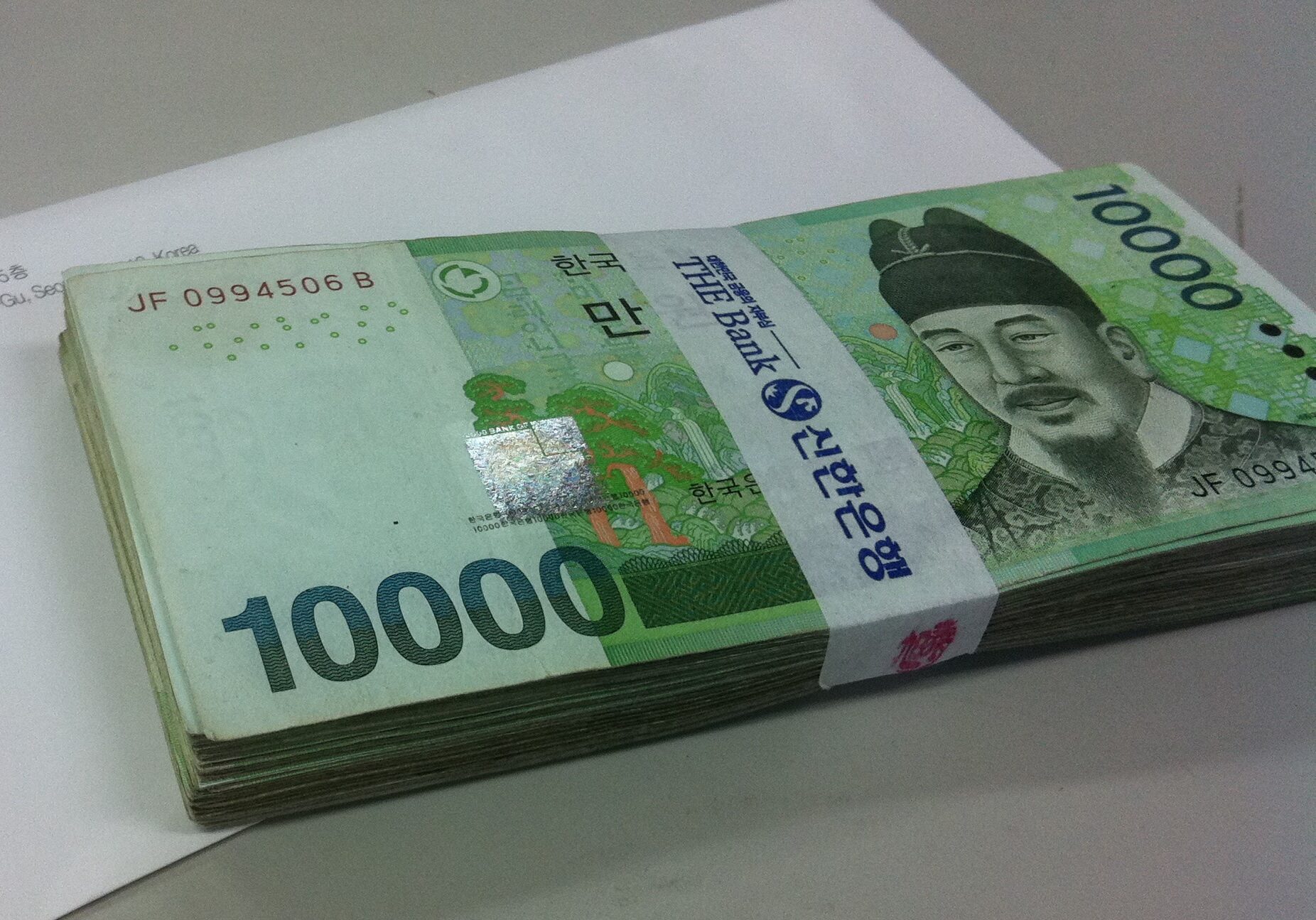
If you’re planning your first trip to South Korea, you may be wondering:
Do I need to carry cash in Korea?
The short answer is: you don’t need to carry a lot of cash, but having some Korean won is still a good idea.
Credit and debit cards are widely used in Seoul and other major cities. You can pay by card at many restaurants, cafés, shops, hotels, and attractions.
However, cash can still be useful for small purchases, traditional markets, certain local businesses, and situations where a particular card isn’t accepted.
And then there’s T-money, the transportation card that many visitors use for Seoul’s subway and buses.
This guide explains everything you need to know about cash, credit cards, ATMs, and T-money in Korea, including how much cash to carry and the easiest way to manage money during your trip.
Do You Need Cash in Korea?
For most travelers, no — you don’t need to carry a large amount of cash.
Cards are widely accepted throughout Seoul, particularly at hotels, department stores, cafés, restaurants, convenience stores, and many tourist businesses.
However, I recommend carrying a small amount of Korean won anyway.
A simple setup for most visitors is:
Credit/debit card + T-money card + some Korean won cash
This gives you flexibility without requiring you to exchange a large amount of money before your trip.
Can You Use Credit Cards in Korea?
Yes.
Major credit and debit cards are widely accepted in South Korea, especially in Seoul.
You can commonly use cards at:
- Hotels
- Restaurants
- Cafés
- Convenience stores
- Department stores
- Shopping malls
- Beauty stores
- Many tourist attractions
- Large supermarkets
- Chain stores
Visa and Mastercard are generally the easiest cards for international visitors to use.
However, acceptance can vary by business, so having a small amount of cash as a backup is still smart.
A Good Rule
Don’t think of your trip as:
Cash OR card
Think of it as:
Card for most purchases + cash for backup and smaller payments.
How Much Cash Should You Bring to Korea?
You don’t need to exchange your entire travel budget into Korean won.
For a typical tourist, I’d start with around ₩50,000–₩100,000 in cash and then get more if necessary.
That’s enough to give you a comfortable cash buffer without carrying a large amount of money.
You can use your card for larger expenses such as:
- Hotels
- Shopping
- Restaurants
- Department stores
- Attractions
And use cash when necessary for:
- Small purchases
- Traditional markets
- Street food
- Small local businesses
- Transportation-related situations
- Places that don’t accept your card
Your exact amount depends on your itinerary and spending habits.
If you’re planning a budget trip, you may need less.
If you’re visiting traditional markets or smaller towns outside Seoul, carrying more cash can be useful.
Should You Exchange Money Before Going to Korea?
You don’t necessarily need to exchange a large amount of Korean won before leaving home.
For many travelers, a practical approach is:
- Bring a small amount of Korean won.
- Bring a credit/debit card with low foreign transaction fees.
- Use ATMs or exchange services in Korea if you need additional cash.
This reduces the risk of ending your trip with a large amount of Korean currency you don’t need.
Don’t Exchange Too Much
One common mistake is exchanging hundreds or thousands of dollars into Korean won before the trip.
It may feel reassuring, but it’s usually unnecessary.
You’ll have other options once you arrive.
What Currency Is Used in Korea?
South Korea uses the Korean won (₩).
You may see prices written as:
- ₩5,000
- ₩10,000
- ₩15,000
- ₩50,000
The symbol is ₩ and the currency code is KRW.
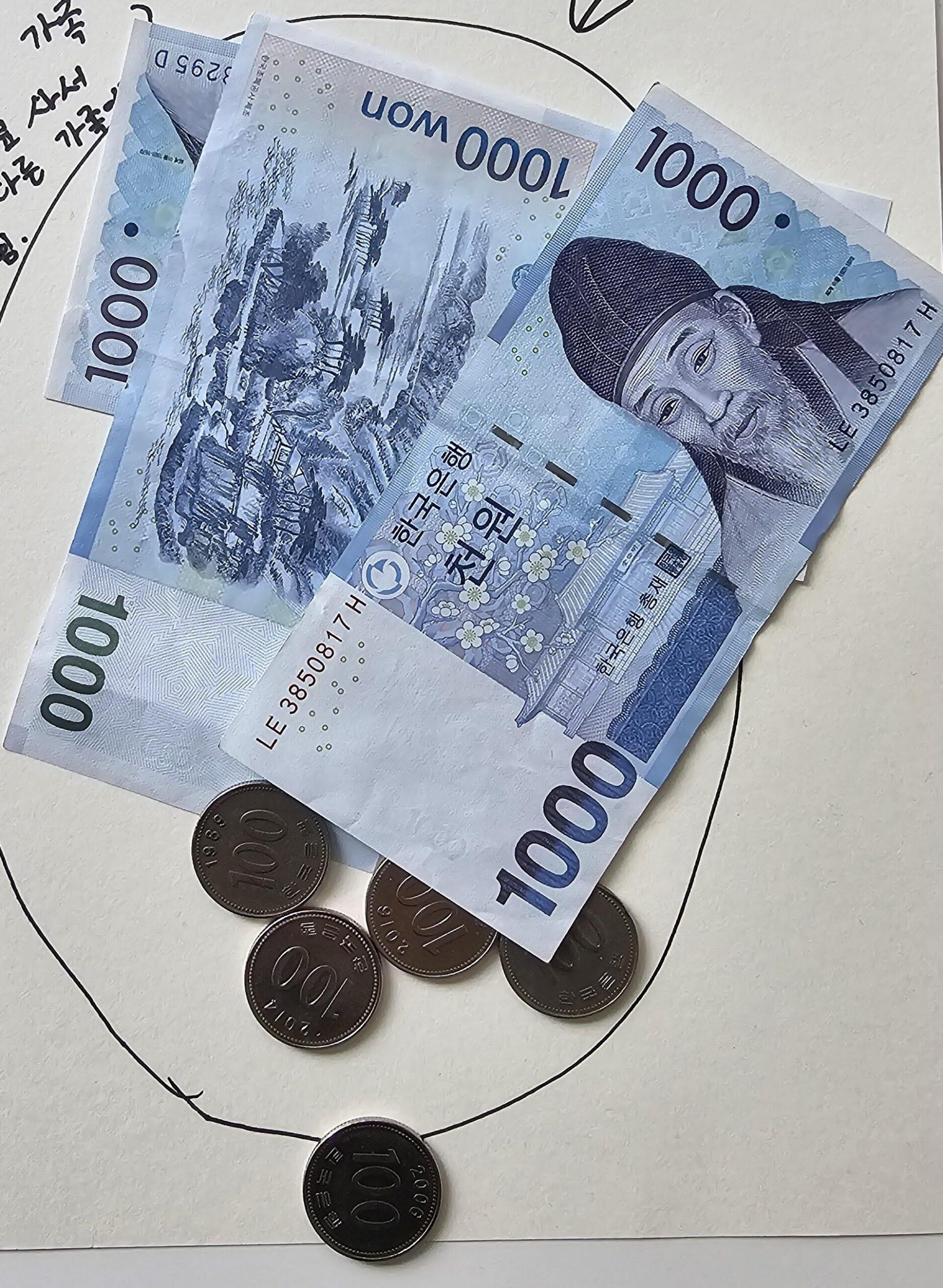
Korean banknotes commonly come in:
- ₩1,000
- ₩5,000
- ₩10,000
- ₩50,000
You will also encounter Korean coins.
One Important Tip
When you’re looking at Korean prices, don’t accidentally treat ₩10,000 as $10.
The Korean won has a much larger numerical denomination than the U.S. dollar.
For example:
₩10,000 = ten thousand won, not ten dollars.
You’ll get used to the numbers quickly.
Where Can You Get Korean Won?
There are several ways to get Korean won.
1. Currency Exchange
Currency exchange counters are available at airports and throughout major tourist areas.
Airport exchange counters are convenient, but convenience doesn’t always mean the best exchange rate.
If you’re exchanging a large amount, compare rates when possible.
2. ATMs
International visitors can also withdraw Korean won from compatible ATMs.
However, not every ATM will necessarily accept every foreign card.
Look for ATMs that support international cards and check the fees displayed before completing the transaction.
3. Banks
Banks can also provide currency exchange services, although opening hours and requirements vary.
For most tourists, an ATM or established currency exchange service is usually more convenient.
Can You Use an ATM in Korea?
Yes.
ATMs are widely available in Seoul, including at banks, convenience stores, transportation hubs, and other locations.
However, there is an important distinction:
Not every ATM accepts foreign cards.
If your card doesn’t work at one ATM, don’t assume that your card is broken.
Try another ATM, particularly one that clearly indicates support for international cards.
Before Your Trip
It’s a good idea to check with your bank:
- Whether your card can be used internationally
- Foreign transaction fees
- International ATM fees
- Daily withdrawal limits
- Whether you need to notify the bank about international travel
This can prevent unpleasant surprises after you arrive.
Should You Withdraw Cash at the Airport?
You can, and it can be convenient.
But you don’t necessarily need to withdraw a large amount immediately after landing.
If you already have a small amount of Korean won, you can wait until you understand your spending needs.
If you do use an airport ATM, check the fees and exchange-rate information carefully before confirming the transaction.
The airport is about convenience, not necessarily getting the absolute best exchange rate.
What Is T-money?
If you’re visiting Seoul, you’ll probably hear the name T-money very quickly.
T-money is a rechargeable transportation card used for public transportation in Korea.
It is particularly useful for visitors using:
- Seoul subway
- City buses
- Other participating public transportation
Instead of buying an individual subway ticket for every trip, you simply load money onto the card and tap it when using transportation.
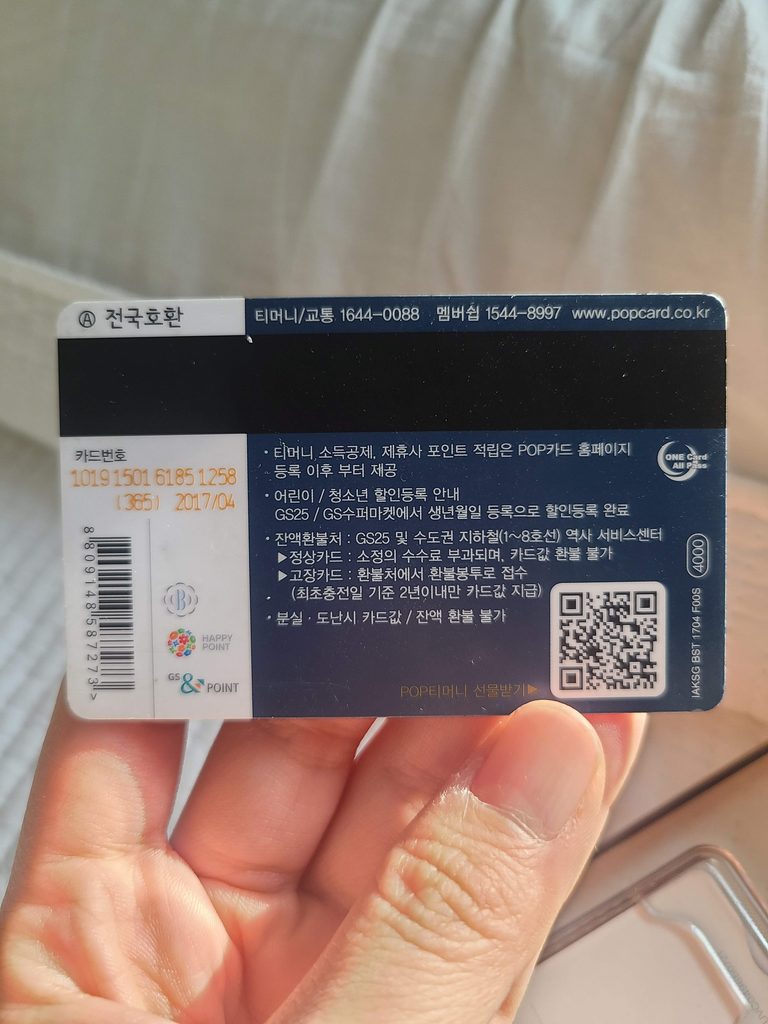
Do You Need T-money in Korea?
You don’t absolutely need one.
But if you’re staying in Seoul for several days and plan to use the subway or buses, I strongly recommend getting one.
It’s convenient and saves you from repeatedly buying individual tickets.
For most first-time visitors, this is the simplest combination:
Credit card → everyday purchases
T-money → public transportation
Cash → backup and cash-only situations
How Much Money Should You Put on T-money?
You don’t need to load a huge amount at once.
Start with a modest amount and add more when necessary.
Your transportation spending depends on:
- How many days you’re staying
- How often you use public transportation
- How far you’re traveling
- Whether you use buses as well as the subway
If you’re staying in Seoul and sightseeing every day, you’ll probably use public transportation several times a day.
You can read our complete subway guide here:
How to Use the Seoul Subway: A First-Time Visitor’s Guide
Can You Use a Credit Card Instead of T-money on the Subway?
This is where things can be confusing for international visitors.
You should not assume that your normal foreign credit card can simply replace a T-money card at every Seoul subway gate.
For a straightforward tourist experience, use a transportation card such as T-money for regular subway and bus travel.
This also makes transfers between public transportation modes easier to manage.
Do You Need Cash for Korean Restaurants?
Usually not.
Many restaurants accept cards, particularly in Seoul.
However, smaller independent restaurants and certain local businesses may have different payment policies.
This is one reason I recommend keeping some Korean won with you.
If you see a restaurant that looks interesting but you’re unsure about payment methods, check before ordering.
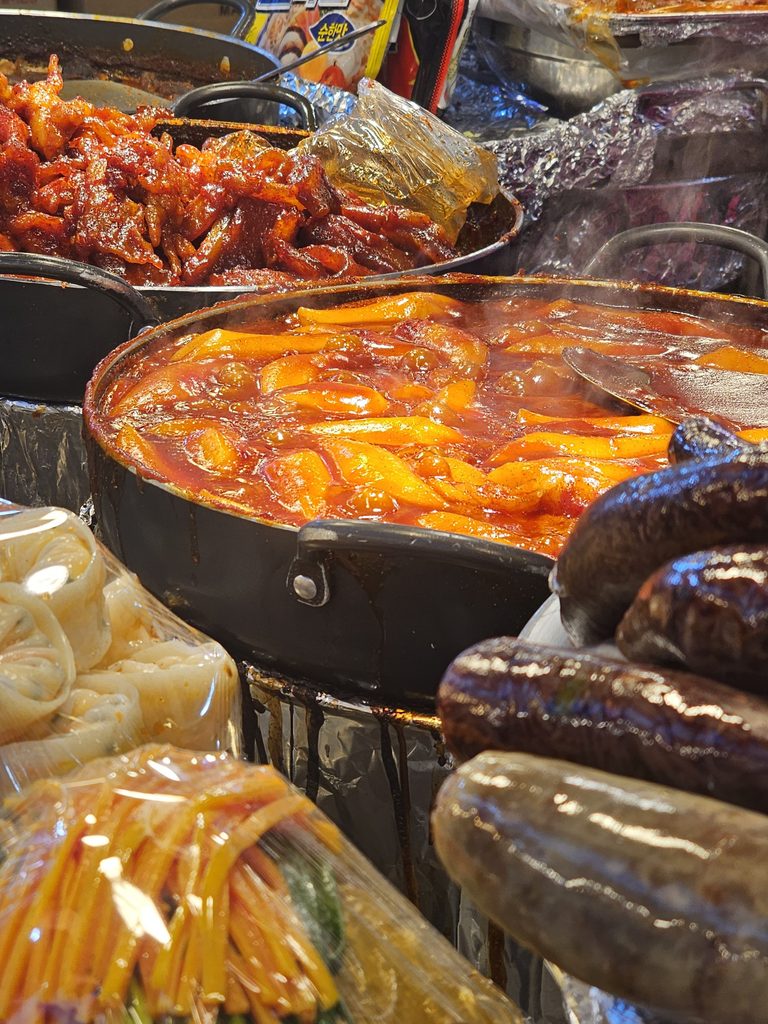
Do You Need Cash for Street Food?
This is where having cash becomes particularly useful.
Some street-food vendors and small market stalls may prefer or require cash, while others may accept cards or other forms of payment.
Don’t assume that every small vendor accepts international credit cards.
If you’re planning to explore traditional markets or street-food areas, carrying some Korean won is a good idea.
Do You Need Cash at Korean Convenience Stores?
Major convenience stores generally accept cards, so you don’t need cash just to buy a drink or snack.
This makes convenience stores particularly useful for international visitors.
If your card works, you can usually pay without worrying about having Korean won in your wallet.
And there are convenience stores almost everywhere in Seoul.
Can You Use Contactless Payment in Korea?
Contactless and mobile payments are becoming increasingly common, but you shouldn’t assume that every Korean merchant will accept your particular foreign mobile wallet or contactless payment method.
Your physical card is a useful backup.
For a first trip, I’d recommend bringing:
- Your primary credit card
- A second card as backup
- Your phone
- Some Korean won
- A T-money card
This gives you several payment options.
What About Apple Pay and Other Mobile Wallets?
Mobile payment availability can vary by country, card issuer, merchant, and payment terminal.
If you normally rely heavily on Apple Pay or another mobile wallet at home, don’t make it your only payment method in Korea.
Bring a physical card as a backup.
This is one of those situations where a little preparation can prevent unnecessary stress.
Are Korean Won Coins Useful?
Yes.
You may receive coins when paying with cash.
Don’t throw them away.
Small denominations can be useful for small purchases and certain machines.
However, you don’t need to carry a huge number of coins around.
Use them naturally during your trip and you’ll gradually get rid of them.
Cash vs. Card in Korea: What Should You Use?
Here’s the simplest way to think about it.
| Situation | Best option |
|---|---|
| Hotel | Credit/debit card |
| Department store | Credit/debit card |
| Large restaurant | Credit/debit card |
| Café | Card |
| Convenience store | Card |
| Subway | T-money |
| Bus | T-money |
| Small vendor | Cash can be useful |
| Traditional market | Cash recommended as backup |
| Street food | Cash recommended as backup |
| Emergency | Cash |
This isn’t an absolute rule.
Payment methods vary by business.
But it’s a useful starting point for first-time visitors.
7 Money Tips for Your First Trip to Korea
1. Bring Two Cards
Don’t travel internationally with only one card.
Bring a backup card and keep it separately from your primary card.
If one card is lost, blocked, or declined, you’ll still have another option.
2. Check Foreign Transaction Fees
Some cards charge foreign transaction fees.
A card with no foreign transaction fee can save you money over the course of a trip.
3. Don’t Carry All Your Cash Together
If you’re carrying a significant amount of cash, don’t keep everything in one wallet.
Keep a backup separately.
4. Keep Some Korean Won on Hand
Even if you mostly use cards, having ₩50,000 or so available can make your trip more comfortable.
5. Don’t Exchange Your Entire Budget
There’s no need to carry your entire travel budget in cash.
Use your card for larger purchases and obtain additional cash if necessary.
6. Check ATM Fees
Your bank and the Korean ATM operator may charge fees.
Read the fee information displayed on the ATM before confirming a withdrawal.
7. Keep Your T-money Separate
If you use T-money regularly, keep it somewhere easy to reach.
You’ll be tapping it frequently when using public transportation.
A Simple Money Setup for a 7-Day Seoul Trip
If I were planning a one-week Seoul trip, I’d keep it simple.
In My Wallet
- 1 primary credit card
- 1 backup card
- ₩50,000–₩100,000 cash
- T-money card
On My Phone
- Banking app
- Card issuer app
- Navigation app
- Currency converter
In My Luggage
- Backup physical card
- Some emergency cash stored separately
You don’t need a complicated system.
The goal is simply to have more than one way to pay.
What About Tipping in Korea?
Unlike the United States, tipping is generally not expected at ordinary restaurants and cafés in Korea.
You normally pay the stated amount rather than automatically adding a percentage.
Some businesses may have their own policies or service charges, so check your bill if you’re unsure.
For everyday travel, you don’t need to build a large tipping budget into your plans.
Should You Carry U.S. Dollars in Korea?
U.S. dollars are not a substitute for Korean won when making everyday purchases.
If you need cash for a purchase, use Korean won.
If you arrive with U.S. dollars or another foreign currency, exchange them through an appropriate currency exchange service rather than expecting ordinary shops to accept them.
What If Your Card Doesn’t Work?
Don’t panic.
There are several possible reasons:
- The merchant doesn’t accept your card network
- The payment terminal doesn’t support your card
- Your bank declined the transaction
- Your card has international transactions disabled
- The business only accepts certain payment methods
Try another card or pay with cash if you have it.
If you’re using an ATM, try another ATM that supports international cards.
This is another reason I recommend having a backup card.
Final Answer: Do You Need Cash in Korea?
Yes, but you don’t need much.
For most visitors to Seoul, a combination of credit/debit card + T-money + a small amount of Korean won is the easiest approach.
Use your card for most everyday purchases.
Use T-money for public transportation.
Keep some cash for small vendors, markets, street food, and unexpected situations.
You don’t need to spend your first day in Seoul worrying about exchanging a huge amount of money.
Start with a reasonable amount of Korean won, use your card when convenient, and withdraw or exchange more only when you actually need it.
My Simple Recommendation
If you’re a first-time visitor, remember these four things:
Bring two cards.
Carry some Korean won.
Get a T-money card if you’re using public transportation.
Don’t rely on only one payment method.
That’s really all you need.
Planning Your Seoul Trip?
If you’re still planning your first trip to Seoul, these guides may also help:
- Is Seoul Expensive? A Realistic Seoul Travel Budget for 2026
- Where to Stay in Seoul: 7 Best Areas for First-Time Visitors
- How to Use the Seoul Subway: A First-Time Visitor’s Guide
- How Much Does Food Cost in Seoul? A Realistic 2026 Guide
What About You?
When you travel internationally, do you prefer using a credit card almost everywhere, or do you like carrying cash?
If you’ve already traveled to Korea, what payment tip would you give to someone visiting for the first time? Share it in the comments!
Leave a Reply