
Planning your first trip to Seoul and wondering what Korean food you should try?
You could spend weeks eating your way through Seoul and still discover something new.
Korean food is much more than kimchi and Korean barbecue. Depending on where you go, you can find comforting soups, sizzling grilled meat, handmade noodles, crispy fried chicken, spicy street food, traditional rice dishes, and some surprisingly delicious desserts.
The challenge for a first-time visitor isn’t finding Korean food.
It’s deciding what to try first.
So I’ve put together 10 Korean dishes that I think are especially worth trying on your first trip to Seoul.
Some are famous internationally. Others are dishes you may not have tried before.
And you don’t need to visit expensive restaurants to enjoy most of them.
What Korean Food Should You Try First?
If you only have a few days in Seoul, I’d prioritize these 10 dishes:
- Korean BBQ
- Bibimbap
- Kimchi jjigae
- Gimbap
- Tteokbokki
- Korean fried chicken
- Naengmyeon
- Kalguksu
- Bulgogi
- Mandu
They represent very different parts of Korean food culture.
Some are spicy, some are mild, some are hearty, and some are perfect as a quick snack.
The best part is that you can find many of them at ordinary restaurants throughout Seoul.
1. Korean BBQ
Let’s start with one of the foods most visitors associate with Korea.
Korean barbecue is more than just grilled meat.
The experience of cooking meat at the table, eating it with different side dishes, wrapping it in lettuce, and sharing everything with friends or family is part of what makes Korean BBQ special.
Popular choices include:
- Samgyeopsal (pork belly)
- Galbi (beef short ribs)
- Bulgogi
- Various cuts of pork and beef
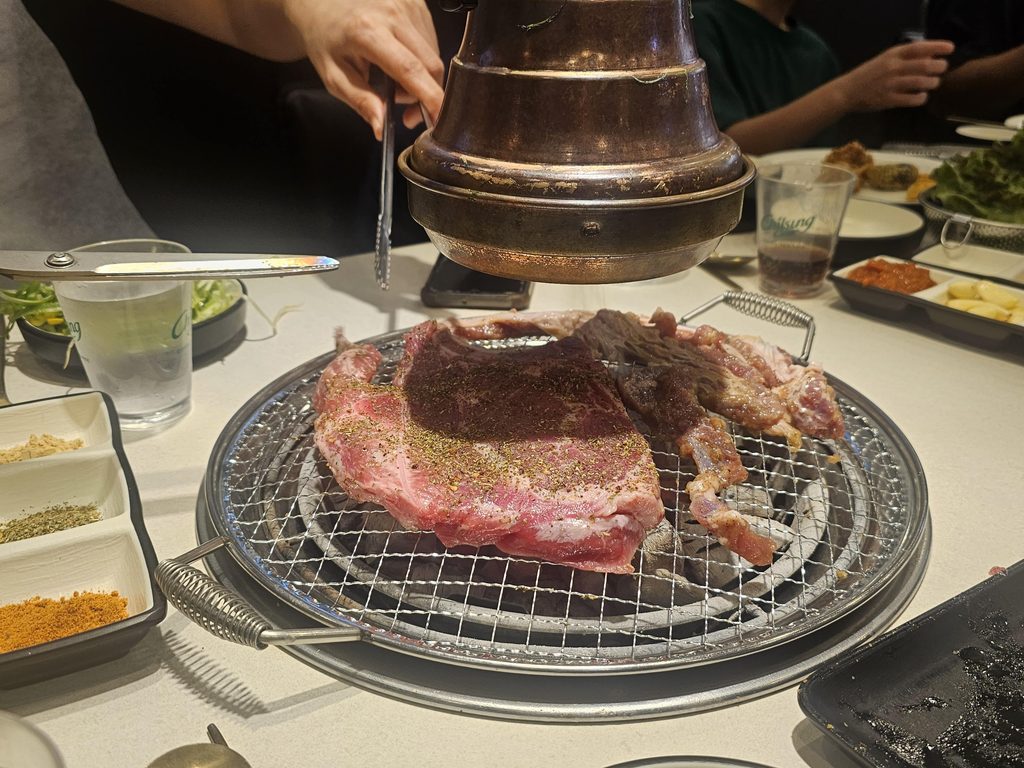
How Do You Eat Korean BBQ?
Depending on the restaurant, you’ll typically receive various side dishes called banchan.
You can eat the grilled meat with rice, lettuce wraps, sauces, garlic, kimchi, and other side dishes.
Don’t worry if you don’t know exactly what to do.
Watch what other diners are doing, or simply ask the staff.
Is Korean BBQ Expensive?
It can be.
Korean BBQ generally costs more than a simple bowl of noodles or soup, particularly if you’re ordering premium beef.
For a realistic breakdown of Seoul food prices, see:
How Much Does Food Cost in Seoul? A Realistic 2026 Guide
2. Bibimbap
If you want something that feels distinctly Korean but is relatively easy for first-time visitors to understand, try bibimbap.
Bibimbap literally combines rice with various ingredients.
A typical bowl may include:
- Rice
- Vegetables
- Egg
- Meat
- Sesame oil
- Gochujang
You mix everything together before eating.
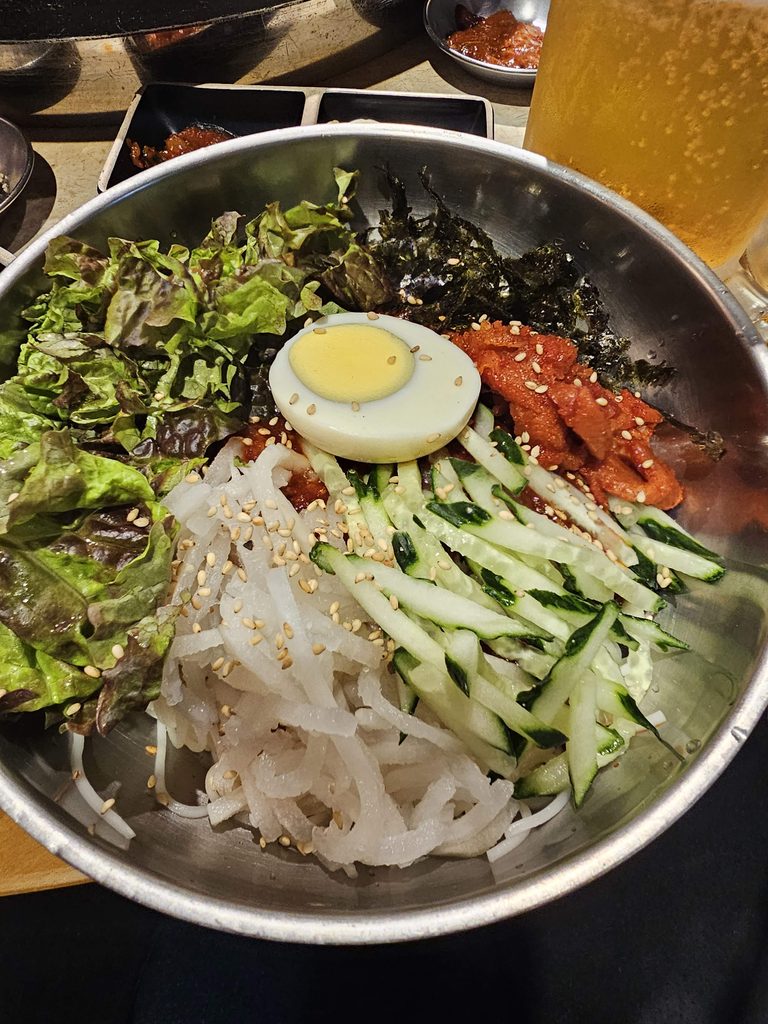
Why Try Bibimbap?
It’s colorful, filling, and customizable.
If you’re worried about trying unfamiliar Korean dishes, bibimbap is a good place to start.
You can also find different versions depending on the restaurant.
One popular variation is dolsot bibimbap, served in a hot stone bowl.
The rice at the bottom becomes crispy as it cooks against the hot bowl.
If you like crispy rice, definitely try this version.
3. Kimchi Jjigae
If you want to experience everyday Korean comfort food, try kimchi jjigae.
Jjigae means stew, and kimchi jjigae is a spicy stew made with kimchi and other ingredients.
Depending on the restaurant, it may include:
- Pork
- Tofu
- Onions
- Green onions
- Kimchi
It is usually served hot and accompanied by rice and side dishes.
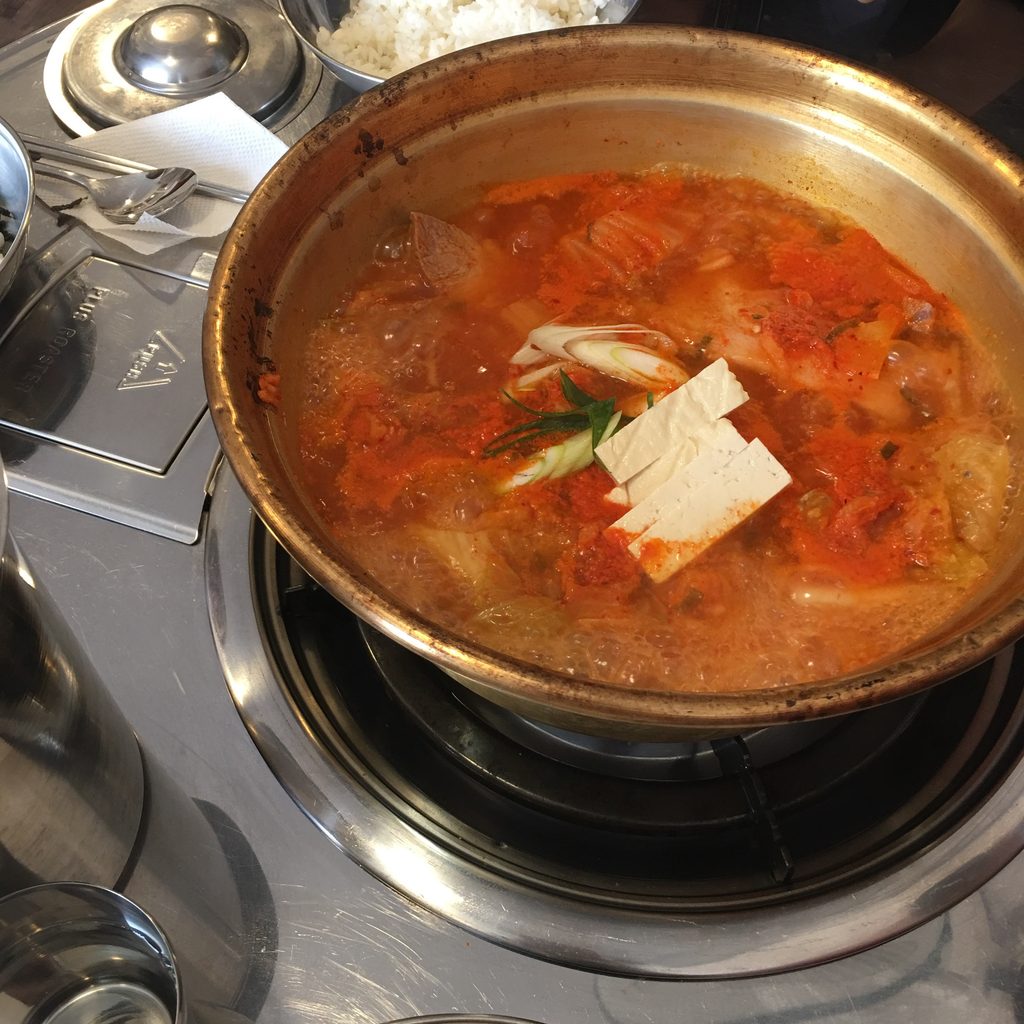
Is Kimchi Jjigae Very Spicy?
It can be.
The level of heat varies depending on the restaurant and recipe.
If you don’t normally eat spicy food, ask the restaurant about the spice level before ordering.
Even if you love spicy food, remember that Korean dishes can use different types of chili and fermented ingredients, so the flavor can be quite different from spicy food you’re familiar with at home.
4. Gimbap
Gimbap is one of the easiest Korean foods for a first-time visitor to try.
It consists of rice and various fillings wrapped in dried seaweed and sliced into bite-sized pieces.
Common fillings include:
- Vegetables
- Egg
- Pickled radish
- Fish cake
- Beef
- Tuna
- Cheese
There are countless variations.
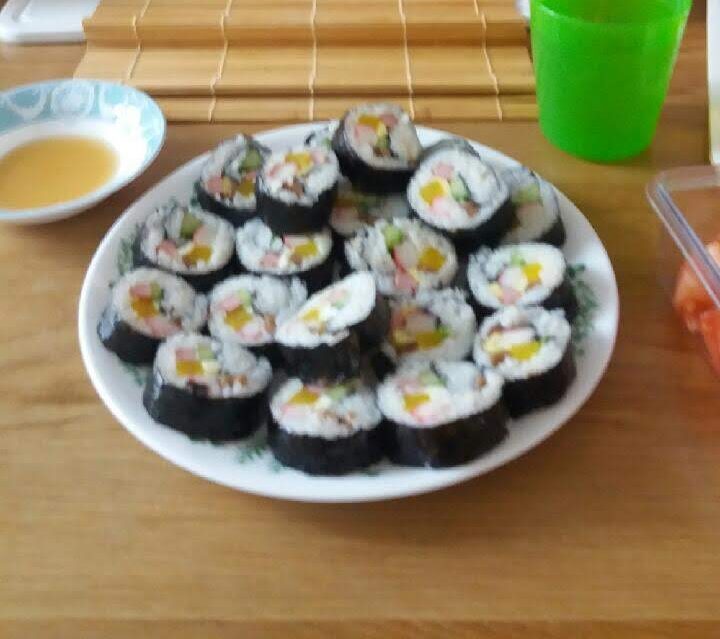
Why I Recommend Gimbap
It’s inexpensive, portable, and easy to share.
You can eat it for breakfast, lunch, a snack, or even as part of a picnic.
It’s also one of the easiest foods to pick up from a casual neighborhood restaurant or convenience store.
If you’re traveling on a budget, gimbap can be particularly useful.
5. Tteokbokki
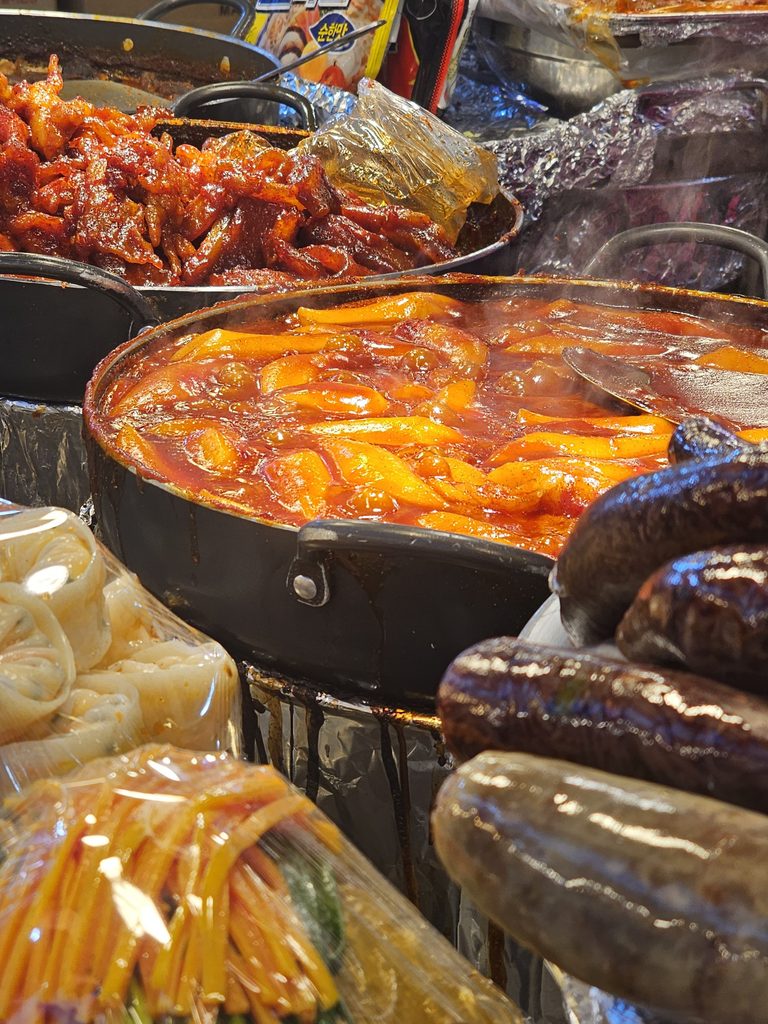
If you walk around a Korean market or street-food area, there’s a good chance you’ll see tteokbokki.
These chewy rice cakes are usually cooked in a sweet and spicy red sauce.
It’s one of Korea’s most recognizable street foods.
Is Tteokbokki Spicy?
Often, yes.
But the level of spiciness varies.
If you’re sensitive to spicy food, start with a small portion.
The texture is also part of the experience.
The rice cakes are soft and chewy rather than crispy, so the dish may feel quite different from foods you’re used to eating.
What Goes Well With Tteokbokki?
You’ll often see other street foods alongside it, such as:
- Eomuk (fish cake)
- Twigim (fried snacks)
- Mandu
- Korean-style fried food
Trying several small dishes together can be a fun way to explore Korean street food.
6. Korean Fried Chicken
Korean fried chicken deserves its own category.
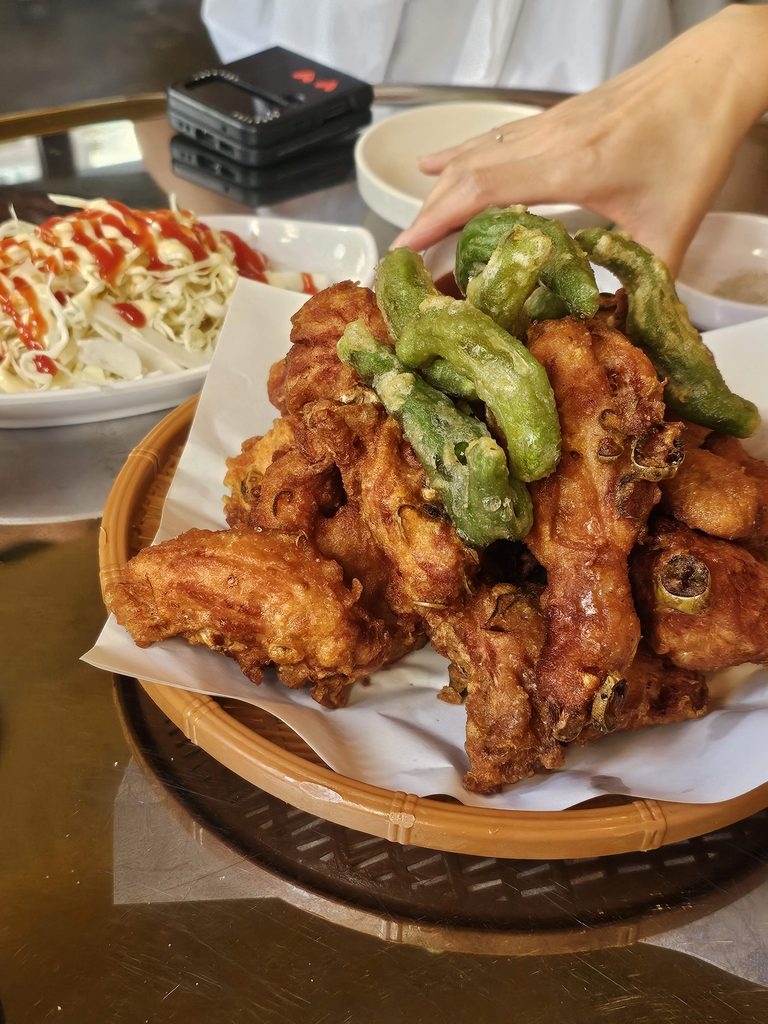
The chicken is often fried until extremely crisp and then coated with different sauces or seasonings.
Popular flavors include:
- Soy garlic
- Spicy sauce
- Original crispy chicken
- Honey or sweet flavors
Why Is Korean Fried Chicken So Popular?
The texture.
Korean fried chicken is known for its crispy exterior, and many restaurants serve it with beer or other drinks.
You don’t necessarily need to order it as a late-night meal.
It can be a fun dinner to share with friends or family.
How Many People Should Share?
A typical order can be quite large.
If you’re traveling with two or three people, sharing one order can be a good option.
7. Naengmyeon
Naengmyeon is a great dish to try if you’re visiting Seoul during warmer weather.
The name literally refers to cold noodles.
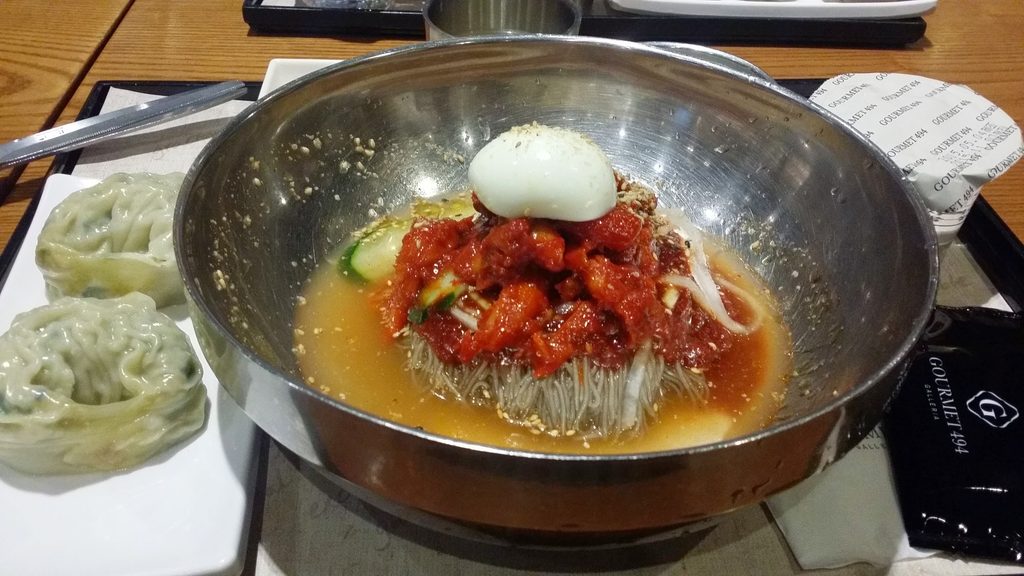
The noodles are served cold, often in a chilled broth or with a spicy sauce, depending on the variety.
Two common styles are:
- Mul naengmyeon — noodles in a chilled broth
- Bibim naengmyeon — noodles mixed with a spicy sauce
Why Try Cold Noodles?
The texture is completely different from most Western noodle dishes.
The noodles are thin and chewy, and the cold broth makes the dish particularly refreshing during summer.
It may not be love at first bite for everyone.
But if you enjoy trying new foods, it’s absolutely worth experiencing.
8. Kalguksu
If you’re looking for something warm and comforting, try kalguksu.
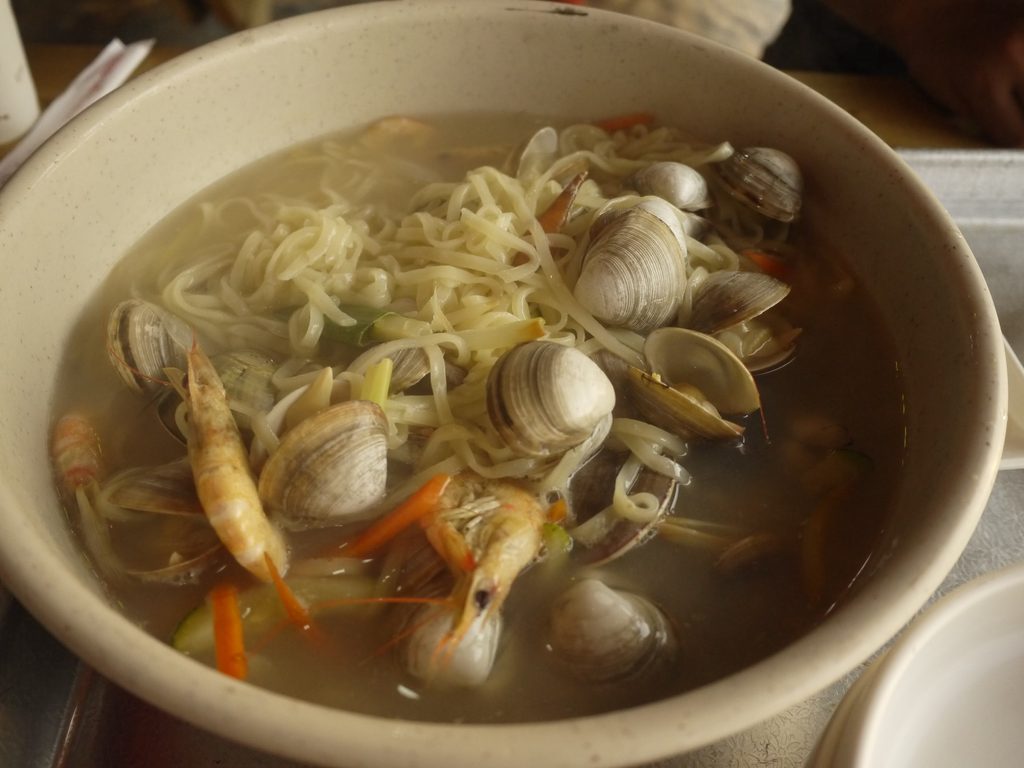
Kalguksu means “knife-cut noodles.”
The noodles are made by cutting dough into broad, flat pieces before cooking them in broth.
Depending on the restaurant, the broth and toppings can vary.
You may find versions with:
- Chicken
- Seafood
- Clams
- Dumplings
- Vegetables
When Should You Eat Kalguksu?
Almost anytime.
But it’s especially comforting on a cold or rainy day.
It’s also a good option if you’re looking for a Korean dish that isn’t necessarily spicy.
9. Bulgogi
Bulgogi is one of the best-known Korean dishes internationally.
The name refers to thinly sliced meat that is marinated and grilled or cooked.
The marinade typically creates a sweet and savory flavor.
Bulgogi is usually made with beef, although variations exist.
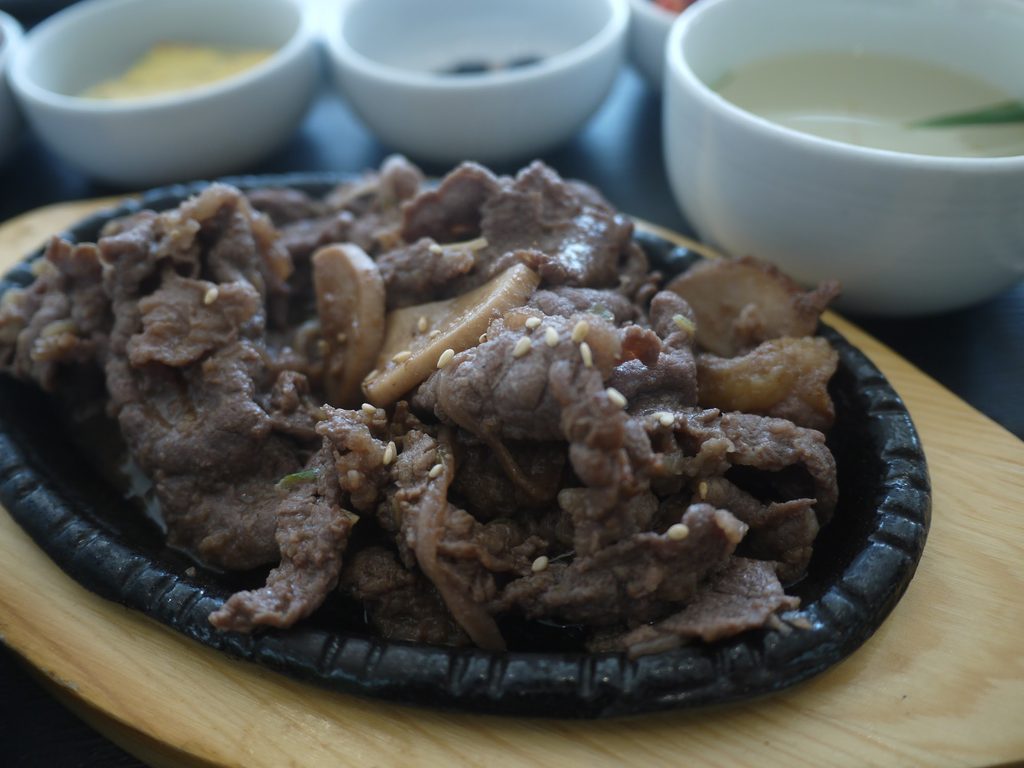
Is Bulgogi Good for First-Time Visitors?
Absolutely.
If you’re nervous about trying unfamiliar Korean food, bulgogi is one of the safest places to start.
The flavors are savory and slightly sweet, and the dish is usually easy to understand even if you’re unfamiliar with Korean cuisine.
Try it with rice and several Korean side dishes.
10. Mandu
Last but definitely not least: mandu.
Mandu are Korean dumplings.
They can be:
- Steamed
- Boiled
- Pan-fried
- Added to soup
Fillings vary, but you may find meat, vegetables, tofu, or other ingredients inside.
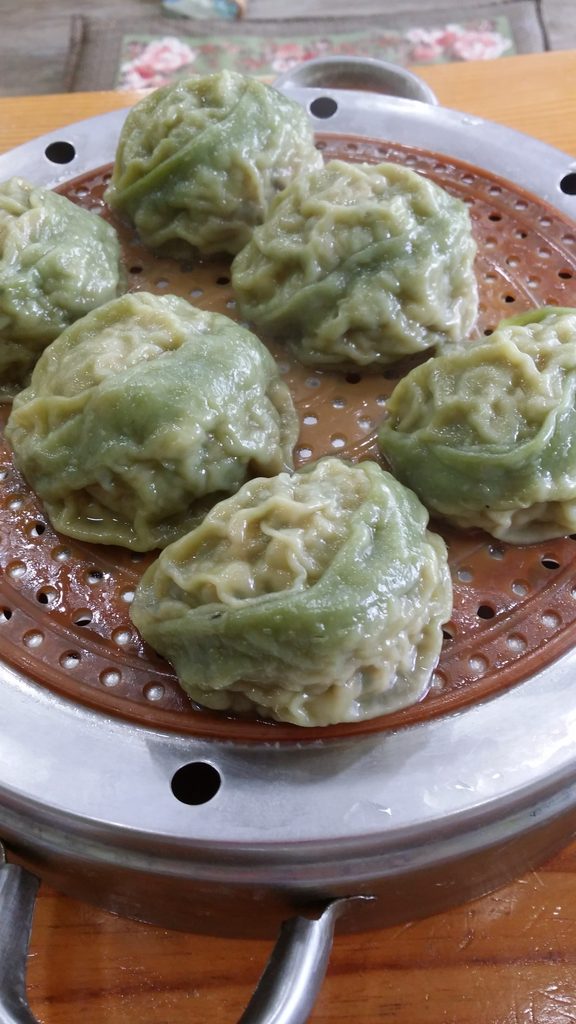
Why Try Mandu?
They’re easy to share and usually familiar enough for travelers who aren’t accustomed to Korean food.
You can also find them at traditional markets, casual restaurants, and noodle shops.
If you’re visiting Gwangjang Market or another traditional market, keep an eye out for dumplings and other handmade snacks.
What If You Don’t Like Spicy Food?
Don’t worry.
Korean food is not all spicy.
Some famous dishes are spicy, but there are plenty of milder choices.
Try:
- Bulgogi
- Gimbap
- Kalguksu
- Mandu
- Korean fried chicken
- Some varieties of bibimbap
- Grilled meat
When ordering, you can also ask about the spice level.
A useful phrase is:
“Is this spicy?”
In Korean:
매워요? (Maewoyo?)
Even learning one simple phrase like this can make ordering easier.
What Korean Food Should Vegetarians Try?
Korean food includes many vegetable-based dishes, but vegetarians should be aware that some seemingly vegetarian dishes may contain meat, seafood, fish sauce, or other animal-based ingredients.
For example, kimchi can sometimes contain seafood ingredients.
If you have strict dietary requirements, it’s best to explain your restrictions clearly before ordering.
You can also research vegetarian and vegan restaurants in Seoul in advance rather than relying entirely on finding suitable dishes after you arrive.
Where Should You Try Korean Food in Seoul?
You don’t need to visit a famous restaurant for every meal.
In fact, some of the best ways to explore Korean food are simply to eat in different neighborhoods.
Traditional Markets
Markets are excellent for trying several small dishes in one visit.
Consider:
- Gwangjang Market
- Namdaemun Market
- Mangwon Market
Neighborhood Restaurants
Look for busy restaurants where local residents are eating.
A crowded restaurant isn’t automatically better, but a steady local crowd can be a useful sign that the restaurant has regular customers.
Tourist Areas
Areas such as Myeongdong and Hongdae have an enormous number of restaurants and are convenient for first-time visitors.
However, don’t assume that every restaurant in a tourist district represents the best or most authentic Korean food.
Sometimes walking a few streets away from the busiest tourist area can lead you to interesting neighborhood restaurants.
How Much Should You Budget for Korean Food?
You don’t need to spend a fortune.
A simple Korean meal can be relatively inexpensive, while Korean BBQ, premium seafood, and trendy restaurants can cost considerably more.
For a detailed breakdown of typical food costs in Seoul, read:
How Much Does Food Cost in Seoul? A Realistic 2026 Guide
If you’re trying to keep your overall trip budget under control, you can also read:
Is Seoul Expensive? A Realistic Seoul Travel Budget for 2026
How to Order Korean Food as a First-Time Visitor
Ordering can feel intimidating if you can’t read Korean.
Fortunately, many restaurants in tourist areas have English menus.
Navigation and translation apps can also help.
A few useful Korean words can make the experience easier:
| English | Korean | Pronunciation |
|---|---|---|
| Thank you | 감사합니다 | Gamsahamnida |
| Delicious | 맛있어요 | Masisseoyo |
| Spicy | 매워요 | Maewoyo |
| Not spicy | 안 매워요 | An maewoyo |
| One, please | 하나 주세요 | Hana juseyo |
| Water, please | 물 주세요 | Mul juseyo |
You don’t need to speak Korean fluently.
A smile, a little patience, and a willingness to try are usually enough.
A Simple Korean Food Plan for a 3-Day Seoul Trip
If you only have three days, here’s one way to fit several Korean foods into your trip.
Day 1
Lunch: Bibimbap
Snack: Tteokbokki + eomuk
Dinner: Korean BBQ
Day 2
Lunch: Gimbap + mandu
Snack: Korean café dessert
Dinner: Korean fried chicken
Day 3
Lunch: Kalguksu
Snack: Street food
Dinner: Bulgogi or another Korean specialty
You don’t have to follow this exactly.
The point is to mix different types of Korean food rather than eating the same type of meal every day.
A Few Korean Foods You Shouldn’t Leave Seoul Without Trying
If you asked me to narrow the list down to just five, I’d choose:
1. Korean BBQ
For the experience as much as the food.
2. Gimbap
Simple, affordable, and easy to try.
3. Tteokbokki
A classic Korean street-food experience.
4. Bibimbap
A colorful and approachable introduction to Korean cuisine.
5. Naengmyeon
Something completely different from what many first-time visitors expect.
But honestly, if you have enough time, try all ten.
One of the best parts of visiting Korea is discovering which dishes become your personal favorites.
Final Thoughts
Seoul is one of those cities where food can become a major part of the trip.
You can eat a quick bowl of noodles for lunch, grab street food in the afternoon, have Korean barbecue for dinner, and finish the evening at a café.
And you don’t have to spend a huge amount of money to experience Korean food.
If this is your first trip, don’t worry about finding the “perfect” restaurant every time.
Try different neighborhoods.
Order something you’ve never had before.
Share dishes with your travel companions.
And if you find something you love, go back and eat it again.
That’s part of the fun.
What About You?
Which Korean food are you most excited to try in Seoul?
Are you looking forward to Korean BBQ, street food, bibimbap, fried chicken, or something completely new? If you’ve already visited Korea, what’s the one dish you think every first-time visitor should try?
More Seoul Travel Guides
Is Seoul Expensive? A Realistic Seoul Travel Budget for 2026
Where to Stay in Seoul: 7 Best Areas for First-Time Visitors
How to Use the Seoul Subway: A First-Time Visitor’s Guide
How Much Does Food Cost in Seoul? A Realistic 2026 Guide
Leave a Reply